Get Full Government Meeting Transcripts, Videos, & Alerts Forever!
Get email alerts on the Criminal Court Docket topic
No spam. Unsubscribe anytime.
Monroe and Clinton circuit dockets record multiple guilty pleas; prosecutor recommends 32-year term in Jose Robles case
Summary
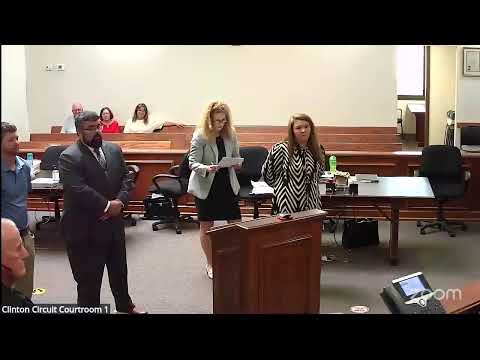
Monroe and Clinton circuit judges heard a long docket of arraignments, guilty pleas and diversion referrals in a remote session that included cases from Monroe, Clinton and several neighboring counties.
Monroe and Clinton circuit judges heard a long docket of arraignments, guilty pleas and diversion referrals in a remote session that included cases from Monroe, Clinton and several neighboring counties.
The most consequential action came in Commonwealth v. Jose Robles (23CR00050), where Robles pleaded guilty under a negotiated agreement that the prosecutor described in court as carrying multiple, concurrent and consecutive terms that the Commonwealth recommended be imposed. The judge accepted the plea for the purpose of proceeding and ordered a presentence investigation and a sentencing date to be set after that report is prepared.
Why it matters: The Robles plea ties together several felonies and, per the prosecutor’s on-the-record summary of the agreement, would result in substantial prison exposure if the court accepts the recommended terms at sentencing. The court recorded additional pleas, diversion placements and revocation hearings across the docket that will affect supervision, restitution and pretrial diversion outcomes for numerous defendants.
What the court recorded - Jose Robles (23CR00050): The Commonwealth told the court that under the plea the prosecutor would recommend the following terms (as described in open court): a 15-year term for assault in the first degree; a 15-year term for the amended manslaughter charge (to run concurrently with the assault term, producing 15 years on those two counts); three counts of wanton endangerment in the first degree carrying five years each (to run consecutively with each other for a total of 15 years); and one additional count of wanton endangerment in the first degree carrying two years. The prosecutor said the 15-year aggregate from the three wanton-endangerment counts and the 2-year count would run consecutively with the 15-year combined assault/manslaughter term, producing 32 years total under the recommendation. The Commonwealth opposed probation and shock probation. The prosecutor also said the parties agreed the defendant should forfeit specified firearms and that a listed pickup truck be released to its owner after final sentencing. The judge accepted the plea for the purpose of taking it under advisement, ordered a presentence investigation by probation, and scheduled sentencing after that report. The court stated the defendant would receive credit for time served. (Presentence report and final sentencing remain to be completed.)
- Other docket activity (selected): The court routinely took pleas and set negotiation and return dates in scores of cases from Clinton, Monroe, Russell, Wayne, LaRue, Pulaski and Cumberland counties. Several defendants were placed on supervised pretrial diversion (including a combined diversion agreement involving Cumberland Circuit Court indictment 25CR35 and Clinton Circuit Court indictment 25CR62, under which the prosecutor described a total four-year sentence structure to be diverted and supervised if completed). The court also revoked or set revocation hearings in multiple diversion or probation matters, ordered referrals to drug court in some revocation matters, and set standard negotiation and sentencing dates (commonly the next negotiation date and a court date 1 week later or in September). Several defendants were ordered to pay restitution or court costs, with payment schedules set on the record.
Court process and next steps The judge repeatedly explained that, before imposing a final sentence in cases taken by plea, the court will often wait for a presentence investigation (PSI) prepared by probation, and that the judge is not bound to accept the Commonwealth’s sentencing recommendation. In the Robles matter the judge explicitly ordered the PSI and scheduled sentencing after receipt of that report. In diversion and revocation matters the court either entered referrals (for example to long-term rehabilitation or drug court) or set revocation/sentencing dates when revocation was alleged.
What the record does not yet show The Commonwealth’s courtroom sentencing recommendation in Robles was described on the record, but the judge did not immediately impose final sentence the same day; the final sentencing hearing and the court’s decision whether to adopt the Commonwealth’s recommendation were reserved pending the PSI. For other matters the docket set negotiation and return dates; outcomes depend on subsequent hearings or compliance with diversion conditions.
Background/context The session combined arraignments, plea hearings and probation/diversion reviews for multiple counties. Many of the appearances were routine: defendants confirmed identity, acknowledged understanding of constitutional rights, waived those rights to enter guilty pleas, and the court scheduled follow-up steps (PSI, sentencing, or diversion supervision). Several matters involved requests to revoke diversion or probation based on positive drug tests, new charges, or failure to complete treatment; in some of those the court ordered revocation or scheduled sentencing for a later date.
Looking ahead: The Robles matter will return for sentencing after probation completes the presentence investigation; other contested matters on the docket (diversion revocations and requests for inpatient treatment) were scheduled for further hearings or treatment referrals. Several arraignment cases were set for negotiation on Sept. 4 and return on Sept. 11 (dates the court announced repeatedly for the next appearance).