Get Full Government Meeting Transcripts, Videos, & Alerts Forever!
Get email alerts on the Gaza Humanitarian Crisis topic
No spam. Unsubscribe anytime.
UN says Gaza crisis ‘beyond anything we’ve seen’ and urges safe, sustained aid access
Summary
United Nations officials warned that the humanitarian crisis in Gaza is unprecedented, described a UN plan to scale up assistance during a ceasefire, and said access constraints and safety risks are preventing lifesaving deliveries.
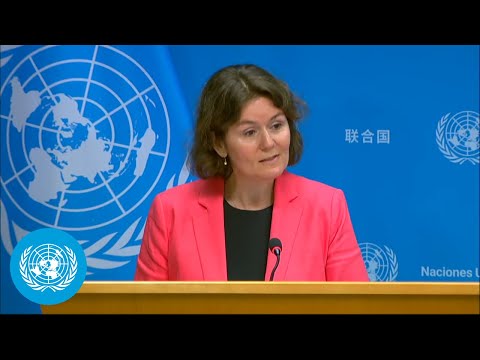
UN spokesperson Stephanie said at a United Nations noon briefing that the humanitarian crisis in the Gaza Strip is “beyond anything we've seen in recent times,” and urged that crossings be opened, fuel and equipment allowed in, and humanitarian staff permitted to operate safely so the UN can scale up deliveries if a ceasefire occurs.
The secretary-general, Antonio Guterres, "said that the scale and scope of the humanitarian crisis in Gaza is beyond anything we've seen in recent times," Stephanie reported, and called again for an immediate and permanent ceasefire, the unconditional release of hostages, unimpeded humanitarian access and steps toward a two-state solution.
Stephanie said the UN’s under‑secretary‑general for humanitarian affairs, Tom Fletcher, has shared with member states a plan that "outlines the steps necessary to stop the horror, the constraints placed on humanitarian operations in Gaza, and our proposed solutions to resolve them." Fletcher, she said, wrote to the Gaza Humanitarian Foundation to reiterate that the UN stands ready to engage partners but that any partnership must “adhere to the globally accepted principles of humanity, impartiality, neutrality, and independence.”
Stephanie described the operational constraints that are blocking scale‑up. She said UN and OCHA teams reported that, out of 15 attempts to coordinate humanitarian movements inside Gaza, four were denied outright, three were impeded, one was postponed, two were canceled by organizers and only five missions were facilitated, including cargo pickup at crossings and fuel transfers. "What is missing right now is safe, sustained access," she said.
The spokesperson noted that during the previous pause in fighting tens of thousands of truckloads entered Gaza and food aid reached nearly every person in the strip, adding that "our supplies, which have been paid for by member states from around the world, are ready to move." She warned that aid workers face constant danger and that crossings remain unreliable.
On the question of using airdrops, including offers by Jordan, Stephanie said the UN welcomes efforts to provide aid but reiterated that "the most efficient way to bring in supplies is by road" and that it is imperative aid be allowed to enter through all crossings and corridors to enable large‑scale deliveries. She said the UN “welcomes also this announcement” regarding airdrops but emphasized the primacy of land access.
The briefing made clear the difference between planning and action: the UN has a plan and stockpiled supplies ready to move, but the scale‑up depends on safe, reliable access during an eventual ceasefire and on partners operating in line with humanitarian principles. The spokesperson said the plan was shared with member states and that further decisions will depend on developments on the ground and on diplomatic and security arrangements.
The briefing also noted particular vulnerabilities within the population: Stephanie said hunger and malnutrition are rising quickly; pregnant and breastfeeding women face increased risks; and local health authorities in Gaza had reported two additional deaths from starvation the prior day. She said the UN would accelerate deliveries of food, health services, water, sanitation and shelter "if Israel opens the crossings, lets fuel and equipment in, and allows humanitarian staff to operate safely."