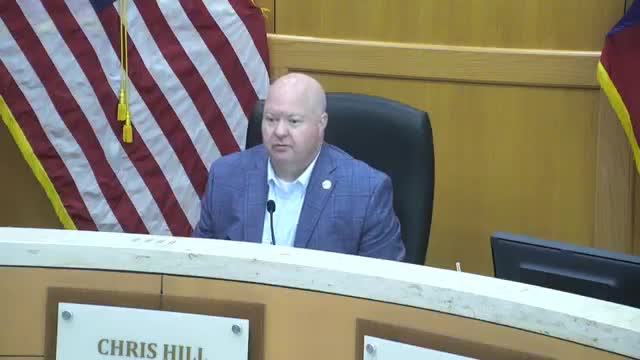
Collin County commissioners press sheriff over jail overtime, staffing and training
Loading...
Summary
Judge Hill and commissioners pressed Sheriff Skinner at an Aug. 5 budget workshop to explain persistent high overtime at the Collin County Detention Center and asked when that expense will decline.
Judge Hill and commissioners pressed Sheriff Skinner at the Commissioners Court budget workshop about why the county continues to pay high amounts of overtime at the Collin County Detention Center and when those costs might fall.
The sheriff told the court the jail has been operating with staffing shortfalls and high average daily population that have kept posts open and driven overtime. He and his commanders said the department is hiring more detention officers but that new hires require phases of training and field training before being released to all posts. Commissioners asked whether training schedules or pay practices — including on-duty lunches and comp time — are inflating overtime costs.
Sheriff Skinner and his staff told the court they have had dozens of people in training at once and that some trainees are used to staff housing posts once they complete particular phases of training. Skinner said the department has had a rolling average of many trainees since October and that the jail population has increased compared with several years ago. “Overtime is going to continue in the future until we can get people out of training and on post,” Skinner said. He urged that retention — keeping trainees on the job after training — is essential to reducing overtime.
Commissioners pressed specifics the sheriff’s office can control. They asked the sheriff to identify the discrete drivers that add overtime — hospital watches, constant watch, construction security, bailiff duty, and on-duty lunches were all named — and to work with the court to reduce those costs. Commissioner Webb and others asked whether the county’s adopted policy against paying for on-duty lunches is being followed; Sheriff Skinner said operational constraints in the jail often prevent employees from leaving the facility and that federal wage rules require that employees be allowed an opportunity to separate from duties for an unpaid meal if they can. County staff and the sheriff agreed the legal question and how it is implemented needs clarifying.
The sheriff’s office said some overtime stems from construction-related security (PIP projects) and the video-camera installation program that require constant two-person posts; others come from hospital watches and medical transports. The sheriff said some work is intermittent while other duties are continuous. The sheriff’s staffing analysis and the county’s staffing work group disagree on whether the department’s relief factor and net available work hours fully account for time away from post (for example, comp time, training, and other non-post duties).
Commissioners and the sheriff discussed multiple levers the court could use to reduce overtime: funding additional detention officers, stricter enforcement of existing county policies intended to limit comp time and pay for on-duty lunches, and operational changes such as asking bailiffs or courts to provide more coverage instead of using sheriff’s deputies. The court also discussed conversion of some administrative or non-jail positions into detention officers as a way to add floor staffing without raising the tax rate.
No final, binding budget decision on a large jail-staffing package was approved during the meeting. Commissioner Hale moved to add a broad package of detention officers and other reorganizations intended to reduce overtime; the motion did not win a majority and failed in committee votes. The court asked sheriff’s staff to return with clearer, itemized driver descriptions and with hiring/retention forecasting for the coming fiscal year so the court can weigh pay and staffing tradeoffs against other county needs.
Ending: Commissioners emphasized they want the sheriff to present specific, quantifiable drivers of overtime — hours by driver, the number of staff in each training phase and the expected date those new hires will be available for posts — so the court can evaluate budget options. Sheriff Skinner said he will continue recruiting and work on retention, and the court signaled it will revisit staffing and comp-time policy decisions as it finalizes the FY‑2026 budget.