
South Gate council adopts short‑term budget plan, delays deeper cuts while seeking revenue options
Get AI-powered insights, summaries, and transcripts
Sign Up Free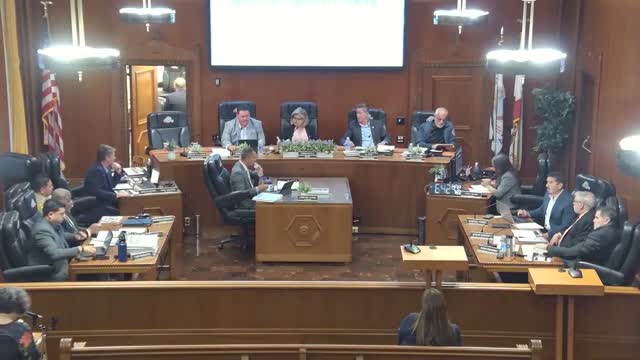
Summary
City officials approved a one‑year plan that pares about $2.2 million in internal cuts and uses one‑time reserves to balance the fiscal 2025–26 budget, while warning of a recurring structural gap of roughly $8 million next year and urging community discussion on revenue options including a possible utility users tax.
South Gate city leaders on Tuesday approved a budget package that trims roughly $2.2 million in internal spending and relies on one‑time reserves and transfers to balance the fiscal year 2025–26 budget, while postponing far deeper cuts that officials warned would sharply reduce services.
The council adopted the package after a presentation from City Manager Rob Houston and Administrative Services Director Louis Frost, who said the city faces a structural budget gap driven by rising pension, health‑insurance and contract costs. "We are projecting at least an $8,000,000 structural gap in fiscal year 26–27 if no action is taken," Frost said during the hearing.
The adopted plan freezes 17 vacant positions across departments, including five sworn police positions that otherwise would have been filled, reduces training and discretionary spending and scales back some public‑facing programs. It also uses budget stabilization reserves (about $2.2 million for this year) and transfers from other funds to produce an estimated year‑end general fund balance of roughly $3.1 million, staff said.
Why it matters
Officials said the city has sustained services in recent years by relying on one‑time federal funds — primarily American Rescue Plan Act (ARPA) dollars — and reserves, but that those sources have dried up. "We used one‑time reserves and budget stabilization funds to maintain current service levels. This approach, while necessary, is not sustainable in the long term," Frost told the council.
The staff presentation laid out two broad choices: a deep set of cuts that would eliminate as much as $9.4 million in spending and substantially reduce core services, or a smaller package of internal cuts and temporary use of reserves to buy the city time to pursue revenue options and efficiency measures. The council chose the second approach, with the expectation of an 11‑month period to explore permanent solutions.
Details from the staff presentation
- Proposed FY 2025–26 general fund revenues: about $70.9 million; proposed expenditures: about $78 million. City staff said initial budget gaps were around $9.4 million before $2.2 million in proposed reductions. - Key cost drivers identified: unfunded pension liabilities (projected to grow from earlier years to roughly $10.3 million), employee health insurance increases and rising contract costs such as animal control, training, and equipment replacement. - Departments flagged examples of inflationary pressure: Police Chief Darren Aracawa cited increases in academy and background check costs, vehicle prices and an uptick in recurring Axon body‑camera contract costs. Parks and Recreation Director Steve described steep increases in equipment, repair and minimum‑wage driven personnel costs. Public Works Director Art detailed multi‑hundred‑percent increases on selected line items such as emergency repairs and tree maintenance.
Public comment and the pool
More than two dozen speakers, many representing the South Gate Aquatic Coalition and swim teams, urged the council not to close or curtail access to the Patricia Mitchell Swim Stadium. Parents, swimmers and seniors described the pool as a training site, workplace and therapy space and said a three‑month closure proposed under the deeper‑cuts scenario would be harmful.
City staff had proposed two options regarding pool hours: a minimal reduction (one day per week) under the smaller‑cuts plan, or a full three‑month closure under the larger‑cuts scenario. After the public comments and council discussion the adopted package preserved pool operations as part of the smaller‑cuts approach. "These programs are important to our youth and seniors," Mayor Mary Davila said in debate before the vote.
Revenue options and next steps
Council and staff emphasized that long‑term solutions will require new revenues or structural change. Staff presented comparative data showing South Gate collects substantially less revenue per capita than many nearby cities and noted the city does not currently have a utility users tax — a revenue tool many neighboring jurisdictions use.
"If, say, a utility user tax was something that is put on a ballot and the community was to say OK, we have a solution," City Manager Rob Houston said. He and other officials suggested the council and staff will pursue community outreach, fee studies (impact fees, permit fees) and economic development as part of a broader plan to close the structural gap.
Actions taken and process
The council voted to adopt the proposed FY 2025–26 municipal budget using the staff‑recommended "option 2" approach: roughly $2.2 million in internal reductions plus one‑time uses of reserves and transfers. The vote also included direction for quarterly updates on cost‑saving measures and continued work with an ad‑hoc budget group and staff on revenue and efficiency options.
Council members emphasized the difficulty of the decisions and the need for transparency. "We have to have that conversation about what level of service we want based on how much it's going to cost," Rob Houston said during the discussion.
Ending note
Council members and staff said they will return to the community with additional information on fee changes, impact‑fee studies and possible ballot measures, and that the next fiscal year will require additional action unless new revenue sources are identified. The budget approval gives the city about a year to develop and vet those longer‑term choices.
Votes at a glance
- Adopted FY 2025–26 municipal budget (Option 2: $2.2M internal cuts + one‑time reserves/transfers): approved by council (motion made during the meeting; council directed quarterly reports and continued ad‑hoc review). (Provenance: council discussion and public hearing, transcript excerpts starting at the budget presentation and ending at the motion and roll call.) - Approved allowing Councilwoman Avalos to participate remotely under AB 2449: council approved the request during the meeting after city attorney counsel (transcript contains the request and roll‑call). - Closed‑session report: Council met in closed session with the labor negotiator pursuant to Government Code section 54957.6; city attorney reported "no reportable action taken."
(For full roll‑call tallies and formal resolutions adopted, see the meeting minutes and the official adopted resolution numbers.)