Get Full Government Meeting Transcripts, Videos, & Alerts Forever!
Get email alerts on the School Safety topic
No spam. Unsubscribe anytime.
Safety upgrades lauded: cameras, mutual‑link alarms, AEDs and vape detectors rolled out districtwide
Summary
The district’s safety director presented an overview of completed and ongoing safety upgrades — including 3,000 cameras, mutual‑link silent alarms, AED deployment, vape/haze detectors and mapping — and described ongoing door, radio and lockdown-work priorities.
Dan Barry, director of safety and security, told the board Aug. 6 that Waterbury Public Schools has completed a multi‑year upgrade of cameras and access-control systems and has expanded emergency notification and monitoring capabilities.
What the district reported - Cameras and monitoring: The district now has about 3,000 uniform cameras across buildings, with feeds routed to a 24/7 real‑time crime center for monitoring. Staff said this provides police and school leaders near real‑time situational awareness. - Mutual Link and Everbridge: The district has implemented Mutual Link silent-alarm devices in buildings (giving administrators a direct, early alert to send to dispatch) and uses Everbridge for mass notification during incidents. - AEDs and medical readiness: About 70–80 AED units have been installed in strategic locations, with pads compatible with first responders. Barry cited an instance where an AED installed in a Kennedy High gym was used successfully during a medical emergency. - Vape/haze detection: The district installed about 70 detectors in middle and high schools and planned a second wave of installations for other buildings. - Doors, man-traps and mapping: A mapping project documented building layouts and facilitated targeted door and access improvements; the district reported man‑trap (secure front entrance) installations at most school buildings and is replacing exterior doors that present security issues. - Planned upgrades: Identometrics (finger-scan school access) pilots and a residency-verification contract (Clear ID) were under way; grant-funded “round 6” camera work was ongoing and a repeater project was in progress to improve emergency-radio coverage at specific sites.
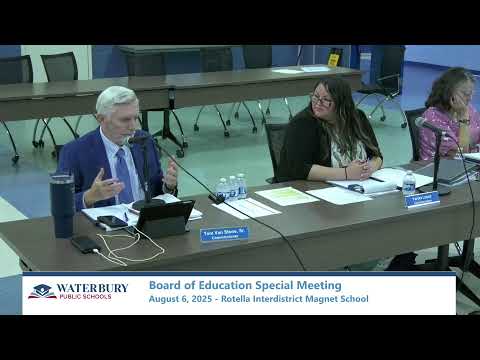
Board reaction and issues raised Commissioners praised the progress but asked for clearer public messaging about how the tools make schools safer for students and staff. Several members requested ongoing attention to maintenance (cameras and doors), and Commissioner Van Stone specifically sought more attention to buildings — naming Driggs as a school to prioritize for additional facility work. Barry said his office handles daily incident calls and coordinates with police and the operations department.
Why it matters: Safety-system investments change how schools detect and respond to emergencies and affect daily operational workflows. The board signaled support for continued capital investment and requested regular updates on system performance and outstanding maintenance items.
Next steps: Operations and safety staff will continue rollout of round‑6 camera upgrades, address door replacements and complete the identified repeater and identometrics projects; they will also provide the board with follow-up information about community-facing messaging on safety improvements.