Get Full Government Meeting Transcripts, Videos, & Alerts Forever!
Get email alerts on the Zoning Heights topic
No spam. Unsubscribe anytime.
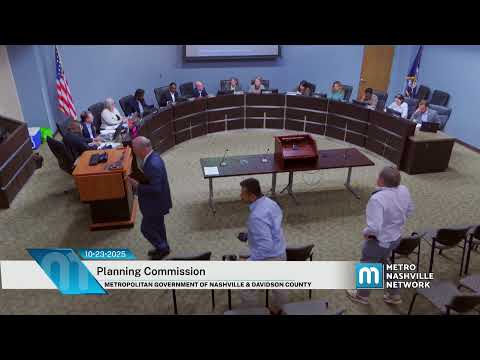
Commission defers vote on proposed R/RS height limits after debate over neighborhood context
Summary
The commission deferred a text amendment that would lower height limits in many R and RS neighborhoods to 2½ stories/35 feet and clarify measurement rules, citing concerns about compatibility in neighborhoods that already have taller homes. The item was deferred one meeting to allow staff and council to propose contextual flexibility.
The Planning Commission deferred action one meeting on a proposed text amendment that would change height standards in R and RS zoning districts, after commissioners raised concerns about how a straight 35-foot limit would affect neighborhoods that already contain taller homes.
Staff planner Dustin Shane presented the amendment as part of a broader housing and infrastructure package intended to create more predictable infill and to simplify two-family use permitting. The draft reduces the maximum height in many R and RS districts from three stories to two-and-a-half stories and clarifies how height is measured — tying heights to eave and roof ridgeline measurements rather than the more permissive measurements in the current code.
Shane said the changes were intended to "ensure more predictable infill" and to better match the scale of a community where the existing housing stock is primarily two stories. But commissioners and several council members said street-level context varies across neighborhoods and that a blanket standard might produce inconsistent block faces where some lots already have taller structures.
Commissioners asked whether the BZA special-exception process could provide flexibility; staff described a special-exception pathway that exists in some mixed-use districts but noted that many commissioners preferred explicit, written contextual flexibility in the ordinance rather than relying on the Board of Zoning Appeals process. Several commissioners urged staff and the sponsor to draft substitute language that would allow council to apply contextual exceptions or a bounded range (for example, allowing some adjustment above 35 feet but capping the upper limit near 45 feet).
Council member Gamble, the sponsor, told the commission she was open to deferring the council public hearing so the commission could provide more detailed, written guidance to the council before the bill appears at a public hearing. Vice Chair Farr moved to defer the item one meeting to November 13; the motion carried.
Staff recommended approval with a substitute that includes clarified definitions and measurement methods but said council could consider additional flexibility during its review. The council public hearing had been scheduled for November 4; after the commission's deferral the sponsor indicated she would seek to move the council public hearing to December to allow more time for revisions and for the commission to make a recommendation before council action.