Get Full Government Meeting Transcripts, Videos, & Alerts Forever!
Get email alerts on the Energy Solar topic
No spam. Unsubscribe anytime.
Waterbury presents $3.6 million rooftop solar plan for five schools; state and federal incentives expected to cover most costs
Summary
District staff and outside consultants presented a project manual for rooftop solar on five Waterbury schools, saying the Department of Administrative Services would cover most costs and federal incentives could reduce the city—s share. The board will consider formal approval at its Sept. 18 meeting.
City and Waterbury Public Schools staff presented a project manual for rooftop solar arrays at five city schools and said state and federal incentives could cover most of the upfront cost.
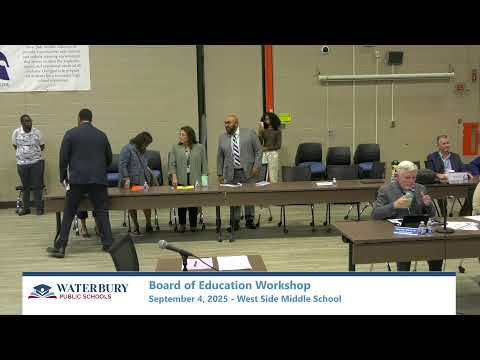
Consultants and district staff told the Board of Education at a Sept. 4 workshop that the project currently is estimated at $3,600,000 and was bonded by the city. They said the Department of Administrative Services (DAS) has committed to reimburse roughly 79% of eligible costs and that federal tax incentives created under the Inflation Reduction Act allow direct payment options that could cover much of the remaining cost for municipalities and nonprofits.
The consultants said the project manual will be sent to DAS as the next administrative step; DAS reimburses after project completion, so the city must initially finance the work. The district—s presentation explained that a favorable federal direct-payment mechanism plus a state incentive program administered by Eversource (a utility program that would pay a premium per kilowatt-hour) could produce both near-term reimbursement and a 20-year revenue stream the presentation estimated at about $230,000 per year across the five sites.
Project staff said the five schools selected for the rooftop arrays have recently had roofs replaced, a key requirement for DAS grant eligibility. Consultants also said an operations and maintenance contract will be procured to monitor the arrays after installation and to ensure panels perform at expected levels; school-level displays will allow staff and the public to see real-time generation on each site.
Presenters emphasized the timing: the district—s building committee signed off on moving the manual to DAS, and district staff said the formal vote to authorize project documents and signatures is expected on the Board—s Sept. 18 regular meeting agenda. No procurement contract award or developer selection was voted on Sept. 4.
Nick Albini, the district presenter, told the board: "Part of the project is funded through DAS." Consultant Rob Klee summarized the financial framework and the possible combination of DAS reimbursement, federal direct payment under the Inflation Reduction Act, and an Eversource performance payment that together could reduce or eliminate net cost to the district over time.
Board members asked about the DAS roof-age rule (DAS generally prefers roofs replaced within the last six years), the risk of reimbursement programs changing over time, and contract provisions controlling change requests and schedule delays. Commissioners asked staff to include strong liquidated damages or similar incentives to keep developers working quickly and to avoid costly change orders.
Why it matters: If permitted by DAS and procured competitively, the arrays could reduce the district—s electricity costs and produce revenue from utility incentive payments. The project involves bonding and reimbursement timing that require city cash flow management and a formal authorizing vote at a future meeting.
What comes next: District staff will bring the project manual and professional cost estimate back for formal approval at the Sept. 18 Board of Education meeting so the city can submit to DAS and then go out to the developer marketplace.