Get Full Government Meeting Transcripts, Videos, & Alerts Forever!
Get email alerts on the Juror Misconduct Burden Of Proof topic
No spam. Unsubscribe anytime.
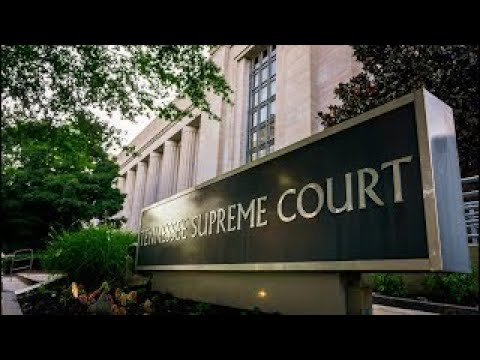
Tennessee Supreme Court hears arguments on burden for juror-misconduct claims under Rule 606(b)
Summary
The Tennessee Supreme Court heard oral argument in Knoxville on whether the party challenging a jury verdict must prove juror misconduct affected the verdict by clear and convincing evidence or by a preponderance, and how courts should apply the Adams factors and Rule 606(b).
The Tennessee Supreme Court heard oral argument in Knoxville on whether the party challenging a jury verdict must prove juror misconduct affected the verdict by clear and convincing evidence or by a preponderance, and how courts should apply the Adams factors and Rule 606(b).
The question arose in an appeal from a second jury trial over patient treatment decisions in which a juror reported seeing a medication warning label during deliberations. Defense counsel Grant Lewellen told the court that “the proper burden is clear and convincing evidence,” and urged the court to adopt an objective framework using factors from Adams and Patton to assess whether extraneous information was prejudicial and impactful. Plaintiff counsel Rachel Hurt said that, under the facts here, “the validity of the verdict is unquestioned” if the court applies a preponderance standard and that the juror-disclosed material was repeated during trial by multiple experts.
Why it matters: The court’s choice of standard and framework governs when trial courts should order new trials for juror misconduct statewide. Lawyers and judges said a higher burden narrows new-trial relief and protects jury finality; challengers said the Adams approach with a rebuttable presumption better protects a litigant’s right to a fair trial where extraneous prejudicial information reaches the jury.
Arguments and record details
Grant Lewellen, who said he represents Dr. Roos, framed the question as both legal and policy-driven and argued the higher clear-and-convincing standard best balances finality and fairness. Lewellen noted the length and scope of the trial, saying the case involved “an 11, 12 day trial in this matter. We had 28 odd witnesses testify, over 10 expert witnesses,” and argued that when admissible evidence shows the content and dissemination of extraneous material, judges can and should weigh objective factors rather than rely on speculation.
Plaintiff counsel Rachel Hurt and Joe Bednarz (who said he and his son represented the plaintiff, Miss Collier) contended the court should follow Adams and related precedent that requires an initial showing that the jury was exposed to extraneous prejudicial information, which then gives rise to a rebuttable presumption that the information could have influenced the verdict. Bednarz told the court, “We we carry that burden clearly. It is so obvious that information was not presented at trial,” asserting the juror’s affidavit that he saw the EpiPen warning was not cumulative and likely affected at least one undecided juror.
Central facts from the record include the juror affidavit reporting that an EpiPen label stated a caution during pregnancy — language summarized in argument as “caution should be used during pregnancy.” Counsel disagreed about whether that wording was cumulative of expert testimony admitted at trial: defense counsel said the warnings were testified to by experts “admitted multiple times at trial”; plaintiff counsel said the manufacturer’s label conveyed a distinct message that jurors could treat as an independent source of authority.
Disagreement over legal framework and appellate review
The court pressed both sides on whether Adams (a Tennessee Supreme Court decision cited repeatedly), Patton v. Rose (an intermediate appellate opinion), and other authorities require different burdens or merely an analytical framework. Justices asked whether civil cases should adopt the same standard historically used in criminal cases and whether the Adams rebuttable-presumption approach already resolves the inquiry.
Counsel debated the standard of appellate review after a trial judge rules on juror misconduct. Several speakers characterized the trial judge’s role as fact‑weighing (the judge as “thirteenth juror”) and said that, under current Tennessee practice, a trial court’s resolution is reviewed for abuse of discretion, though some legal questions within the analysis (for example, the proper legal standard) would be reviewed de novo. The parties disputed whether, if the court adopts or clarifies a new standard, this case should be remanded for the trial judge to reapply that standard or whether the appellate courts may resolve the issue without remand.
What the lawyers asked the court to do
Defense counsel urged adoption of a high, clear‑and‑convincing standard or at least clarification of an objective factor test; Lewellen argued that folding Adams-style factors into the initial threshold helps eliminate conjecture. Plaintiff counsel urged adherence to Adams’ threshold plus a rebuttable presumption of prejudice once extraneous and prejudicial material is shown, and argued that under existing law the court of appeals was correct to order a new trial in this record.
No decision from the court was announced at the hearing. The justices repeatedly pressed counsel on whether the correct resolution requires remanding to the trial court and on how to reconcile trial-judge factfinding with appellate review.
Context and next steps
The underlying dispute began with a jury verdict in a medical‑malpractice‑style case and a later juror affidavit that referenced a medication warning; the trial judge initially granted a new trial, reconsidered, and the court of appeals reversed that reconsideration. The Supreme Court’s forthcoming opinion could clarify whether Tennessee requires clear and convincing proof that juror misconduct affected a verdict, whether Adams’ rebuttable‑presumption structure governs civil juror‑misconduct claims, and how appellate review should proceed when a trial judge has made factbound findings on juror impact.
The court took the arguments under advisement and did not issue a ruling at the hearing.