Get Full Government Meeting Transcripts, Videos, & Alerts Forever!
Get email alerts on the Capital Improvement Plan topic
No spam. Unsubscribe anytime.
Petoskey reviews $51.3 million draft six‑year capital improvement plan; 2026 budget shows $1.8M general‑fund gap
Summary
City staff presented a draft 2026–2031 capital improvement plan (CIP) totaling $51.3 million and asked the City Council and Planning Commission for prioritization guidance as the city refines the 2026 capital budget, with immediate attention on Winter Sports Park, street reconstruction and electric system resilience.
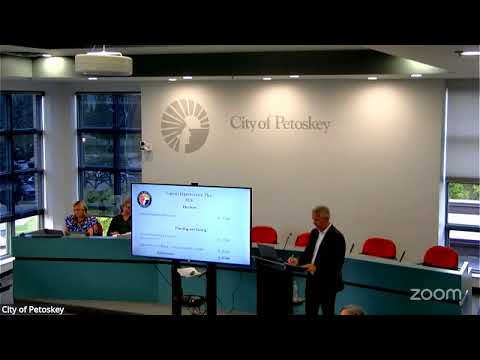
Petoskey City Council and the Petoskey Planning Commission met in a joint session Aug. 12 to review a draft six‑year capital improvement plan covering 2026–2031 that staff said totals about $51.3 million and is intended as a planning tool rather than a binding appropriation.
City Manager Orr said staff is seeking direction primarily for the first two years of the plan because those years have the most reliable cost estimates and feed the operating budget process. The draft shows a proposed 2026 capital budget of roughly $10.4 million and a general‑fund capital ask that currently totals $1.8 million — about $1.0 million more than staff estimates the general fund can sustain without drawing reserves.
Why it matters: the CIP organizes multi‑year projects across utilities, streets, parks and public facilities and will guide what projects appear in the 2026 operating budget. Several large, high‑cost items in the draft — including the Winter Sports Park, major street reconstructions and electric‑system resilience work — compete with smaller but time‑sensitive repairs such as elevator upgrades and marina electrical work.
Key numbers and near‑term funding assumptions - Six‑year CIP total: $51,300,000 (draft). - Proposed 2026 capital budget: $10,400,000 (draft). - Draft 2026 general‑fund capital total: $1,800,000 (staff estimate; subject to change). - Staff anticipates using about $500,000 of general‑fund reserves in 2026 under current proposals; planned available general‑fund capital nearer $1,000,000 after accounting for other items staff identified. - Anticipated grant revenue shown in the draft for 2026: about $1,300,000 (not all awarded/confirmed).
Major project categories discussed - Parks and special facilities: Winter Sports Park remains a top priority but staff said bids are imminent and value‑engineering will be required once bids return; the draft includes $900,000 tied to the park in 2026 and shows a conceptual $1.3 million interfund loan as one possible funding mechanism pending council decision. Riverbend playground and skate‑park equipment replacement also appear in the plan; staff noted a recreation passport grant may cover part of replacement but is not guaranteed.
- Streets and drainage: staff proposed a lighter reconstruct year in 2026 and a larger reconstruct program in 2027. A Howard Street segment (East Mitchell to Michigan) is in the 2026 list, with an estimated $605,000 for reconstruction of the Mitchell/Howard intersection and sidewalk work. The Bay/Rose Street area is included as a larger 2027 reconstruct (reduced in scope from prior estimates) because construction and underground utility costs have risen. Staff also noted that pavement condition ratings and underlying utility needs — not surface appearance alone — drive prioritization.
- Water and lead/copper work: the draft includes a lead/copper materials inventory and replacement program; staff said replacing a private‑side service line can cost roughly $5,000–$10,000 per home depending on conditions and that reimbursement sources for replacement work remain limited. Staff will inventory service materials and prioritize replacements as projects move forward.
- Electric utility projects and resilience: staff proposed advanced metering infrastructure (AMI) implementation in a phased program and the replacement of an aging 46 kV metering station. After the March ice storm staff moved some undergrounding and distribution projects earlier in the schedule; the draft lists targeted circuit undergrounding and distribution‑pole testing to reduce outage risk. Staff said previous undergrounding work materially reduced outage impacts during the storm.
- Marina and Pier B: decking and electrical work on Pier B was flagged as necessary after a past decking project triggered the need to meet the 2017 NEC electrical code; staff said the current Pier B electrical arrangement leaves too few breakers serving many slips and increases the risk that a single fault will take dozens of boats offline. Proposed work includes electrical upgrades and board replacement; marina funds and state waterways grants are possible funding sources.
- Buildings and facilities: items identified include city hall elevator upgrades to comply with an updated Michigan elevator code, city hall security card access phase 2, and a fire‑station kitchen renovation at the East Lake Street station. Staff described the public works and parks storage buildings and salt barns as major future capital projects lacking funding, with a planning‑level estimate in the tens of millions for a consolidated public‑works facility.
- Motor pool and equipment: the draft proposes a sewer‑jet/hydroexcavation truck and other vehicle/equipment replacements. Staff also proposed purchasing a trailer‑deployed modular vehicle barrier system to secure street closures for events; staff said the manufacturer has grant‑writing assistance available and that some grant matches were modeled at 50/50 in the draft.
- Voting equipment: the clerk noted the City’s existing voting equipment is near the end of its service life; the state contract with existing vendors expires Feb. 28, 2027, and the bureau of elections is expected to issue a new contract. Staff estimated roughly $15,000 per precinct/ward device and said state or federal grant funds may be available but are not guaranteed.
Process, schedule and next steps Staff has posted the draft CIP on the city website and set a public comment deadline of Sept. 10 ahead of an anticipated City Council review on Sept. 15. The planning commission was asked to discuss priorities at its next meeting and may forward recommendations to council. City staff emphasized that the CIP itself does not appropriate funds; final appropriations for year‑one projects will come through the 2026 operating and capital budget processes later this year.
Stakeholder concerns raised in the session included accelerating certain items (for example, event‑safety barriers and select infrastructure repairs), clarifying which projects could secure grant funding, and ensuring that master‑plan priorities align with CIP project justifications. Staff asked commissioners and councilmembers to flag any items they want reconsidered or moved up before council takes formal action.