Get Full Government Meeting Transcripts, Videos, & Alerts Forever!
Get email alerts on the Emergency Response Training topic
No spam. Unsubscribe anytime.
Committee considers 'Stop the Bleed' school training and Good Samaritan expansion bills
Summary
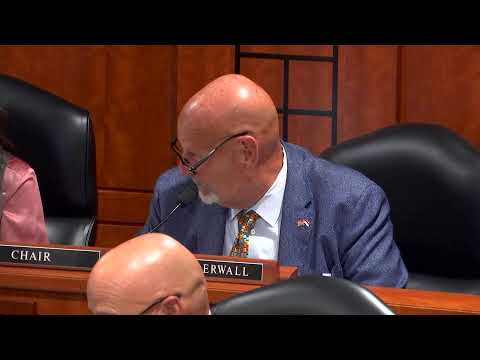
The House Health Policy Committee heard testimony on a package of bills—HB 4107, HB 4108 and HB 4847—that would encourage Stop the Bleed training in schools and expand Good Samaritan protections for bystanders who control life-threatening bleeding.
The House Health Policy Committee heard testimony on a package of bills—House Bill 4107, HB 4108 and HB 4847—that would encourage Stop the Bleed bleeding-control training in schools and amend Michigan's Good Samaritan law to protect bystanders who act to control life-threatening hemorrhage.
Representative Preston Frisbie and Representative Harris introduced the package; the sponsor told the committee the measures build on existing school requirements for CPR and AED instruction and aim to give students and community members simple, hands-on skills for emergencies. "This bill will strongly encourage schools to do the hands on portion of this training as part of their health and safety curriculum, just as they've done with CPR and AED training," the representative said.
Supporters included current and former EMS providers, a nurse and local educators. Laura Walker, an EMS nurse, told the committee Stop the Bleed teaches three basic measures—holding direct pressure, packing a wound and applying a tourniquet—that can be learned in under an hour. "When it's a matter of life and death, there is no time for hesitation," Walker said, noting that hesitation can follow when trainees learn bleeding control but are unsure whether they would be legally protected.
Testimony described real-world cases in which bystander bleeding control made the difference. Dana Lockwood, a high school teacher, described a rural incident in which a neighbor improvised a tourniquet while waiting for an ambulance and said she believed the response prevented a fatality. "I never in my wildest dreams thought that I would have used a tourniquet," Lockwood said. "I'm sure the neighbor across the way, had he not done that? When we got to the hospital, I was begging them to take us to a hospital...they said he wasn't going to make it."
Representative proponents also said the package includes HB 4847 to explicitly add bleeding-control acts into Good Samaritan protections so bystanders who act in good faith would not face routine civil suits. Witnesses noted Michigan already protects certain acts, such as CPR and AED use, and that expanding protection for bleeding control would reduce hesitancy to intervene.
Those testifying said the bills were not intended to force schools to buy costly equipment; rather, the intent is to encourage hands-on instruction and local partnerships with first responders or certified instructors. Speakers said 14 states have some form of Stop the Bleed training in schools or for staff and that the training is short and inexpensive to provide.
The committee also received written support noted on the record from the Michigan Health and Hospital Association and the Michigan Trauma Coalition. No formal vote was recorded during the hearing.
Committee members asked about the scope of legal protections, precedent for including specific interventions in statute, and classroom implementation. Supporters recommended clear statutory language to protect good-faith actions while preserving recourse for gross negligence, and they urged coordination with schools and local emergency providers for curriculum delivery.