Get Full Government Meeting Transcripts, Videos, & Alerts Forever!
Get email alerts on the Public Health Newborn Screening topic
No spam. Unsubscribe anytime.
Committee hears bill to add congenital CMV to Michigan newborn screening
Summary
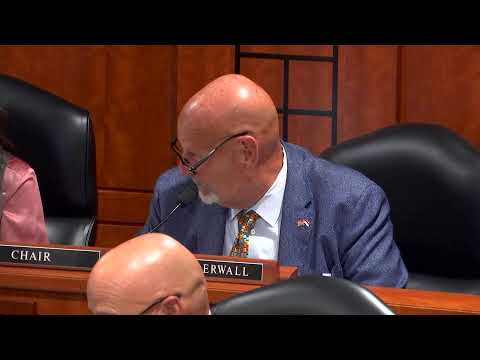
The House Health Policy Committee heard testimony on House Bill 4402 at a committee session where medical experts, a parent and advocates urged lawmakers to add congenital cytomegalovirus (CMV) to Michigan's newborn screening panel.
The House Health Policy Committee heard testimony on House Bill 4402 at a committee session where medical experts, a parent and advocates urged lawmakers to add congenital cytomegalovirus (CMV) to Michigan's newborn screening panel.
Supporters told the committee CMV infects roughly one in 150 newborns and that about one-fifth of those infants develop lifelong health problems, including hearing loss, vision loss, intellectual disability, motor impairment and seizures. They said most babies with congenital CMV appear healthy at birth and that routine newborn hearing screens can miss infants who later develop hearing loss.
The bill would add CMV to the list of conditions screened for at birth and require the Michigan Department of Health and Human Services to produce informational materials for clinicians and parents. Proponents said the test can be done on the same specimen already used for many newborn screens and can identify infants who could benefit from monitoring or antiviral treatment when begun early.
"If it's caught, however, it can be treated with most effective results happening if the baby is treated before they are a month old," said a sponsoring representative in opening remarks. Dr. Chelsea Conrad, testifying for the Michigan Audiology Coalition, told the committee that universal screening would identify infants who pass their initial hearing screen but remain at risk later in childhood. "Without universal screening, 99 percent of infants with CMV will go undiagnosed," Conrad said.
Parent Kim Williams described her son Joe's experience: he "appeared healthy at birth other than failing his newborn hearing screening," she said, and her hospital's protocol for testing based on failed hearing screens led to a CMV diagnosis and early antiviral treatment. "That early diagnosis is what allowed us to begin treatment of antivirals within the optimal window of 1 month from birth and connect with specialized doctors and early intervention services promptly," Williams said.
Dr. Megan Pesch, a developmental and behavioral pediatrician at the University of Michigan and executive director of the National CMV Foundation, said Michigan already sees an estimated 500 babies born with congenital CMV each year but likely diagnoses only a small fraction of cases. "Every month that we wait, dozens of babies in Michigan are losing the chance to be diagnosed," Pesch said, urging universal screening and follow-up care for infants who test positive.
Committee members asked about the availability and risks of antiviral treatment and about how other states handle screening. Pesch and Conrad said antivirals are recommended for infants with symptoms or with hearing loss and can be given as a 6-week to 6-month course depending on severity; evidence for treating asymptomatic but infected infants is still emerging. Conrad noted Minnesota adopted universal CMV screening in 2021 and that Connecticut began universal screening more recently; other states use targeted screening for infants who fail newborn hearing tests.
Witnesses said CMV testing uses PCR on saliva, urine or blood and can be performed using the same specimen collected for other newborn screens. They also told the committee that Michigan retains newborn dried blood spots, which can in some cases be retested to confirm congenital infection in older children.
No formal vote was recorded on HB 4402 during the hearing. Committee members and multiple witnesses urged further consideration and coordination with the state newborn screening program to address operational issues and follow-up care.
The committee took testimony and recessed; no final action on the bill was announced at the hearing.