Get Full Government Meeting Transcripts, Videos, & Alerts Forever!
Get email alerts on the Artificial Intelligence topic
No spam. Unsubscribe anytime.
West Chester Area SD outlines AI policy, pilots and privacy checks after Perplexity issues
Summary
District staff reviewed AI policy implementation, staff and student training modules, pilots of multiple platforms, privacy and terms‑of‑service checks, and next steps after the district stopped a planned Perplexity pilot due to changed features and Google login privacy concerns.
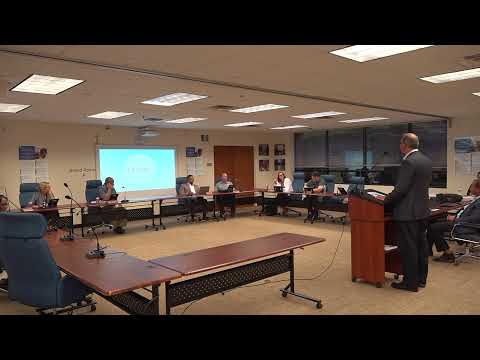
District instructional-technology staff reported to the Teaching, Learning and Equity committee on the district’s multi-year work to evaluate and pilot artificial intelligence tools for classroom and administrative use.
The presentation traced the district’s steps: initial review of terms of service and privacy; a focus on instructional benefit; pilot testing; and phased wider adoption only after platforms meet requirements. Presenters said the district required administrative and teacher training modules (six mandatory modules for secondary teachers and four for students in grades 8–12) and that the board approved a district AI policy in December 2024.
Technology staff said Perplexity had been selected for a student pilot because it returned citations and a prompt‑editing workflow, but the vendor removed key features and added Google‑account login behavior the district judged problematic for student privacy. The district therefore “moved away from Perplexity,” turned off the Google‑login pathway for district accounts, and paused rollout. Staff said the district used PowerSchool to capture parental permissions where pilots require consent.
Presenters walked trustees through a “traffic‑light” classroom permission model that teachers would use to show whether AI is allowed for a given assignment, how it may be used, and when student work must be unaided. Staff urged that teachers be explicit with students about expectations for AI and said that refusal by a parent to permit AI use on district devices is operationally difficult if a student will otherwise have district-provided hardware and commonly used productivity suites (Google, Microsoft) that include AI features.
District staff listed current pilots and approved tools in use or under review: DiffIt (text-leveling and summaries), Canva (education features), Microsoft Copilot (sandboxed via district Microsoft licensing), Brisk, MagicSchool, SchoolAI, NotebookLM and Copilot Basic (no additional district cost under current licensing). The district is also piloting Snorkel as an AI‑driven prompt/voice tool in math classrooms; staff noted accessibility considerations for students with speech or language needs. Presenters said they will collect pilot feedback and run teacher and student surveys before broad adoption.
Trustees asked about parent communication, the possibility of requiring teachers to use AI, measures of benefit and whether the district would pursue metrics. Staff said pilots would include surveys and feedback and that a larger evidence base could take years to accumulate; they also reiterated that the district cannot fully block AI technology externally because AI capabilities are increasingly embedded in commonly used productivity platforms.
Board members praised the district’s emphasis on data privacy and the district’s deliberate approach to policy, vendor terms and pilot testing. District staff said they are working with a 20‑district innovation group to develop tool-selection toolkits and intend to continue refining training modules and parental messaging.