Get Full Government Meeting Transcripts, Videos, & Alerts Forever!
Get email alerts on the Student Achievement topic
No spam. Unsubscribe anytime.
West Chester Area SD presents PSSA/Keystone data and plans for curriculum alignment; elementary science resource to change
Summary
District staff presented PSSA and Keystone results, outlined steps to emphasize instructional growth and curriculum alignment, described new common summative assessments and benchmarking, and said the elementary science core resource will change to Mystery Science.
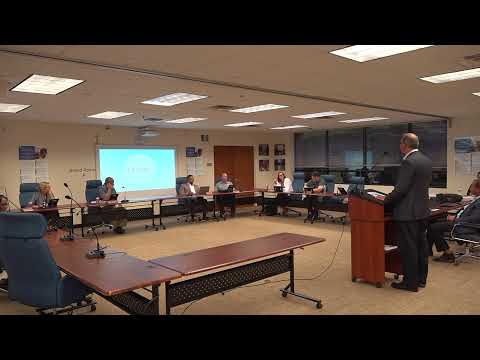
President Fleming convened the Teaching, Learning and Equity committee to hear an achievement report from Dr. Brown and members of his team, who presented preliminary PSSA and Keystone results and district plans to improve student outcomes.
Dr. Brown said the district’s “focus this year really is on instructional growth and curriculum alignment,” and described four core areas of work: consistent middle-school benchmarking, more cohesive elementary curriculum, improved data collection and training, and horizontal and vertical curriculum alignment. He said the district has developed common summative assessments that “students in our core content areas will take at the end of each unit of learning” and that those will allow teachers to “measure the learning of all students and better inform their practices.”
The presenters emphasized coaching and professional learning as levers for change. Dr. Brown said the district has added instructional coaches to each middle school and added reading and math specialists; those staff will be trained to use data from IXL, Acadience, and the new common summatives to target instruction. Cara Bailey described targeted grade-level data meetings and a “consistent data analysis protocol” in which teacher teams, curriculum supervisors and instructional coaches set plans to address identified gaps.
Presenters identified several concerning results in the most recent data they shared. The report highlighted that about 30% of middle-school students demonstrated proficiency in math at the eighth-grade PSSA level and that the district’s eighth-grade algebra Keystone proficiency was about 49% (down from roughly 64% the prior year). Dr. Brown described those figures as “a lot to take in” and said the district expects to see improvement once the common summative assessments and consistent middle-school benchmarking are in place.
Staff described approaches to address those gaps, including daily quick warm-ups to build procedural fluency, blending paper-pencil practice with digital tools, weekly work with instructional coaches, and use of an AI-supported platform called Snorkel to prompt students to articulate reasoning for answers. District staff said they have considered accessibility and accommodations for students with speech or language needs when piloting voice-response technologies.
The team also discussed literacy work and an upcoming ELA resource adoption for K–5 and 6–12, centered on integrating reading and writing across content areas, building background knowledge, and increasing access to digital annotation tools. Presenters said elementary and middle-school ELA and math data showed both areas of consistency and notable declines in some grades and that disaggregated subgroup data (by race/ethnicity, students with IEPs, etc.) is expected in the district’s October presentation.
On curriculum resources, Dr. Brown returned to present the district’s Curriculum Resource List and said it is an extensive inventory by content area. He told the committee that “Mystery Science at the elementary level will be the biggest change” to the elementary science core resource and that the change is “grounded in” the science standards the district referenced. Other textual resources were described as updated or translated versions of existing textbooks; staff said most other resources remain consistent with previous years.
Board members asked how quickly results could change under the new approach. Dr. Brown said he “fully expect[s] next year's number to look better,” arguing that the common summatives and consistent benchmarking, once implemented, should produce earlier corrective instruction and yield measurable improvements by the end of the next school year. Staff identified IXL and Acadience as interim measures to track progress during the year and said those data points, along with CommonLit for middle-school ELA, will give the district “a good grasp” by midyear (around February).
The committee discussed student engagement and “buy‑in” as a non-instructional factor affecting performance; trustees urged outreach to parents and caregivers to attend the October meeting when the district plans to present disaggregated results. Several trustees also asked about interventions for students after testing and were told that buildings have continuous improvement plans and that PLCs (professional learning communities) meet weekly to adjust instruction based on formative and benchmark data.
The presentation closed with staff reiterating the district’s emphasis on instructional coaching, aligned curriculum (K–12), and common assessments as the route to improved outcomes; the committee scheduled a fuller disaggregated-data review for October.