Get Full Government Meeting Transcripts, Videos, & Alerts Forever!
Get email alerts on the Community Grants topic
No spam. Unsubscribe anytime.
Cannabis committee approves nonprofit grants, sets tighter rules and schedule for small-business grants
Summary
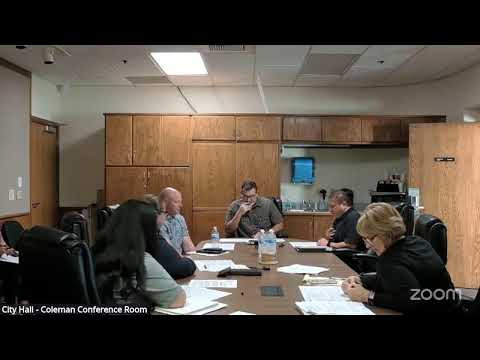
Porterville's Cannabis Committee on Aug. 25 approved a set of nonprofit community-benefit grants that had complete applications and directed staff to tighten application windows, reporting timelines and enforcement for future rounds.
Porterville's Cannabis Committee on Aug. 25 approved a set of nonprofit community-benefit grants that had completed applications and gave staff direction to tighten application windows, award timing and post-award reporting for future rounds.
The committee voted to recommend funding the nonprofit applications that had complete files as of the committee review; no dollar amounts were finalized in the committee record during the motion, and staff said the award list will be forwarded to city council for final action. "To approve the nonprofit grants, the ones with the date complete," a committee member said; another member seconded the motion and the chair called the vote. "Aye. All in favor? Aye," the transcript records.
Why it matters: the grants are drawn from Porterville's cannabis-related community-benefit fund and are intended to support nonprofits and small businesses in the city. Committee members asked staff to make the program clearer and enforceable so funds are used as intended.
What the committee decided and directed
- Nonprofit grants: The committee approved awarding the nonprofit applicants that had completed applications by the application deadline (April 28 through June 20, per staff). The committee instructed staff to forward the recommended awards to city council for final approval.
- Small-business grants: The committee confirmed a first-come, first-served approach for small-business applications and recommended awarding the first completed applications in order of completion up to the available balance from last fiscal year (staff noted $32,953 was the December 2024 balance referenced in the records). Committee members asked staff to get updated finance figures and to return in January or February to award additional completed applications if funds are available.
- Reporting and compliance: Staff proposed keeping a requirement that recipients submit receipts within 90 days. Committee members asked staff to add clearer "teeth" for noncompliance: if a recipient fails to provide documentation within the designated time (or an approved extension), the committee favored converting the award to a repayable loan or otherwise requiring repayment. "Once completed, but it has to be completed within a certain amount of time," one member said. Committee members suggested a case-by-case extension process for supply delays but supported stricter enforcement.
- Limits and frequency: The committee discussed capping award frequency so a single applicant does not receive the maximum amount every year. Members generally supported a policy that a full award (for example, the full $5,000 cap) would limit eligibility for a multi-year period (committee discussion suggested three years as a starting point), while smaller awards could be eligible annually.
Vote and procedural notes
- Motion to approve nonprofit grants with completed applications: motion moved and seconded; committee recorded the motion as carried (transcript records unanimous "Aye"; specific vote tallies were not given in the transcript). Staff will forward the recommended awards to the council for formal adoption.
- Earlier procedural vote: the committee approved the meeting minutes from Feb. 28, 2025. The transcript records a vote that passed "2 0." The committee also agreed to reconvene on a tentative 30-day schedule to follow up on several items.
What staff will return with
Staff will prepare: - Updated grant terms and conditions specifying application windows (staff suggested moving both small-business and nonprofit rounds to fixed windows rather than an open year-round application), a clear post-award reporting deadline and defined penalties for noncompliance; - Financial updates showing current cannabis fund balances so the committee can determine how many small-business applications can be funded at the next meeting; and - Clarified eligibility and award-frequency rules (for example, one full award every three years or smaller awards eligible annually).
Source and attribution: committee discussion and votes recorded in the Aug. 25 committee meeting transcript. Direct quotes and attributions are from Porterville staff and committee members listed in the speaker list and provenance.