Get Full Government Meeting Transcripts, Videos, & Alerts Forever!
Get email alerts on the Police Chief Confirmation topic
No spam. Unsubscribe anytime.
Council instructs solicitor to seek court ruling on whether police chief appointment requires council confirmation
Summary
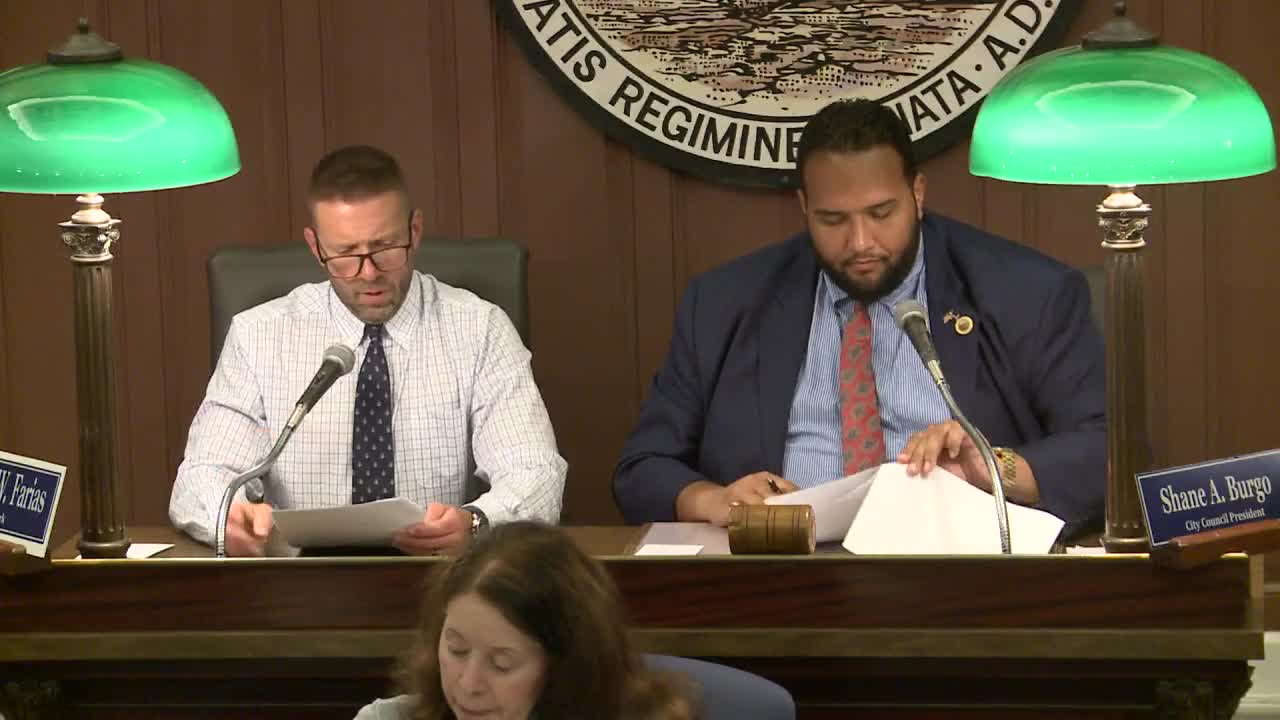
After a lengthy debate about the city charter and appointment powers, the New Bedford City Council voted to instruct the city solicitor to file a complaint seeking a court ruling on whether the mayor's appointment of the police chief requires council confirmation.
The New Bedford City Council voted to instruct the city solicitor to file a complaint in the appropriate court seeking a declaratory judgment on whether the mayor’s appointment of the police chief is subject to City Council confirmation under the city charter.
Attorney David Geratowsky, appearing at the council’s request, told members the charter requires that “all heads of departments” be appointed by the mayor “subject to confirmation by the city council,” and that the city code also names the police chief as head of the police department (citing New Bedford City Code §19‑91). Geratowsky said he found no specific charter or statute that exempts the police chief from council confirmation and noted a section of state law permitting a mayor to enter an employment contract with a police chief (chapter 41, §1080/§108o) does not change appointment powers: “Nothing contained in this section shall affect the appointment powers of any city or town over its police chief,” he said, reading from the statute.
Councilors debated history and precedent. Some members noted chiefs previously were confirmed by the council, and one speaker said the 1996 legislative change that removed the police chief from civil service altered appointment procedures and warranted legal review. Councilor Ryan Perera moved and Councilor Maria Giesta seconded a motion directing the city solicitor to file a complaint in court asking for a ruling on the dispute; the motion passed following a roll‑call/voice vote.
Why it matters: Councilors framed the vote as protecting the council’s charter responsibilities and preventing a precedent that could allow future mayors to appoint department heads without the council’s advice and consent. Supporters of the motion said the court could provide a definitive legal ruling; others said the council could instead vote to request the mayor to submit the appointment for confirmation as a less adversarial first step.
What the solicitor said: Geratowsky summarized his analysis to the council: the charter provides the primary rule for appointments, the city code describes the police chief as head of the department, and the solicitor said he was unaware of any specific exemption that removes the chief from the charter’s confirmation requirement. He recommended the council could seek a declaratory judgment to resolve the question.
Action taken: The council voted to instruct the solicitor to file a complaint seeking a ruling on the council’s confirmation authority over the police chief appointment. The motion was approved (the council recorded “the ayes have it” after a roll‑call sequence); no detailed vote tally was entered in the transcript for that specific motion.
Next steps: The solicitor indicated he would prepare the complaint and related filings if so instructed by the council. Councilors discussed alternatives including a unanimous council request to the mayor to submit the appointment for confirmation, but some members said prior informal requests had not produced the desired result.
Ending: Councilors said the action was aimed at resolving a legal question about separation of duties under the charter rather than an attack on any individual appointee. Several members stressed they supported the person named to the post and framed the action as a procedural, not personal, matter.