Get Full Government Meeting Transcripts, Videos, & Alerts Forever!
Get email alerts on the Digital Permitting topic
No spam. Unsubscribe anytime.
City planners demo ‘Dallas Now’ portal to commission; staff shows new search, intake and CPR tracking features
Summary
City planning staff demonstrated the new Dallas Now portal on Aug. 21, showing an online application wizard, integrated document uploads, processing-status tracking and a related-record (CPR) workflow that ties pre-application work to formal zoning records.
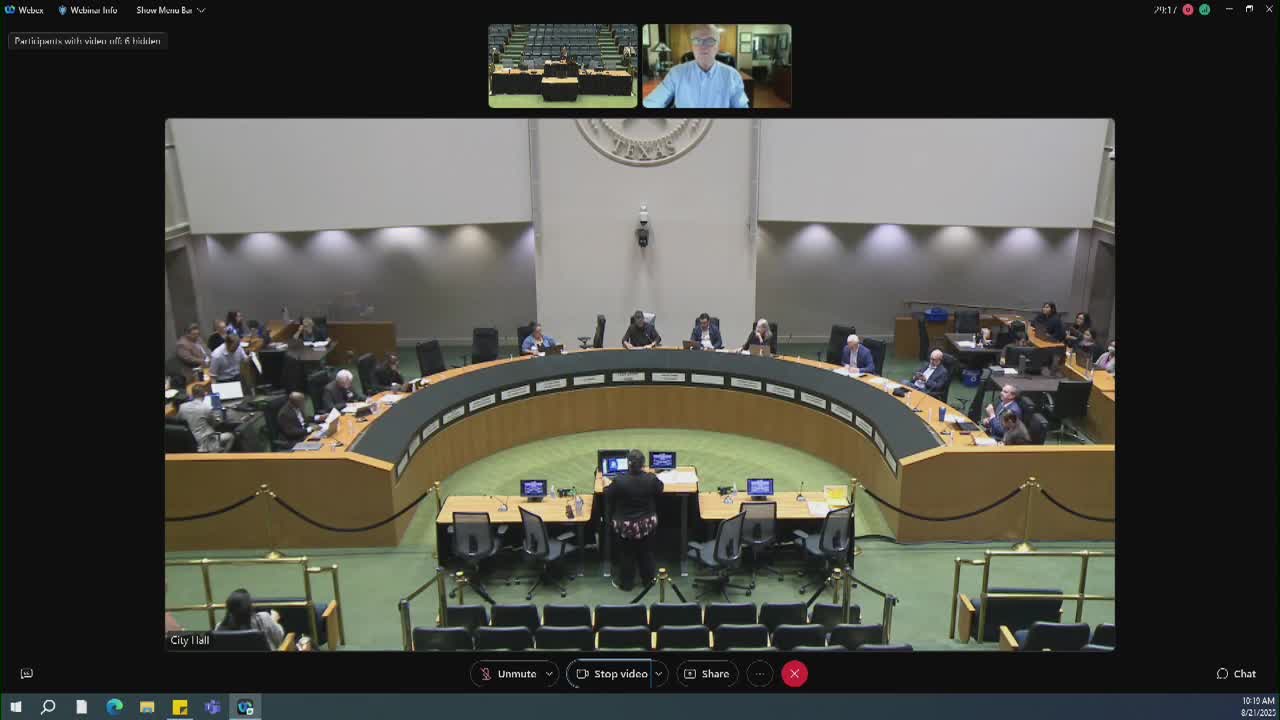
City planning staff demonstrated the city’s new Dallas Now public portal at the Aug. 21 briefing of the Dallas City Planning Commission, showing how the online system replaces paper applications and centralizes application intake, document uploads and staff communications.
Jennifer Munoz, chief planner for special zoning projects, said the portal is intended to guide applicants through the application process and to reduce the need for paper submittals. “When you enter the system, you’re looking at it like this. You’ll enter the application name, … then a description of your request,” Munoz said during the briefing demo, walking commissioners through the system’s application wizard and required-document prompts. She said some basic code-required documents — deed, tax certificates and lien statements — remain required but are now collected digitally.
Munoz gave a live demonstration of record pages that show the case number, a map viewer and a processing status log that lists each internal review step, comments and scheduled hearings. She also explained the system’s related-record workflow: a CPR (current planning request) is used as an internal referral and legal-description review and can be tied to a later formal zoning application so staff and applicants retain continuity of information.
Commissioners and staff explored several functional gaps. Commissioner Carpenter asked about distance from proposed items on a development plan and earlier in the briefing commissioners noted the portal currently lacks a search by city council district. Munoz confirmed: “There is not,” she said when asked whether the portal supports a council-district search, and she said staff plans to add council-district and other targeted notification features in future updates.
Other features shown included the public-facing intake log replacement, automatic notifications to applicants when their application status changes, an attachments section that hosts all uploaded documents for public review and a processing-status timeline that logs which planner or staff member performed each step. Munoz said applicants pay a $15 technology fee at submittal to open the intake record; staff then performs an intake check and notifies applicants when fees are due and the case is ready for formal acceptance and assignment to a planner.
Commissioners asked about related-record uses and whether CPR data would prepopulate later zoning records; staff said CPR records can be used as keys to start a zoning application and to carry legal-description work into the formal case. Munoz and staff acknowledged several near-term improvements, including adding council-district visibility and more convenient early-notice options by district.
Munoz invited commissioners to use test devices during the live demo and said the portal team will continue to refine features based on user feedback. The demonstration concluded with staff offering to assist commissioners and members of the public who need help navigating the portal.