Get Full Government Meeting Transcripts, Videos, & Alerts Forever!
Get email alerts on the Governance topic
No spam. Unsubscribe anytime.
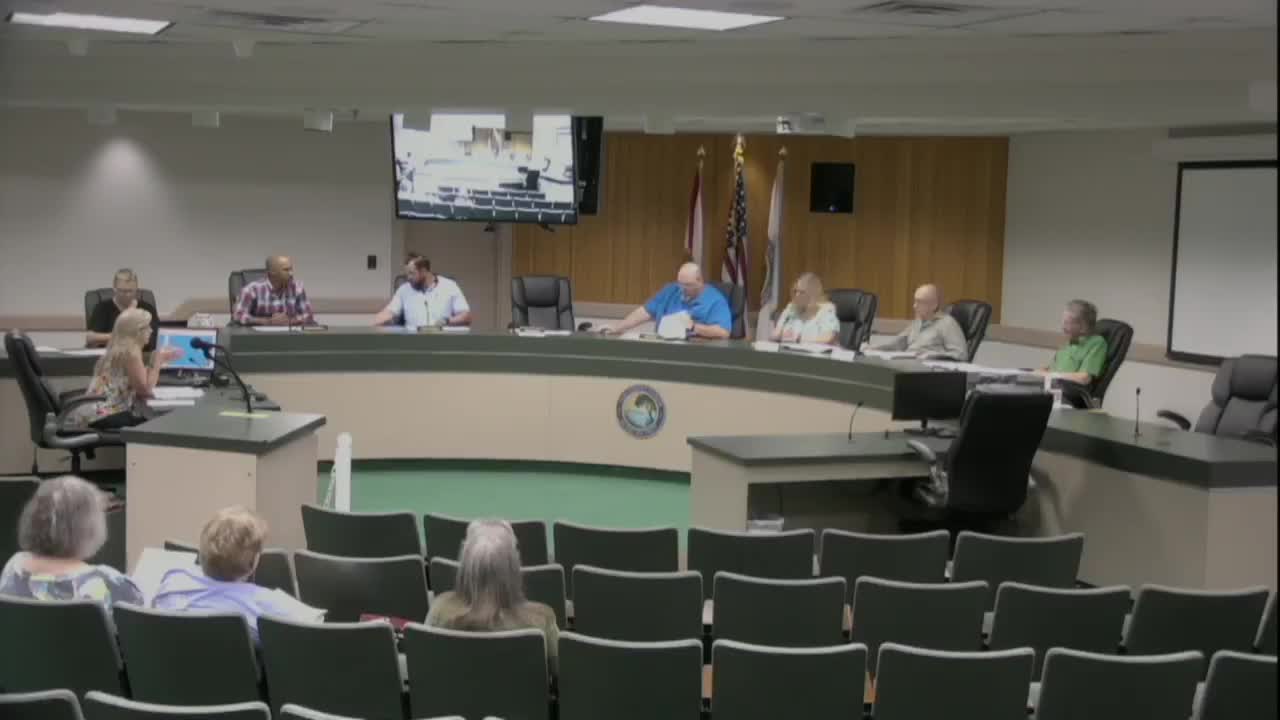
Clay County Historic Preservation Board elects officers, reviews Florida Sunshine Law
Summary
The Clay County Historic Preservation Board approved minutes, voted to install Billy Gould as chair and Sean Atwell as vice chair, and received an annual Sunshine Law briefing outlining restrictions on member communications and penalties for violations.
The Clay County Historic Preservation Board approved two sets of minutes, elected officers for the 2025–26 year and received an annual review of Florida’s Sunshine Law during its meeting.
Board members voted to approve minutes from May 1 and June 5, then elected Billy Gould as chair and Sean Atwell as vice chair after the board’s nominating committee presented those nominations. The board’s chair called for the motions and the votes were carried by voice vote.
The meeting’s Sunshine Law review was presented by Beth, who told the board the law “comes under Florida statute 286.011.” She summarized core requirements: “All meetings of public boards or committees must be made open to the public … minutes of the meetings must be taken and made available to the public,” and warned that the law applies to formal meetings, workshops, subcommittees and many informal gatherings if members discuss committee business outside a public meeting.
Beth told members that written or electronic communications among members that concern board business — including emails, social networking and text communications — can constitute a meeting under the statute. She added that “Any member of a board or committee who knowingly violates the Sunshine Law is guilty of a misdemeanor of the second degree and could be subject to both criminal and civil penalties.”
During questions, board members asked about whether pairs of members working on cemetery research could meet outside the public meeting. Beth said she would consult the county attorney and added that a subcommittee may be established if two members are conducting joint work that will later come before the board; such subcommittee meetings must be noticed and open to the public.
The board completed the agenda’s procedural items and then moved on to marker and program updates.