Get Full Government Meeting Transcripts, Videos, & Alerts Forever!
Get email alerts on the Clerk Register Of Deeds Report topic
No spam. Unsubscribe anytime.
Kalamazoo County clerk presents 2024 annual report highlighting digitized land records, county ID growth and veterans outreach
Summary
Clerk and register of deeds Meredith Place told the Board of Commissioners the office digitized more than 1.5 million land-records, expanded the county ID program and launched two new assistance programs in 2024, and said staff promotions and ARPA funding helped sustain the work.
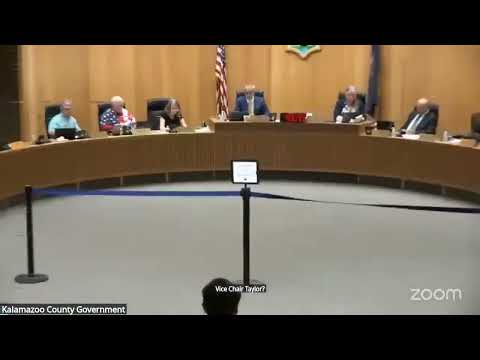
Meredith Place, Kalamazoo County clerk and register of deeds, told the Board of Commissioners on Aug. 6 that her office completed a major digitization project, expanded the county ID program and launched two new services in 2024.
Place said the office digitized Kalamazoo County land records dating to 1831 — “over 1,500,000 documents” — using ARPA funding, and staff are indexing those records to make them searchable. She said staff produced a 200‑page guidebook to help the public while the indexing work continues.
The report highlighted operational changes and new programs. Place told commissioners the office promoted two long‑serving employees and reclassified another position to supervisor, which she said “modernize[d] our management structure” and improves retention and training.
On vital records, Place said the clerk’s office issued more than 50,000 certified copies of birth, death and marriage records in 2024. She described two new programs: a “Bridal Records Scholarship” (funded by a board resolution and a Community Foundation grant) that provided free vital records to 145 residents in 2024, and a “veteran honor rewards” program that encouraged filing of DD‑214 military discharge forms; Place said the office processed over 80 DD‑214 filings in 2024 after the program began.
Place also reviewed elections and county ID work. She said the elections team administered four elections in 2024, launched coordinated early voting with 18 of 19 local jurisdictions and trained hundreds of election inspectors. Turnout in the November general election exceeded 67 percent, she said. On the county ID program she said the office issued more than 2,500 new county IDs in 2024 and hosted 46 mobile units; Place credited a $25,000 Community Foundation grant and increased outreach for growth in renewals.
Commissioners asked for additional numbers. Commissioner Gisler asked for a “total bottom line” operational cost for the county ID program; Place said she would provide figures offline and estimated operational costs have “hovered around $40,000” annually, noting an added half‑time position that became full time. Commissioner Ray asked whether the county ID program had drawn controversy from state or federal changes; Place said the program continues service delivery and that demand has risen, noting the program had issued more than 7,500 IDs since inception and nearly 700 in the most recent year.
Place said land‑records digitization and ongoing indexing were high priorities for 2025, along with continued outreach about the Bridal Records Scholarship, the veteran program and a property‑fraud alert. She closed by thanking staff including chief deputy John Kern and executive coordinator Sam Burns.
The board did not take a formal vote on the annual report; Place said she would provide follow‑up materials and detailed operational costs as requested.