Get Full Government Meeting Transcripts, Videos, & Alerts Forever!
Get email alerts on the Cedc Budget Capital topic
No spam. Unsubscribe anytime.
Colleyville EDC previews $1.69 million in parks capital, proposes $2.8 million operating budget
Summary
At an Aug. 5 Colleyville Economic Development Corporation work session, city finance staff outlined a proposed fiscal 2026 budget with $2.8 million in revenues, $2.7 million in expenses and $1.69 million in capital projects focused on parks, a splash pad and rec center improvements.
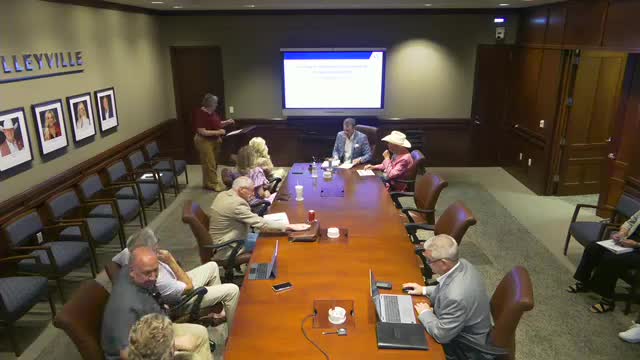
Colleyville Economic Development Corporation board members reviewed a proposed fiscal 2026 operating and capital budget at a work session on Aug. 5, with staff proposing $2,800,000 in revenues, $2,700,000 in operating expenses (a projected $75,000 surplus) and $1,690,000 in capital expenditures focused largely on parks and rec center projects.
Cassie Smith, the City of Colleyville director of finance, outlined the CEDC’s finances and capital priorities, noting the corporation is a Type B entity funded by “a $0.5 sales tax” and was established in September 1996. “So here’s what we’re looking at for our budget this year. We’re proposing 2,800,000.0 in revenues and 2,700,000.0 in expenses for a surplus of 75,000, and we’re also going to be proposing capital expenditures of 1,690,000.00,” Smith said during the meeting.
Why it matters: the CEDC funds about 18 full-time positions across the library, parks and recreation and the Colleyville Center and pays for both ongoing operations and capital improvements. Board members pressed staff on the long-term picture for parks maintenance, the use of hotel occupancy tax revenues for events and how capital projects will be funded without drawing down reserves.
Key budget details and capital projects
- Operating totals: Smith presented proposed fiscal 2026 revenues of $2.8 million and expenses of $2.7 million, yielding a projected $75,000 surplus.
- Capital plan for FY2026: $1,690,000, largely for parks-related projects. Smith identified major items included in or tied to that total: - A proposed splash pad budgeted at about $1,650,000 (as presented in the meeting). Smith said that cost would be funded from multiple sources, including the voluntary park fund, the Tomorrow fund for parks, parkland dedication and the CIP, so “that project ... doesn’t take any money from this fund balance.” - Renovation of the rec center voting-center building with an estimated $1 million component to provide restrooms and support for the splash pad and playground (the $1 million was described as “part of that” in the presentation). - Phase 2 of park signage replacement (roughly a half‑million dollars), following an earlier phase that Smith said had already been approved. - Additional security cameras in parks and routine park maintenance.
Budget drivers and pressures
Board members and staff discussed specific cost pressures and anomalies in multi-year projections: property maintenance increased about $50,000 in staff estimates; electricity rose roughly $37,000 and water about $25,000 in line-item changes noted by staff. Smith also attributed some year‑to‑year swings to formula or accounting classifications (for example, some items shown as operating versus capital).
Hotel occupancy tax and events
Smith told the board the city’s hotel occupancy tax (HOT) fell sharply during the COVID-19 period and has not returned to pre‑pandemic levels. “The hotel tax, probably right before COVID, it was probably almost 400,000 and right now it’s what about $2.40?” she said (the transcript contains that phrasing; Smith’s general point was that HOT revenues remain substantially below pre‑COVID levels). Smith added that state guidance on allowable HOT uses — commonly framed around “heads and beds” — constrains how those funds may be spent, and that reduced HOT receipts have shifted some event‑funding pressure onto the CEDC fund.
Funding mix and capital reliance
Smith and board members discussed how several external funds are being used to cover capital projects (voluntary park fund, Tomorrow fund for parks, parkland dedication and the city’s CIP). Board members were told the CEDC fund has been used effectively for playgrounds and parks projects for years but that, going forward, capital needs may increasingly rely on the CIP or other sources as available fund balances are used.
Other items discussed
- Hail damage: Smith said hail last year caused about $300,000 in damage to city vehicles; high deductibles limited the benefit from insurance. - Senior center/tree trail: Board members discussed a proposed tree‑trail/arboretum project behind the senior center and a multi‑year approach with irrigation and phased planting and amenities beginning after Oct. 1. - Usage: Smith reported high use of city facilities: the rec center had “over 7,000 people in June and over 7,000 people in July,” evidence of sustained demand for amenities.
No formal actions were taken during the work session; staff said they would refine formulas and allocations before the board’s upcoming budget adoption. The board adjourned at about 5:28 p.m.