Get Full Government Meeting Transcripts, Videos, & Alerts Forever!
Get email alerts on the Municipal Budgeting topic
No spam. Unsubscribe anytime.
Winchester finance committee reviews decision-package budgeting, weighs staff time and targeted uses
Summary
Finance committee members reviewed a sample decision-package (CBB-like) approach to budgeting presented by finance staff, discussing workload, where it may be useful (new programs, vehicle replacement) and how midyear federal funding changes would be handled; no budget action was taken. The minutes were approved and the meeting adjourned.
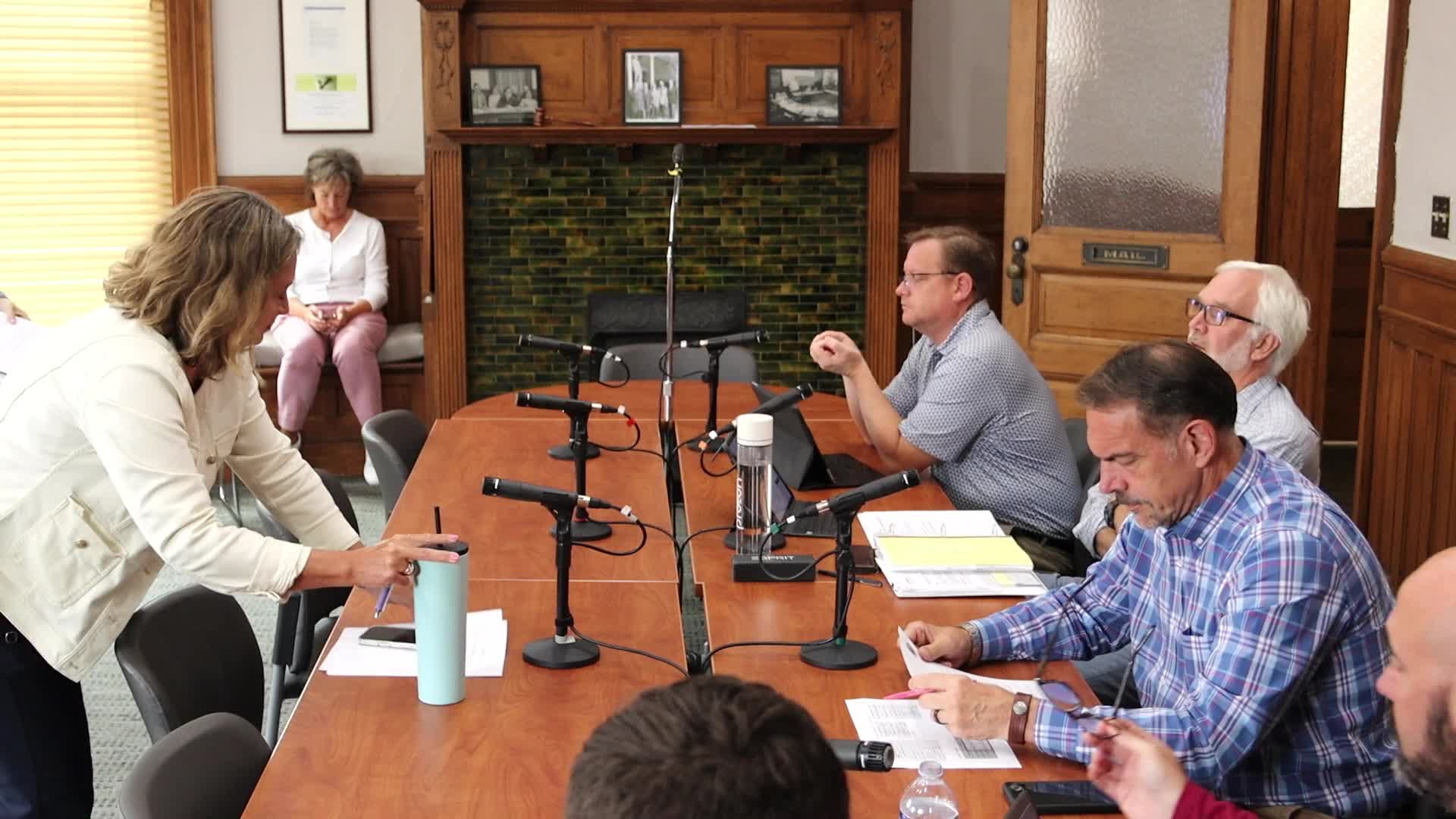
The Winchester Common Council Finance Committee on an October meeting discussed a sample decision-package approach to budgeting intended to give council and staff a more granular view of department costs and proposed new services, but took no formal budget action.
Mary, a finance department staff member, presented a prototype that breaks the finance department into three units—accounting and audit, real estate reassessment, and procurement—and groups spending into "minimum service level to remain viable," "continuation of current services," and "desired/new service levels." Mary said the minimum-service category contains primarily personnel and overhead and described department-level performance measures the city would track year to year. "The first part, the first kind of top, the minimum service level to remain viable," Mary said, summarizing the prototype's structure.
The nut graf: Council members praised the prototype as a useful tool for evaluating new or discrete programs but repeatedly flagged the extra staff time and implementation complexity required to apply the format across large departments. Committee members discussed using the format selectively for new programs, vehicle- or equipment-replacement prioritization and for committee-level review rather than as an annual, department-wide format.
Committee discussion and staff clarifications
Dan, a city staff member, said the decision-package format can be useful for entirely new programs—he cited the city—s prior commuter paramedic program as an example that could have benefited from the format—but warned it would be "a percentage more work" for complex departments such as public works or police. Celeste, another finance staff member Mary referenced, helped rank recurring line items for the sample and noted the ranking involved judgment calls.
Committee members repeatedly raised implementation concerns: departments would likely need to break current line items into more granular service-level categories (for example, separating office supplies by program rather than a single departmental line), and that first-year setup could be intensive. Staff and council estimated the extra effort might be substantial for large departments; one example from the discussion said public services could require roughly three times the effort. Finance staff indicated a dedicated finance staff resource would probably be needed to sustain the approach at scale.
Staff also described how midyear revenue shortfalls or federal grant reductions would be handled under current practice: the city would normally use the supplemental appropriation process to present options to council (reduce, reallocate, or fill gaps). Staff gave a hypothetical example of a $2,000,000 federal reduction to illustrate the decisions council would face about closing gaps or preserving programs.
Performance measures and examples
Mary and Celeste included department-level performance measures in the prototype (for example, increasing electronic funds transfers to reduce vendor check costs) and said new service requests would need measurable outcomes so council and staff could evaluate whether to continue funding them in later years. The prototype also showed a sample new employee request split 50/50 between accounting and real estate reassessment; committee discussion referenced that sample new position as roughly $30,000 in the illustration.
Where the format might be used
Multiple council members said they would not support applying the decision-package approach across all departments every year because of the workload. Instead, they proposed using it selectively for: (1) new programs, (2) capital or multi-department items such as a five-year vehicle/equipment replacement plan, and (3) committee-level reviews or focused work sessions ahead of the formal budget season. Staff recommended integrating any sustained change into the council—s strategic plan so future councils would have clear direction and to avoid repeated rework.
Other meeting business
Councilor Bell opened the meeting, Brandon (staff member) called the roll, and there were no public commenters. The committee approved the July 1 finance committee minutes by voice vote (one abstention recorded). At the end of the session the committee moved, seconded, and approved adjournment.
Ending: The committee directed staff to refine the sample materials, provide additional examples (for instance a supplemental illustration), and return with updates at a future finance committee meeting; staff and council said they expect to use the format selectively rather than as a wholesale annual replacement for the current budget process.