
Del Valle ISD updates student code of conduct; new cellphone rules phased in with exemptions for documented accommodations
Get AI-powered insights, summaries, and transcripts
Subscribe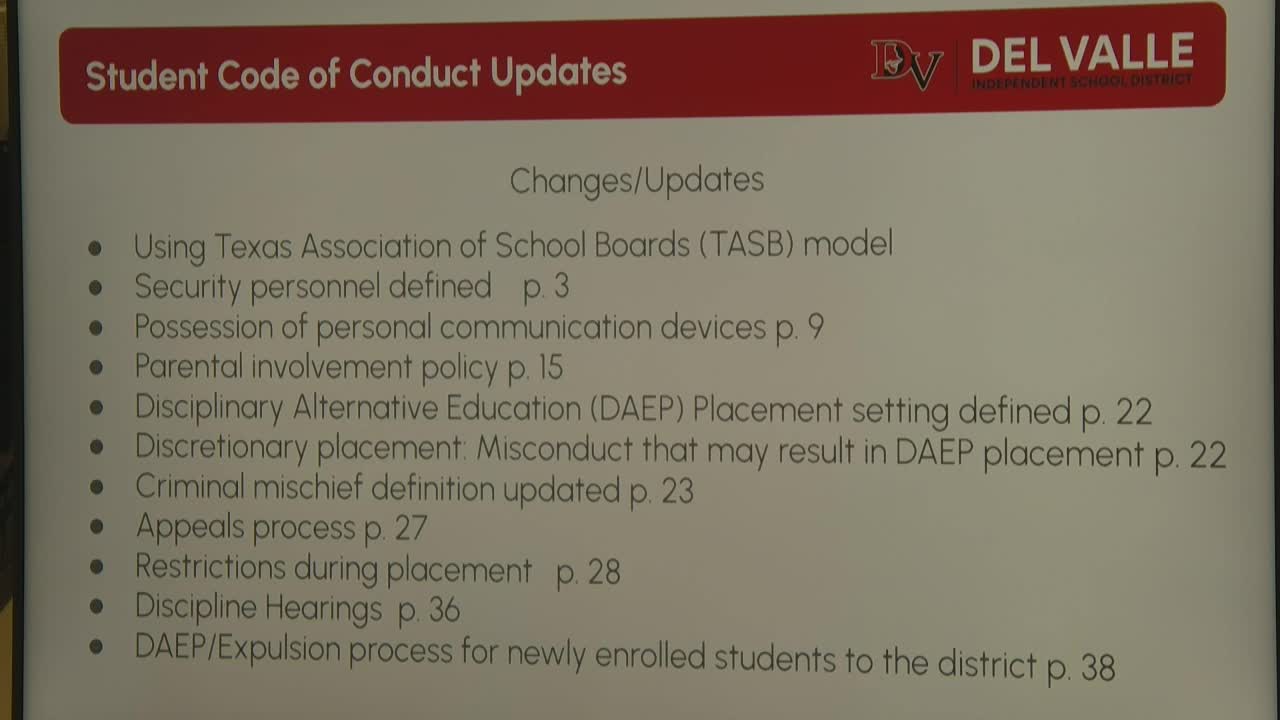
Summary
Del Valle ISD presented a revised student code of conduct and a new policy for personal electronic devices on Aug. 5, proposing an "out of pocket, out of sight" standard and a phased enforcement plan while preserving documented accommodations and adding neutral hearing-officer procedures.
Del Valle ISD administrators presented a substantially revised student code of conduct and a connected policy on personal telecommunications devices during the Aug. 5 board meeting. The updates reflect legislative changes, adoption of TASB model language and district choices about discipline, disciplinary alternative placement (DAEP) procedures, hearing officers and how to handle personal electronic devices.
Major elements presented:
- Model handbook adoption and highlights: The administration said it used the Texas Association of School Boards (TASB) model language as the basis for the code to streamline future legal updates and add clear options for the district. Several sections were flagged for board choice (security‑staff terminology, DAEP procedures, parent involvement language).
- DAEP and graduation participation: The draft sets rules about DAEP (disciplinary alternative placement) operation (typically sixth through twelfth grade in the district), summer program options, transportation and restrictions on extracurricular participation during placement. The draft also sets a default that students placed in DAEP would not participate in graduation ceremonies unless otherwise specified in the DAEP placement order. Trustees debated retaining original language that allowed more administrative discretion; several trustees urged case‑by‑case treatment for seniors so that a one‑time incident would not necessarily prevent graduation with peers. Administration said the draft language can be applied with discretion at the DAEP placement stage and that hearing‑officer procedures would allow case‑by‑case review.
- Hearing officers and appeals: Administration recommended a district hearing officer who is not the campus administrator to ensure a more neutral appellate process. The code also clarifies timelines and procedures for appeals and recommendations for who should conduct hearings.
- Personal telecommunications/electronic devices (cell phones, earbuds, smartwatches): The policy presented a two‑phase approach to enforcement to align with the recent state law change. The administration described the operational standard as "out of pocket, out of sight": personal devices may be brought on campus but must be stored in a backpack, locker or purse and not used during the instructional day. The presentation proposed a transition/education period from the first day of school through Sept. 19 (progressive responses beginning with verbal warnings and teacher/coaching supports) and a stricter enforcement phase beginning Sept. 22 (confiscation requiring parent pickup, detention and escalating consequences up to a temporary ban for repeated violations). The administration emphasized ADA/504/IEP accommodations would be preserved: school teams could document device use when required as an accommodation.
- Enforcement practice and staff safety: Trustees asked how confiscation would be handled to avoid putting teachers at risk. Administration said the campus leadership and, as needed, school resource officers would support enforcement; the district emphasized training, administrative back‑up and an expectation that most students will comply.
Why it matters: The code defines discipline, appeal and DAEP procedures that affect students’ school participation and access to graduation ceremonies, and the device policy responds to a recent state law change that requires districts to set local practice. Enforcement affects daily instruction, parent communications and school operations.
What’s next: Administration will revise code language in response to trustee feedback (especially the graduation/DAEP language) and return the code for formal action on Aug. 19. The device policy will be implemented with a transition period and district monitoring; administration said it will solicit feedback through advisory groups and surveys.
Directly quoted language in the meeting included the administration’s operational summary for devices—"out of pocket, out of sight"—attributed to Dr. Mark Cantu; other attributions in this article follow the meeting transcript’s speaker identifications.