
Residents, health groups press National City to finalize tobacco retail license as youth vaping rises
Get AI-powered insights, summaries, and transcripts
Sign Up Free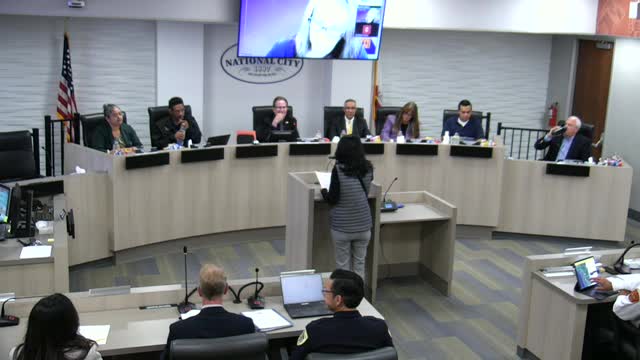
Summary
Speakers at a National City council meeting urged the council to act on a tobacco retail license ordinance and other measures to address youth vaping, citing local schools, public-health concerns and requests for an implementation timeline.
Speakers at a National City Council meeting on an item during the public-comment period urged council members to finalize and implement a tobacco retail license (TRL) ordinance and other measures to curb youth vaping and high-potency marijuana access.
The call came from teachers, public-health advocates and community groups who described vaping as a growing problem in schools and neighborhoods. Liz Murphy, a Sweetwater Union High School District health teacher, said a district anonymous student survey showed “the majority of students themselves recognize vaping as a problem” and that “1 out of 3 students reports avoiding using the bathroom because of vaping.”
Why it matters: Commenters said vaping and high-potency marijuana products are harming youth and increasing emergency room visits. Advocates asked the council to treat the TRL ordinance as urgent and to set a firm timeline for placement on a future agenda.
Public-health and advocacy groups spoke in support of a TRL. Shukri Aden of the American Lung Association told the council a tobacco retailer license is “a necessary step to ensure that retailers are held accountable for responsibly selling these products.” A vice chair of the TRL Tobacco Retail License Coalition and a long-time local activist repeated that the council had committed a timetable for action that had been postponed multiple times and asked that the city honor its commitment.
Speakers suggested a mix of measures beyond licensing: enforcement of age-verification laws, education, cessation resources, and accountability for retailers located near schools. Several commenters tied youth vaping to mental-health and emergency-room trends; Beck y Rapp, identifying a local physician reappointment to a federal post, cited rising ER visits and marijuana poisoning among children as reasons to prioritize local protections.
What council members said: Council members did not take an on-the-record vote on the TRL during public comment. A number of council members acknowledged the public’s concerns and staff’s ongoing work; speakers noted the item had been discussed for more than a year and requested a firm date for council action.
Ending: Commenters left written materials with the clerk and urged the council to move the item from study to an actionable ordinance, repeating requests for a public timeline and stronger enforcement of sales laws.