Get Full Government Meeting Transcripts, Videos, & Alerts Forever!
Get email alerts on the Parking Minimums topic
No spam. Unsubscribe anytime.
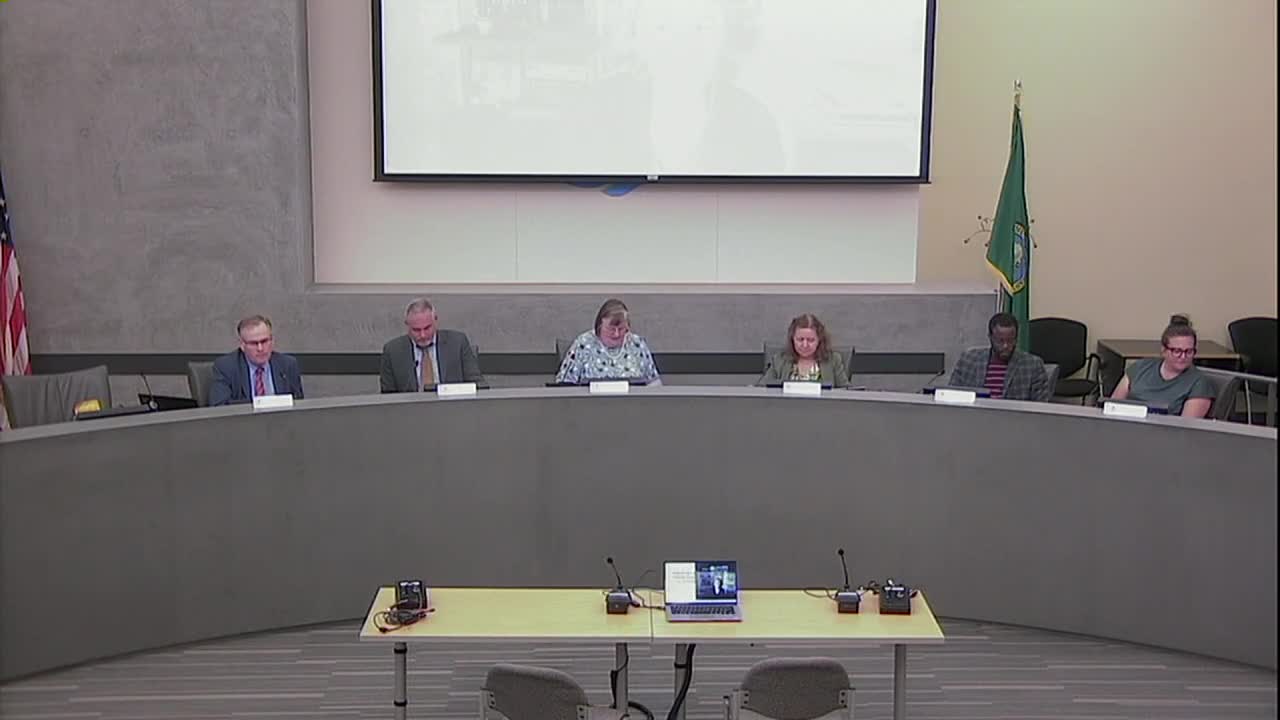
Shoreline council discusses ordinance to eliminate vehicle parking minimums citywide; staff and public support removal
Summary
Planning staff presented Ordinance 1043 on Aug. 4, a development‑code amendment package that would remove vehicle parking minimums citywide while retaining design standards and increasing bicycle‑parking requirements.
City planning staff presented Ordinance 1043 to the Shoreline City Council on Aug. 4, a proposed development‑code amendment package that would eliminate vehicle parking minimums citywide, tighten bicycle‑parking design standards and allow administrative flexibility for some departures.
Steve Safran and Elise Kime described the ordinance as implementing Land Use Policy 3.2 by removing numeric vehicle parking minimums while preserving design standards for parking that developers choose to provide. "These development code amendments does not mean we are outlawing parking. Parking will still be allowed, if it is so desired," Safran said during the presentation.
Public comment at the meeting strongly supported immediate removal of parking minimums. Three residents — Matthew DeAngelis, Tom Lang and Gabrielle Sneed — each urged the council to eliminate minimums now. "Removing parking minimums is planting a seed for those vibrant, walkable, communities that we want," Matthew DeAngelis said during his three‑minute public comment. DeAngelis, Tom Lang and Sneed told the council that eliminating minimums would not immediately remove existing parking and that changes unfold slowly as projects are built.
Proposed code changes and rationale: Planning staff outlined the principal components of the amendments: - Strike vehicle parking minimum tables citywide and remove parking‑related decision criteria from permit paths such as conditional‑use permits. - Retain design requirements (location, screening, lot landscaping) for any parking provided. - Increase bicycle parking requirements and add design specifications for spacing, mounting and location; bicycle parking standards are not tied to vehicle parking supply. - Allow administrative departures in limited circumstances to improve flexibility for both vehicle and bicycle standards.
Council discussion and clarification: Council members broadly expressed support while asking about implementation details. Ramsdell and Bridal Massey said they favor eliminating minimums and noted changes will not create immediate overnight shifts in parking. Council member Scully raised concerns about preserving the city's ability to limit on‑site vehicle volumes where properties are used improperly; staff said enforcement tools and existing limits (for example, a provision capping number of vehicles associated with a residence) remain in the code.
Council members also sought clarity about how the ordinance would affect older buildings. Safran said the new standards generally apply when a building triggers an improvement threshold (for example, a building permit for significant work), and that the city would not retrofit buildings without such a trigger. On loading‑zone requirements for residential vs. commercial uses, staff said they split previous mixed tables between commercial (still using floor area triggers) and residential/mixed‑use (now using dwelling‑unit counts). Staff and the planning commission chose a 60‑unit threshold for on‑site loading requirements after reviewing recent local examples and administrative considerations; staff said some loading needs are being met in public right‑of‑way improvements in recent projects.
Next steps and council direction: Planning commission recommended approval; this meeting served as a council discussion. Council member Scott asked that when the ordinance returns for a decision it include a short staff report and an opportunity for public comment during the regular public‑comment period. The council chair confirmed the executive session item was removed and the ordinance will be scheduled again; no formal council vote on Ordinance 1043 occurred on Aug. 4.
Ending: Supporters at the meeting emphasized climate and housing goals as the rationale for removing parking minimums; staff stressed that parking remains allowed and that the code focuses on design and flexibility. Council members asked staff to return with the ordinance and a concise staff report and to provide the public an opportunity to comment when the item is scheduled for action.