Get Full Government Meeting Transcripts, Videos, & Alerts Forever!
Get email alerts on the Solid Waste Rates topic
No spam. Unsubscribe anytime.
King County presents 2026 solid-waste rate proposal; Shoreline 32‑gal can to rise about $0.79/month
Summary
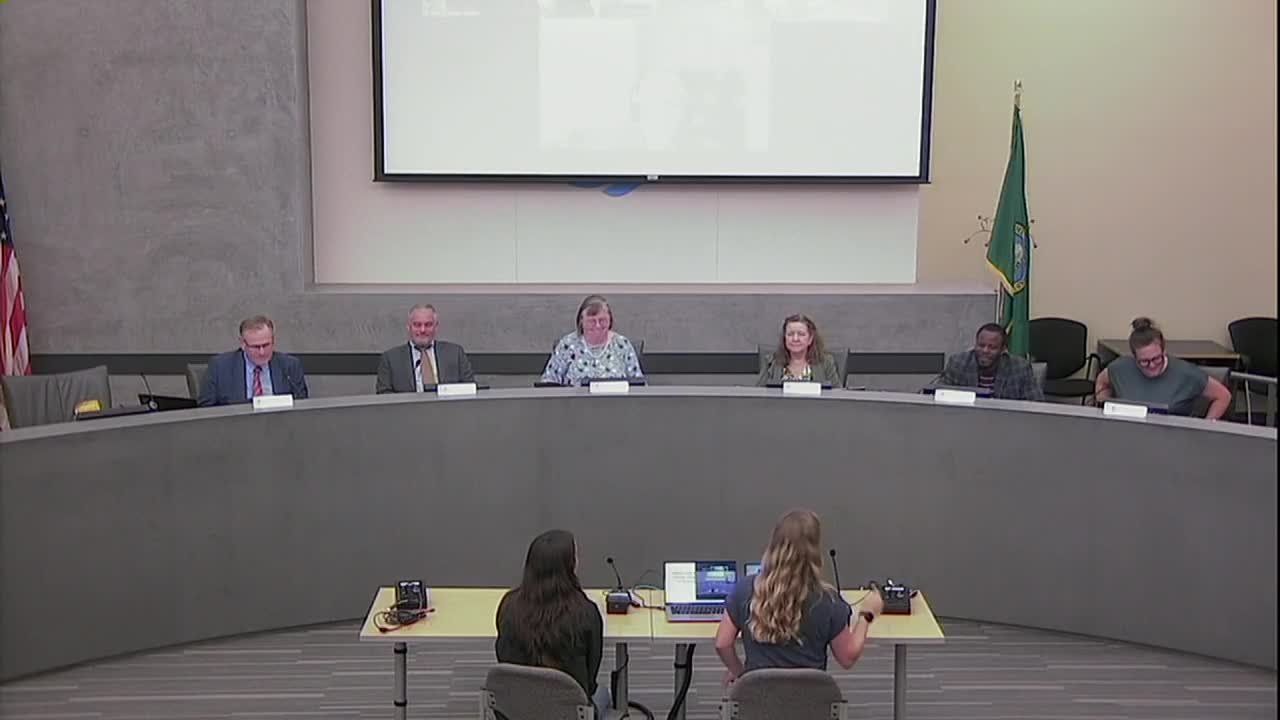
King County Solid Waste Division staff presented a one-year 2026 rate proposal to the Shoreline City Council on Aug. 4, citing rising capital costs and landfill management needs. For a household with a 32‑gallon trash can, the county estimated Shoreline customers would see about a $0.79 monthly increase; yard‑waste rates would rise more steeply.
King County Solid Waste Division director Rebecca Singer and staff presented the division's 2026 rate proposal to the Shoreline City Council on Aug. 4, outlining drivers of higher costs and options the county will use in future rate work.
Singer introduced Dave Pierce, who described the division's revenue and expense picture and said the proposal is limited to 2026 with a separate 2027 rate review to follow. "For a person having a 32‑gallon trash can, the estimated increase in their bill would be 79¢ a month," Pierce said, adding that systemwide the projected increase averages about 71¢ per month.
The presentation said disposal is the majority of division revenue and highlighted rising capital expenditures tied to Cedar Hills landfill work and other large projects. Pierce said capital spending grows in the forecast — for example, capital-related debt service rising toward 2031 — and pointed to development of Area 9 (a final cell at Cedar Hills) and the North Regional transfer station ("NERs") as key drivers.
Why it matters: council members pressed county staff on how the rate is calculated, how reserves influence rates and what the proposal means for recycling and yard‑waste service. Council member Pobbe asked for a brief explanation of the rate allocation model; Pierce described inputs including capital project forecasts, tonnage projections, personnel costs and a now‑depleted "recession reserve" the division used to limit year‑to‑year increases.
Key facts from the presentation: Dave Pierce and Rebecca Singer gave the following figures and program details during the Aug. 4 meeting: - County revenue mix cited: about $125 million total commercial revenue with a $23 million fixed annual charge portion; other revenue categories include a $35 million contribution from collection fees and $5 million other revenue (figures cited by presenter). - The fixed annual charge (a base fee for commercial haulers) began in 2024 and is intended to stabilize revenue as recycling increases reduce disposal tonnage. - Yard‑waste collection represents a small share of revenue (presenter said ~1%) but a larger share of expenses; Pierce said yard‑waste rates in the proposal rise about 12.5% to better align revenues and costs. - Pierce said the division's estimates currently put the likely closure horizon for Cedar Hills Area 9 near 2040, while also noting county leadership is exploring leaving some capacity in Area 9 for disaster debris if needed. - The division said its landfill reserve target is large (presenter cited a figure near $350 million as the amount needed by landfill closure to meet post‑closure obligations) and that the recession reserve used to smooth rates is now zero.
Council concerns and staff responses: Council members asked about mixed‑waste processing, multifamily organics participation, and potential revenue sources. Council member Scully asked what "mixed waste processing" means; Singer replied it is sorting material from general waste loads to recover recyclables. Scully and others urged stronger multifamily organics participation and enforcement to increase diversion.
On new revenues and recent policy changes, council members asked whether landfill gas revenues and the recently passed RAP Act (referenced in the meeting) were included. Pierce said landfill gas and RAP Act effects were included conservatively in the 2026 proposal because rate work is developed far in advance; he said staff will incorporate stronger landfill‑gas revenue expectations and RAP Act impacts in subsequent rate work, which may reduce future increases.
Follow‑up and next steps: Pierce said the county is submitting a 2026 single‑year rate and will immediately return to develop a 2027 proposal, with an intent to resume two‑year rates afterward. Council members asked the Shoreline staff to follow up on lessons learned from past public education campaigns (for example, changes to plastic bag policy) and for the county to provide more detail on outreach and compliance strategies.
Ending: Council members thanked the presenters and emphasized local efforts (for example, Shoreline reuse programs at Celebrate Shoreline) to reduce landfill demand. The county left open the possibility that higher diversion and landfill gas revenues could reduce future rate pressures, but staff emphasized the immediate drivers for 2026 are capital projects and reserve rebuilding.