Get Full Government Meeting Transcripts, Videos, & Alerts Forever!
Get email alerts on the Public Health topic
No spam. Unsubscribe anytime.
Elbert County Public Health reports staffing, clinic growth, septic permit surge and local water concerns
Summary
Public Health Director Sarah McIntosh told county commissioners the department has expanded clinic visits and revenue, is preparing for the county fair health fair and cooling center, and is monitoring implementation of new state OWTS (septic) regulations and local water outages and biosolid storage complaints.
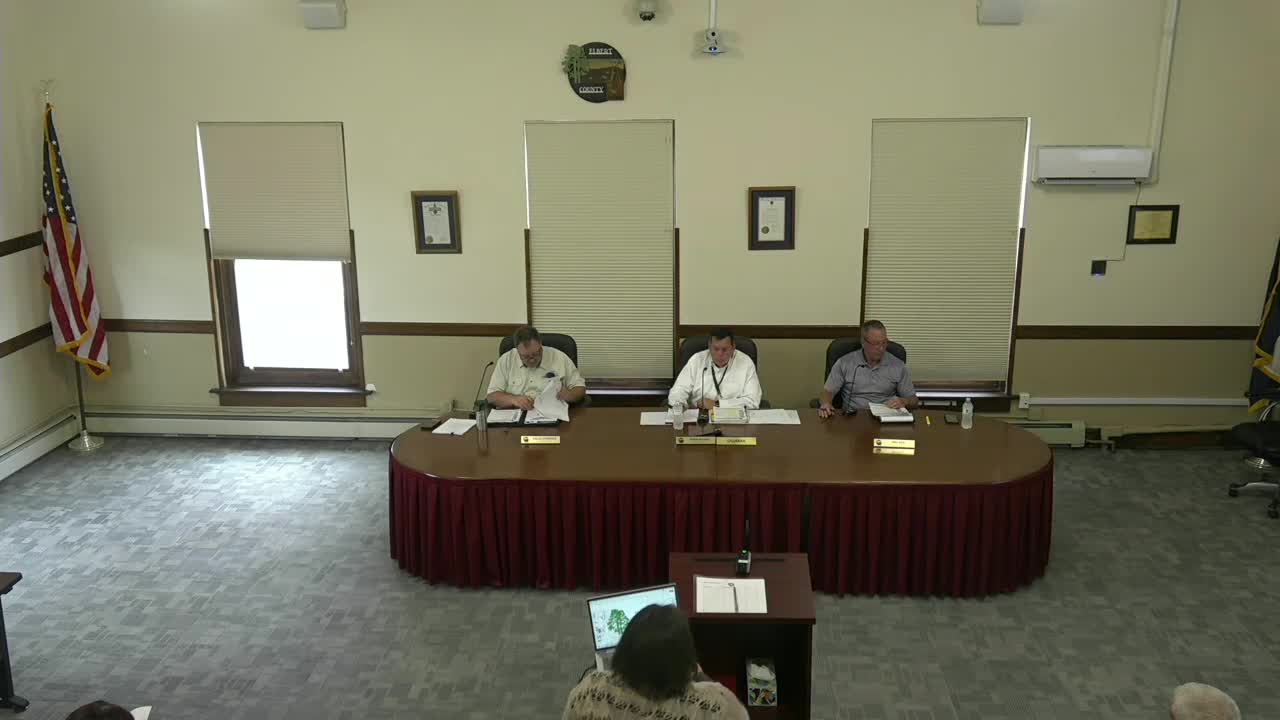
Sarah McIntosh, director of Elbert County Public Health, gave the Board of County Commissioners a mid-year report on staffing, clinic activity, environmental health and ongoing public-health concerns during the board’s July 23 meeting.
McIntosh said the public health office currently has four full-time staff — herself, an environmental health specialist, a health educator and a front-desk administrative assistant — plus two part-time nurse practitioners and several contracted positions including a medical director. She said clinic revenue is growing compared with the same quarter last year and that the department plans to contract with a medical biller/coder to increase collections.
The department is preparing to staff a health fair at the county fairgrounds, offering $25 sports physicals (or insurance billing), adult screening panels and use of the public health building as a cooling center on hot fair days. McIntosh said the health fair will partner with NAYA care and Rocky Vista University medical students to reduce costs and speed throughput for families.
McIntosh also reviewed environmental-health work. She said on-site wastewater system (OWTS or septic) permits, inspections and related revenue have increased year-to-date and noted the county must implement state-adopted changes tied to “Regulation 43” by June 15 next year. She said some additional state regulation options exist that the county may opt into; staff will prepare materials for an August meeting so commissioners can decide which optional provisions to adopt.
McIntosh described a proposed OWTS fee update (fees not increased since 2013) tied to moving permit records into a single county system; she said an estimated additional $8,000 in revenue could result while implementation costs would be about $4,000 plus migration work. Commissioners asked that any fee change be published and run through the public process; McIntosh said staff can delay the effective date and return with the formal resolution for a future meeting.
The director described two ongoing public-safety concerns: repeated boil-water notices and equipment failures at the Overland Estates water system, and neighbors’ complaints about a dried-biosolids storage site south of Highway 24 in Matheson. McIntosh said an outside contractor, Ramey Environmental, conducted an on-site review and the county is awaiting the report; she said she met on-site with the storage-site owner, the biosolids company manager and concerned neighbors.
Commissioners thanked staff for the work and asked for follow-up on both the OWTS regulation choices and the Matheson biosolids report.
Ending: McIntosh invited commissioners and residents to contact public health about infectious- or environmental-health concerns and noted the department’s contact information and online reporting options.