Get Full Government Meeting Transcripts, Videos, & Alerts Forever!
Get email alerts on the Public Safety topic
No spam. Unsubscribe anytime.
Richardson Fire Department unveils 10-year strategic master plan with new stations, apparatus and staffing timeline
Summary
Chief Curtis Poovey presented a 10‑year implementation plan for the Richardson Fire Department outlining new apparatus, a proposed Station 7, expanded EMS capacity and operating and capital cost estimates; council members urged speeding some steps and asked staff to seek grants and report back.
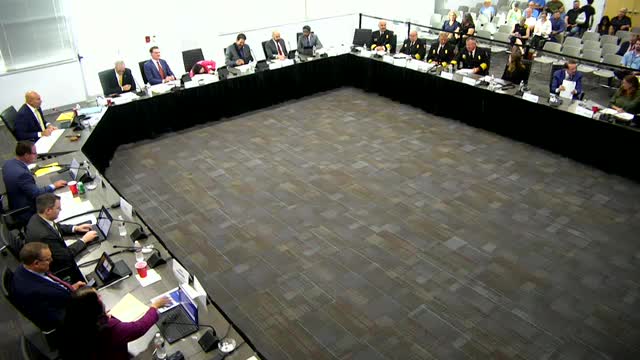
Chief Curtis Poovey and the Richardson Fire Department on Monday presented a 10‑year strategic master plan that lays out equipment purchases, staffing increases and capital projects the department says it needs to keep pace with growth.
The plan, presented during the city council meeting by Poovey and Assistant Chiefs, lays out mid‑ and long‑term initiatives including ordering a northwest truck company for Station 3, adding a new Station 7, a dedicated apparatus storage and repair center, and increases to EMS supervision and ambulances. Poovey told the council the work dates to 2017 and was updated with an external consultant: “We started this back in 2017 looking at it,” he said, describing the consultant review and the department’s consolidation of recommended actions.
Why this matters: the plan ties capital requests to expected bond cycles and to the city’s operating capacity, including the expiration of a tax increment financing (TIF) district that planners expect will free up general‑fund capacity in FY 2032. Several council members said public safety is a high priority and urged staff to explore ways to accelerate key elements.
Key elements and costs - Add one ladder truck company at Station 3 (Northwest Richardson). Timeline: order this year, 15 firefighter hires in FY 2028, promotions FY 2030 and place in service in FY 2030. Capital: $2,700,000 for truck and equipment; recurring operating cost for 15 positions estimated at $2,400,000 per year. - Apparatus storage and repair center (behind Station 5): proposed bond request in the 2026 election. Capital estimate: $5,500,000 for a five‑bay storage/repair facility. - Station 6 renovation (Panhandle/Kepler Field area): proposed 2026 bond, estimate $1,900,000, to reconfigure living quarters and add a workout facility for added personnel. - Computer applications manager (to centralize applications and relieve an assistant chief of day‑to‑day IT tasks): hire in FY27, operating cost ~ $100,000 first year. - New EMS supervision and ambulances: add EMS captains on shift (hire and place in service FY27); a “seventh” peak‑demand ambulance (order in FY26, operate on overtime in FY27; capital ~ $550,000, overtime operating ~$430,000 initially), with plan to convert to a full‑time ambulance when a future station opens. - Station 7 and related staffing: long‑range plan to procure land between now and FY26, construct and open Station 7 in the FY33–FY35 timeframe. Capital estimate (station + apparatus): ~$25,000,000; recurring operating cost: ~$3,700,000 per year once staffed. Staff plan includes pursuing SAFER grants (federal hiring grant that may cover 75% of salary year 1, 50% year 2, 25% year 3). - Additional later ambulances and apparatus are included in the plan with year‑by‑year cost projections (examples: a future ambulance capital estimate cited at $860,000). Poovey warned construction lead times for apparatus and vehicles mean orders must be placed years in advance.
Council reaction and next steps Council members thanked the chief and the department. Several members — including Council Members Justice and Pouvie (Mayor Pro Tem Hutchenrider and others) — pressed staff to explore ways to accelerate some items, especially emergency medical services capacity, and to pursue federal grants to offset operating costs. City staff said some earlier steps will be included in the coming budget workshop and in the city’s next bond planning cycle (FY26 council action to place bond items on a future sale).
Staff clarified the plan is intentionally conservative and timetable adjustments are possible if growth or service needs accelerate. Don Magner (city staff) said FY2028 is a “heartburn” year in the schedule because it contains a large jump in operating costs that will require careful financial planning. Poovey reiterated the department will return to council with budget and implementation steps as needed.
Ending Council members asked staff to bring back opportunities to accelerate high‑priority items if conditions change and to pursue grant funding actively. No formal ordinance or appropriation was voted on at Monday’s meeting; the presentation was a briefing and the council indicated general concurrence with the proposed implementation approach.