Get Full Government Meeting Transcripts, Videos, & Alerts Forever!
Get email alerts on the Tax Settlement topic
No spam. Unsubscribe anytime.
Eau Claire council approves settlement with Sam's Club, limits city refund to about $12,355
Summary
The Eau Claire City Council unanimously approved a proposed settlement with Sam’s Real Estate Business Trust over disputed property assessments; the deal reduces the city’s exposure to a much larger refund and avoids costly litigation.
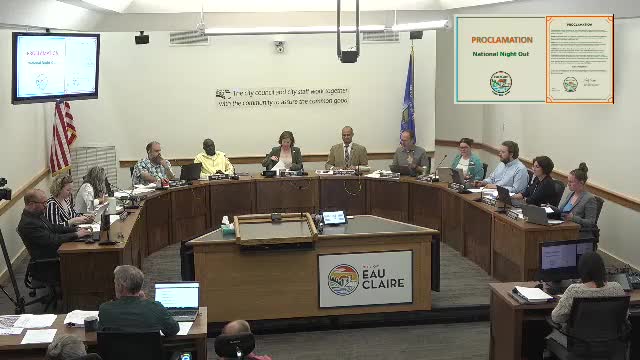
The Eau Claire City Council on July 26 approved a resolution to settle four pending excessive-taxation cases brought by Sam’s Real Estate Business Trust, the property owner for the local Sam’s Club, avoiding further litigation and a potentially much larger refund.
Deputy City Attorney Stromberger told the council that the proposed resolution would resolve four cases in circuit court and that the city is recommending a settlement to limit litigation costs and taxpayer exposure. “The valuation on the Sam’s Club property in Eau Claire was $6,850,000 for ’21 to ’24,” Stromberger said. “We are proposing that we agree to a $6,500,000 valuation for ’21–’22. Sam’s Club has agreed to pay the full $6,850,000 for the ’23–’24 tax assessment years, and they’ve agreed to waive all claims for ’25.”
Under the terms described at the meeting, the refund the city would issue under the settlement would total $12,354.64. Stromberger said Sam’s Club had originally sought a refund across the four years that totaled roughly $722,000.
Council members debated the settlement during the legislative session and expressed frustration that large retailers regularly bring assessment challenges. Council Member Miller put the city’s position in context: “Sam’s Club in 2024 had $86,000,000,000 in revenue, yet the city of Keller has to pay them $12,000 back for their tax litigation,” he said. Council Member Anderson said he would support the settlement reluctantly because pursuing litigation would be prohibitively expensive for the city: “We are in a situation where neither federal nor state law is protecting the citizens of our community from what amounts to a legal shakedown,” Anderson said, adding that the city lacked a better option.
Councilor Serrano moved the resolution; Councilor Brewster seconded. The roll call vote was unanimous in favor. Because the resolution affects the city budget, Stromberger reminded the council the measure required a two-thirds vote; the council recorded the required affirmative votes and finalized the settlement.
The council and city attorney’s office said the settlement avoids the time and expense of extended litigation and the risk of a larger refund judgment that would have to be paid from the city’s general fund. Council members clarified that the settlement applies to the years and valuation discussed; litigation could be brought again for later years if circumstances change.
The resolution does not change the city’s position that large-scale assessment challenges by corporate property owners shift potential tax burdens onto residential taxpayers when successful, a point several council members raised during the discussion.