Get Full Government Meeting Transcripts, Videos, & Alerts Forever!
Get email alerts on the State Legislation topic
No spam. Unsubscribe anytime.
Delegate Keith Hodges reviews 2025 General Assembly outcomes and regional priorities for Middlesex
Summary
Delegate Keith Hodges updated the board on the 2025 General Assembly session, highlighting budget investments in education and health, increases in per-pupil spending, legislation on social media limits for youth, rural health transformational grant opportunities, living shorelines funding, and local control issues including solar siting and ADUs.
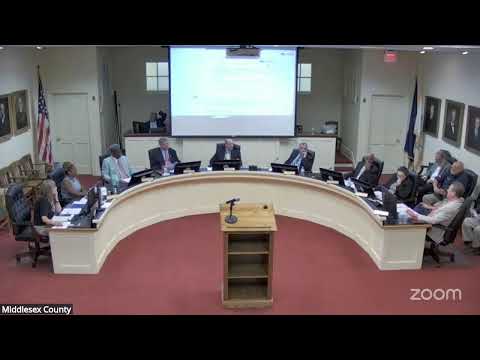
Delegate Keith Hodges (R-68th District) briefed the Middlesex County Board of Supervisors on Sept. 9 about actions and priorities from the 2025 Virginia General Assembly and other state matters.
Hodges summarized the 2025 budget, saying lawmakers approved about $4.2 billion in new investments for education, health care and infrastructure and retained roughly $900 million in reserves. He said the package included tax rebates and an increase in the state standard deduction, and he said the legislature increased per-pupil spending since the pandemic.
Hodges told the board he opposed state preemption proposals that would constrain local zoning decisions — particularly bills that would limit local control over accessory dwelling units and solar siting. He said a proposal to remove local control over certain solar permitting was withdrawn and that the county’s concerns on local authority were heard. He also described a recently passed school-focused limit on social-media use for children under 16 — noting Middlesex had taken local action that drew state attention.
The delegate said he has been working on rural health transformation funding opportunities (federal/state grants) that could deliver up to $1 billion for rural health projects, and he described efforts to fund living shorelines, dredging assistance and resilient infrastructure. He discussed grants and pilot projects for septics, living shorelines and reuse of dredge material, noting a push to create a resiliency industrial park and municipal dredging approaches for the middle peninsula.
Hodges also discussed workforce and economic development issues unique to rural districts: commuter patterns that reduce local tax bases, low average wages that hamper retention of young workers, and niche industries such as blue catfish processing that he said offer opportunities for local job creation.
Board members thanked Hodges and invited continued engagement on county priorities.