Get Full Government Meeting Transcripts, Videos, & Alerts Forever!
Get email alerts on the Employee Benefits topic
No spam. Unsubscribe anytime.
Committee deadlocks on health insurance rate; employee compensation motions withdrawn after extended debate
Summary
Lawmakers debated health insurance per-employee funding, reserve risk and compensation formulas. Two competing health insurance motions (governor: $14,300 per eligible FTE; CEC: $13,960) failed to secure the committee's bicameral majorities; separate compensation motions were later withdrawn to allow more staff work and further consideration.
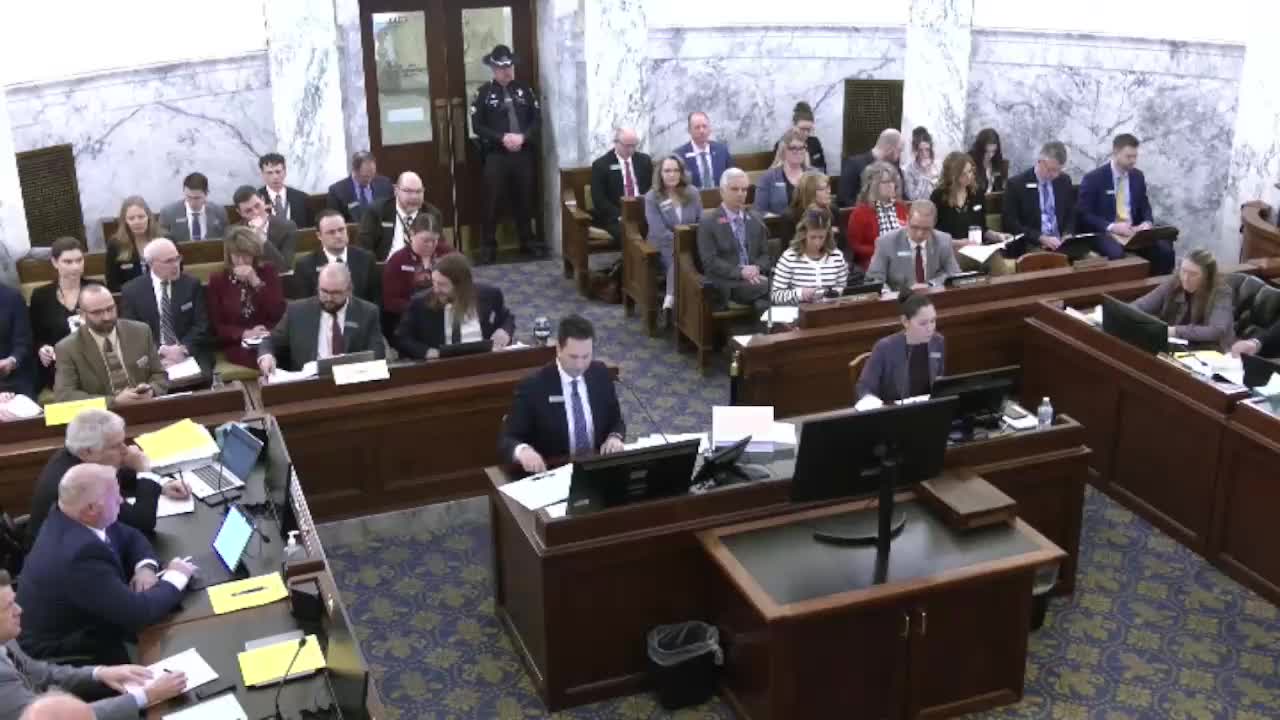
The Joint Finance and Appropriations Committee spent extended floor time debating statewide personnel benefit costs, health insurance funding and employee compensation proposals, but members left without adopting a change to the state employee health insurance base or a final compensation package.
State analysts presented two competing recommendations for FY2026 health insurance funding for eligible full-time equivalent positions. The Economic Outlook/CEC committee recommendation would set health insurance at $13,960 per eligible FTP (a net general fund increase of $29,996,000 and a total increase of $40,261,200). The governor’s recommendation would raise the per-FTP base to $14,300 (an increase of $42,076,600 from the general fund and a total increase of $56,315,200). Analysts said both proposals keep the plan design intact; the numeric choice affects the plan’s contingency reserve.
Actuarial projections from Milliman — the actuary cited by staff — were discussed at length. Division of Financial Management staff and Office of Group Insurance administrators told the committee the state’s contingency reserve stood at roughly $80.5 million at the time of the hearing. Milliman projected that using the lower CEC figure would draw reserve balances down to about $51.6 million (near a 10% contractual minimum), while the higher governor recommendation was projected to leave roughly $61.4 million in reserves — about $10 million more cushion than the lower scenario.
Staff and administrators warned that falling below the contractual 10% contingency reserve could expose the state to a risk charge from the plan carrier and other contractual consequences. The Office of Group Insurance said it was still attempting to quantify the carrier’s “risk charge,” which would depend on how far below the contingency margin the plan fell.
Committee votes on the health insurance numbers failed to produce the committee’s required bicameral majorities. The CEC substitute motion (setting health insurance at $13,960) failed in the joint vote (grand total: 9 ayes, 11 nays). The governor’s motion (setting health insurance at $14,300 and adopting accompanying variable-rate language) later received an overall 13–7 tally; the chair ruled it did not secure the necessary majority among Senate members and thus the motion failed as well. No health-insurance change was adopted and staff were instructed to continue work with the committee.
Separately, the committee approved two other statewide, technical budget decisions that were less controversial: contract inflation (ongoing, contract-defined operating/capital increases) and statewide cost allocation adjustments (agency billings for services such as controller, treasurer and enterprise IT). Both measures carried with unanimous committee votes and will be included in maintenance budget work.
Employee compensation: committee discussion also touched a broader compensation package recommended by the Change in Employee Compensation (CEC) committee: a $1.55-per-hour across-the-board increase for permanent employees (effectively a higher percentage increase for lower-paid workers), market-based increases for IT and engineering classifications, an 8% trooper pay increase and specified increases for nursing/healthcare workers. Multiple substitute and original compensation motions were filed and debated; after extensive discussion and a request for more time for staff to incorporate omitted items (nonclassified IT staff and the public school piece), proponents withdrew the active motions by unanimous consent so the committee can reconvene with corrected materials.
Ending: Committee members and staff said they will reconvene and refile compensation and benefit proposals after staff incorporate omitted classifications and verify the projections. Meanwhile the committee approved contract inflation and statewide cost allocation adjustments and adopted the FY2025 revenue baseline; the contested FY2026 revenue and the employee compensation package will be revisited.