Get Full Government Meeting Transcripts, Videos, & Alerts Forever!
Get email alerts on the Homelessness topic
No spam. Unsubscribe anytime.
County proposes regional Homeless and Housing Board; Folsom council asks for limits on scope and staffing
Summary
Sacramento County staff outlined a proposal to merge the Continuum of Care (CoC) board with elected officials into a new Sacramento Homeless and Housing Board to set regional strategy and performance targets. Folsom council members said they support regional collaboration but raised questions about authority, staffing and budget.
On Sept. 9, 2025, Folsom City Council heard a presentation from Sacramento County officials on a proposal to create a new Sacramento Homeless and Housing Board that would merge the federal Continuum of Care (CoC) board with an elected-policy body to set a single regional strategy for homelessness and housing.
The change, presented by Emily Halcon, director of the Sacramento County Department of Homeless Services and Housing, would establish a smaller, elected-majority board to set strategic goals, approve performance targets, seed issue-driven subcommittees, and provide public oversight of the CoC’s work. “We are here to seek input and get advice from you as we collaboratively work along how to envision how we deliver homeless and housing services,” Halcon said.
County staff said the new board would be a public, Brown Act body. It would act as both the CoC board and a regional policy body, but staff recommended keeping the CoC’s current collaborative applicant — Sacramento Steps Forward (SSF) — in place at the start. Halcon emphasized that the CoC’s federal responsibilities remain part of the proposal and that the board’s initial authority would be focused on CoC-administered funds and regional strategy rather than immediate control of local land-use or shelter operations.
The presentation described two example compositions for the proposed board: (A) a 10-member body of elected officials plus at least one person with lived experience of homelessness, or (B) the same elected mix plus four community seats for health, justice or other topical stakeholders. Halcon said the county plans to gather input from cities and the existing CoC, with staff aiming to return to jurisdictional bodies early next year and, if approved, seat a new board in the second quarter of 2026.
Council members asked detailed questions about scope and limits. Council member Kozlowski asked why the proposal would use a new name rather than simply conform the CoC to federal statute. Halcon replied that the county wanted “to pull the COC into the broader policy conversations” so the body would be “the COC plus a strategic body to set vision and goals across the region.”
Several members raised concerns about how far the board could reach into housing policy. Council member Rethal said he favored collaboration on homelessness and transitional housing but wanted to guard against regional control of local land-use decisions. Halcon said staff did not propose that the board supplant local land-use authority: “We are not recommending that this board bypass or usurp any authorities.”
Council members also pressed Halcon on staffing and cost. Halcon acknowledged the proposal will require additional administrative work and that the county and COC must determine whether existing CoC administrative dollars and HAP administrative funds can cover needed staffing or whether a consultant or new staffing is required: “It is not something to just tack onto somebody else’s current duties.”
Supervisor Rosario Rodriguez told the council that regional visibility matters. “Had we known” about some of the moves in other jurisdictions in 2023, she said, “I think we could have had a better approach to how we were gonna handle the problem that was impacting Folsom at the time.”
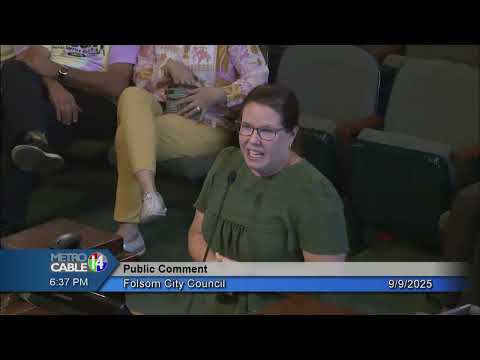
Members of the public who spoke on the item cautioned that the work is difficult and must include multiple providers. Judy Alexander, a longtime Folsom volunteer on homelessness issues, said the problem is complex and varies by individual: “This is a difficult process and project…Not all of them can be served in the same way by everybody.”
Next steps outlined by county staff: meetings with the remaining cities and the CoC board through September and October, a staff synthesis to be returned to city managers for review, and a goal of bringing formal approval requests to jurisdictions early next year. Halcon said staff will use feedback from city councils to design the board’s final size, membership rules, bylaws and administrative plan.
Folsom council members generally signaled openness to continued participation while asking staff to return with clearer limits on authority, budget implications and a staffing plan before any final commitments.