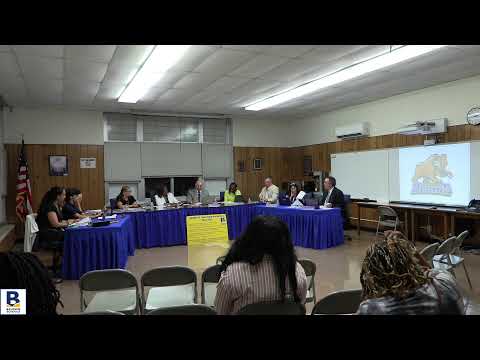
Baldwin reviews summer capital projects, kitchen and bathroom renovations and UPK expansion; electrical lead times delay some work

Loading...

AI-Generated Content: All content on this page was generated by AI to highlight key points from the meeting. For complete details and context, we recommend watching the full video. so we can fix them.

Summary

District officials briefed the Board of Education on summer capital work — bathroom renovations, roofing, kitchen/cafeteria projects and electrical upgrades — and on expanded UPK slots. Officials said contractor insurance, higher bids and long lead times for electrical switchgear have slowed schedules; the board approved related facilities consent

District business and facilities officials told the Baldwin Union Free School District Board of Education on Aug. 13 that extensive summer capital work — including bathroom renovations, roofing replacements, kitchen/cafeteria renovations and electrical upgrades — is underway but that contractor insurance requirements, higher-than-expected bids and long manufacturing lead times for electrical switchgear have delayed some completions.

Dr. Robinson, who led the facilities and finance update, said the district is pursuing a multi-year, multi-funded strategy to address needs across many aging buildings, using a mix of transfers to capital, capital reserves, grants and bond proceeds. "We have developed this plan...to minimize the impact to our taxpayers," he said, noting the district has used federal and state COVID-relief funding for one-time needs and has created reserve funds to smooth multi-year work.

Work under way this summer included bathroom renovations (a capital-reserve initiative; Robinson cited roughly $11.2 million allocated within a larger program), roofing replacements at several elementary schools, and a $11.6 million cafeteria and kitchen project at Plaza that is currently in demolition and early construction phases. The district reported that kitchen plans for several schools have received Department of Health approval and that plan approvals from the state education department are advancing.

Robinson said contractor insurance and subcontractor coverage requirements led to delays in some scopes; the district stressed it enforces insurance requirements to transfer risk to contractors. He described a construction management process of daily coordination and occasional overtime work by contractors and the district's construction manager to meet contractually required "substantial completion" dates; the district's position is that overtime costs should be borne by contractors unless the district causes delays.

On electrical upgrades, Robinson and board members discussed supply-chain lead times. Robinson said specialized switchgear and transformers have long manufacturing lead times — in some cases more than a year — meaning district crews may complete preparatory work but then wait for equipment to arrive before final connections can be made. He said as a result "not all of the middle school will have everything in September." PSE&G and similar utility coordination also figured into the timelines.

The district also reported expansion of its Universal Pre-K (UPK) program: officials added a second UPK classroom at the district office building, bringing total locations to three (Millburn, Shubert and the district office). Robinson said the program now has about 96 registered students with roughly 20 additional registrants in process and about 46 on a waiting list; historically the district has accommodated waitlists of 30–50 students but cautioned this year’s higher numbers create pressure to add more seats. He explained that state UPK funding is allocated based on reported seats; the district cannot claim more state money than its classroom capacity allows.

The board approved an updated Use of Facilities report, several consent items that included facilities-related motions, and other routine business during the meeting.