Get Full Government Meeting Transcripts, Videos, & Alerts Forever!
Get email alerts on the Abandoned Wells Moa topic
No spam. Unsubscribe anytime.
Commission on Water Resource Management considers MOA with Honolulu Board of Water Supply to seal two abandoned Oahu wells
Summary
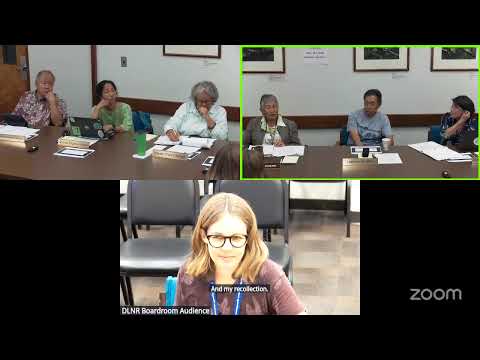
The Commission on Water Resource Management on Aug. 19 heard staff recommend authorizing the chairperson to enter into a memorandum of agreement with the Honolulu Board of Water Supply to use congressionally directed funds routed through the U.S. Environmental Protection Agency to seal two state-identified abandoned wells on Oahu.
The Commission on Water Resource Management on Aug. 19 heard staff recommend authorizing the chairperson to enter into a memorandum of agreement with the Honolulu Board of Water Supply to use congressionally directed funds routed through the U.S. Environmental Protection Agency to seal two state-identified abandoned wells on Oahu.
Katie Roth, Planning Branch funding-program staff, told the commission the earmark totals $2,400,000 and requires a 20% cost share of $600,000, which the Board of Water Supply has agreed to provide. "About 2 years ago, we received congressionally directed funding from Congress in the amount of $2,400,000, with the intent to seal abandoned wells statewide," Roth said. She recommended the commission authorize the chairperson to finalize and enter the draft MOA, and to permit the chair to make non-substantial edits; any substantial changes would return to the commission.
Roth said the funding is being routed through EPA and that the state must complete an application and federal- and state-level compliance checks before funds are received. "As far as we know, the funding is secured," she said, adding the MOA would subsequently be routed to the state attorney general's office for final review.
Commission discussion addressed both the MOA and broader policy on abandoned wells. Commissioners and staff raised that well and pump permits are valid for two years and typically issued to contractors, with no explicit automatic requirement that a temporarily unused well be sealed. A staff member explained: "The permits themselves don't have a requirement to abandon and seal the well if it's not in use...we do issue certificates of well construction and pump installation upon completion, but there's currently no requirement to seal it if it's not in use." That staff member also said staff can direct sealing in specific cases where environmental risk exists.
Commissioners discussed enforcement and long-term responsibility. Chair Dawn Chang and other commissioners urged exploring permit conditions or decommissioning bonds so that future permittees or property owners bear the cost of sealing, rather than relying solely on government funds. "I would ask the Water Commission staff to likewise think about that, that in our permits approvals, especially well permit approvals, that we do include a provision for decommissioning or removal bonds," Chair Chang said.
Staff and commissioners noted statutory language already addresses abandonment: a presenter said a portion of the water code (174C-87) requires the owner to file and seal an abandoned well in a manner approved by the commission, but enforcement has been limited by staffing and funding constraints. Commissioners asked staff to convene a coordination meeting with the Department of Health and county water departments to clarify roles and funding paths for sealing priority wells.
No formal roll-call vote or final action on the MOA was recorded in the provided transcript excerpt. The staff recommendation, as presented, would authorize the chairperson to enter and finalize a memorandum of agreement with the Honolulu Board of Water Supply to receive funding to seal state wells 3-4101-005 and 3-4101-006 on Oahu, subject to attorney general review and return to the commission if any substantial edits are proposed.
The commission also deferred approval of minutes for July 15, 2025, and took attendance. Several commissioners and staff participating in the discussion identified themselves during roll call and at the start of the meeting.