Get Full Government Meeting Transcripts, Videos, & Alerts Forever!
Get email alerts on the Budget Tax Rate topic
No spam. Unsubscribe anytime.
Bedford council sets maximum tax rate for public hearing after weeks of budget debate over retiree COLA
Summary
The Bedford City Council on Tuesday set a maximum proposed tax rate and scheduled a Sept. 9 public hearing after a contentious discussion about adding a recurring cost‑of‑living adjustment for retirees under the Texas Municipal Retirement System.
The Bedford City Council on Tuesday set a maximum proposed tax rate and scheduled a public hearing after hours of debate over whether to add a non‑retroactive cost‑of‑living adjustment (COLA) to retiree pensions administered through the Texas Municipal Retirement System (TMRS).
Council members voted 6‑0 to set a maximum tax rate of $0.526212 per $100 of assessed valuation and scheduled a public hearing for Sept. 9, 2025, at 6 p.m. in City Hall. The vote establishes the ceiling the council may consider at that hearing; it is not an adoption of the tax rate.
The discussion centered on a city staff proposal to add a TMRS COLA option to next year’s budget. Staff presented two recurring options: a 30% COLA formula and a more expensive 50% COLA formula that would add roughly $263,000 annually to the city’s ongoing obligations. Council members also discussed offsetting the first year’s cost with one‑time bond proceeds for public safety equipment, an approach staff described as a stopgap to avoid immediate operating shortfalls while finding a permanent funding source.
Mayor (presiding) and Council members said they were split between accepting the added recurring cost for retiree benefits and finding other ways to use the funds. Council Member Farco argued for the COLA as a retention and fairness measure, saying, “Our most precious asset at this city are our employees. And we need to take care of them, not only the ones we have now, but the ones that are gonna retire in the future.”
Other council members warned about the long‑term budget commitments. One council member said, “It is hard for me to accept a 3¢ increase at this given time,” citing limited revenue growth and competing needs such as public safety staffing, sidewalk repairs, and facility maintenance.
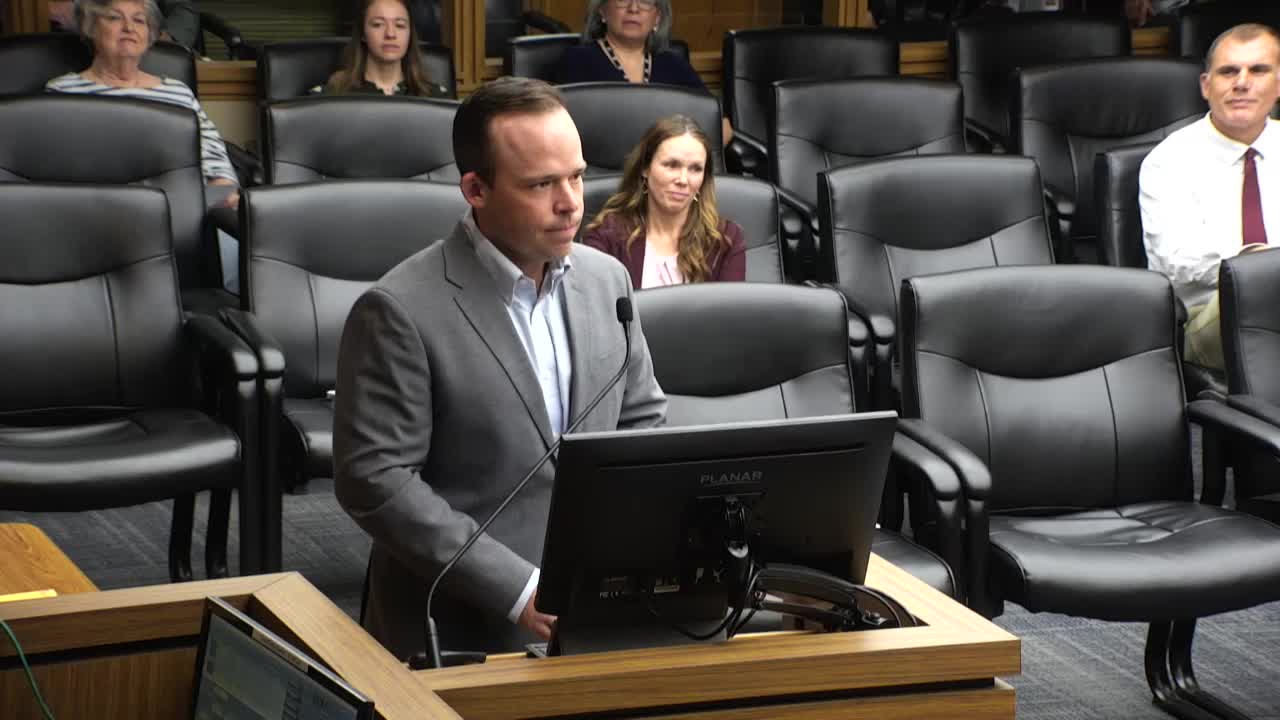
Finance Director Brady Olson described the city’s fiscal constraints, noting that Tarrant County’s appraisal timing left the city with effectively no assessed value growth this year and that the proposed tax‑rate moves were needed to fund planned operating costs, step increases for public safety and a modest cost‑of‑living adjustment for current employees.
Council Member Sable made the motion to set the maximum tax rate ($0.526212) for consideration on Sept. 9; Council Member Farco seconded. The motion passed 6‑0.
Votes at a glance - Consent agenda (minutes, tax roll, site plan for 3000 Crystal Springs Street, NEFTA interlocal amendment, police locker purchase, ratification of lawsuit challenging an AG opinion, and other consent items): approved unanimously (mover: Council Member Farco; seconder: Council Member Gagliardi). - Resolution to renew employee medical and dental insurance with Cigna (effective Oct. 1, 2025): approved unanimously (mover: Council Member Gagliardi; seconder: Council Member Sable). - Call public hearing on proposed FY 2025–26 budget for Sept. 9, 2025: approved unanimously (mover: Council Member Farco; seconder: Mayor Pro Tem Dawkins). - Motion to set maximum tax rate of $0.526212 per $100 assessed valuation and schedule the public hearing for Sept. 9: approved 6‑0 (mover: Council Member Sable; seconder: Council Member Farco).
Council members said they expect further public input and additional budget decisions before a final tax rate is set. Staff emphasized the Sept. 9 meeting will be the formal public hearing where the council may adopt a final rate after hearing citizens’ comments and additional financial detail.
The council’s action gives staff and the public time to evaluate tradeoffs between the recurring retirement liability and other immediate spending priorities while reserving the council’s option to act at the Sept. 9 hearing.