Get Full Government Meeting Transcripts, Videos, & Alerts Forever!
Get email alerts on the Public Health Clinic Consolidation topic
No spam. Unsubscribe anytime.
Public speakers urge St. Clair County board to reject medical director memo that would close clinics and seek end to water fluoridation
Summary
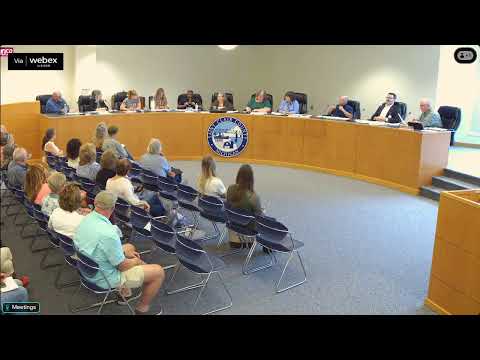
St. Clair County Health Advisory Board members heard more than two hours of public comment at an August advisory meeting on proposals from Medical Director Dr. Remington Nevin to consolidate community clinical services, curtail outreach clinics and advocate removing fluoride from municipal drinking water.
St. Clair County Health Advisory Board members heard more than two hours of public comment at an August advisory meeting on proposals from Medical Director Dr. Remington Nevin to consolidate community clinical services, curtail outreach clinics and advocate removing fluoride from municipal drinking water.
The public outcry included health-care workers, retired clinicians, local pastors and community advocates who said the changes would reduce access to vaccines, school-based care and other preventive services in Yale, Algonac, Port Huron and other parts of the county. Several speakers also warned the changes risked loss of grant funding that pays for some outreach services.
"Public health is not free community health care," said Angie Dufresne, a Fort Gratiot resident. "I fullheartedly support Doctor Nevin in all of his directives ... but we need to get control of it before we lose funding." Dufresne said she supported the board's work while also asking for professional conduct in meetings.
Several health-care professionals questioned the memorandum's rationale and the safety claims behind proposals to end off-site clinics. Steven Gura, a professor of nursing at SC4 and former advisory board member, told the board that Dr. Nevin is well qualified but that his memorandum does not solve primary-care access. "Logically, we should have a second part-time primary care physician who has credentials for nurse oversight to meet the needs of the community," Gura said, while recommending an addendum that closures be temporary until alternate physician coverage is found.
Nurses and county health department staff urged the board to retain standing orders and off-site clinics. Amber Conagieser, who said she works for the health department, told the board that nurses and nurse practitioners "hold their own license, credentials, and education" and should be trusted to provide care within their scope. Conagieser said the medical director works 16 hours a week and that that part-time status creates a service gap but is not an argument to eliminate community clinics.
Speakers with dental and public-health expertise strongly defended community water fluoridation. "At the recommended levels of 0.7 milligrams per liter, fluoridation is safe, effective, and recognized as a major public health achievement," said Dr. Kimberly Raleigh, interim executive director of the Michigan Oral Health Coalition. Retired dentist Ralph Gilohulli described fluoride dosing in parts per million and told the board that raising levels from a Great Lakes baseline of about 0.5 parts per million to the recommended 0.7 yields community benefits for dental decay prevention.
Other public commenters warned that reducing local vaccine and testing access would push people to emergency departments and threaten preparedness for outbreaks of measles, influenza, RSV or other communicable diseases. "If we take these clinics away ... our health care system will collapse," said Reverend David Stensky, a local pastor and hospital chaplain.
Board procedure and motions
Separately, the advisory board handled several procedural motions at the start of the meeting. After debate about whether to move public comment in the agenda, the board fixed the meeting adjournment time at 11 a.m.; a roll call vote approved that motion 4-3. The board then approved a motion, also by roll call, that left the order of public comment as originally posted while keeping the 11 a.m. adjournment time; that motion passed 4-3.
A motion to postpone any action on Dr. Nevin's memorandum for 90 days was moved and seconded and debated, but the maker of the motion withdrew it before a vote when the meeting reached the fixed 11 a.m. adjournment time. Board members also moved and seconded approval of the July 2025 minutes and of the budget-to-actual and transaction registry; those items were carried without extended public debate.
Board and staff remarks on authority and timeline
During discussion, the chair noted that "Dr. Nevin's memorandum will take effect September 1" and emphasized that the medical director issues medical orders; that point was raised as a legal and operational constraint by multiple speakers. Public commenters and several board members repeatedly referenced standing orders, collaborative agreements for nurse practitioners, and the public health code as the frameworks shaping who may provide vaccines and testing under delegated authority.
What proponents and opponents said
Supporters of the memorandum and of Dr. Nevin's approach argued that consolidation and tighter oversight respond to liability concerns and ensure use of the medical director's license in ways that meet his standard of care. "There is a disconnect between this medical director's directives and the mission of the health department," said one resident who supported Dr. Nevin, asking the board to consider legal exposure.
Opponents argued the changes would disproportionately harm residents who rely on outreach clinics and school-based services, including families without reliable transportation. Multiple speakers warned that grant-funded programs might be lost permanently if clinics close, and urged the board to seek collaborative solutions, such as adding an additional physician or adjusting schedules rather than eliminating services.
Where things stand
The advisory board did not vote to adopt or reject Dr. Nevin's memorandum during the meeting. The motion to postpone or to formally oppose the memorandum was withdrawn when the meeting reached its fixed adjournment time. The board approved procedural votes and routine financial reports and adjourned at the fixed time of 11 a.m.
The medical director's memorandum, which Dr. Nevin has presented as administrative orders, was described in the packet as taking effect Sept. 1; the advisory board has no unilateral authority to alter an individual physician's standing orders, and commenters urged the board to consult county legal counsel and state public-health authorities to determine next steps and the effect on grant-funded services and community clinics.
A special meeting or further agenda item addressing the memorandum could be scheduled in the coming weeks; the advisory board did not set a follow-up date at the session's close.