Get Full Government Meeting Transcripts, Videos, & Alerts Forever!
Get email alerts on the Energy Policy topic
No spam. Unsubscribe anytime.
Fremont County opts out of state EV-charging permitting model established by HB24-1173
Summary
The commissioners approved a resolution opting out of the permitting model promoted by House Bill 24-1173, saying the county’s current permitting (electrical permit) meets safety needs and expressing concern about state energy-code implications for building costs and consumer choice.
FREMONT COUNTY, Colo. — On Aug. 12 the Fremont County Board of County Commissioners approved Resolution No. 16, Series 2025, formally opting out of the electric motor vehicle charging system permitting process promoted by House Bill 24-1173.
The resolution passed on a roll-call vote recorded as aye by the three commissioners present. County legal staff explained the county currently requires an electrical permit for installations and said the county is not adopting the Colorado Energy Code’s model permitting path embedded in HB24-1173.
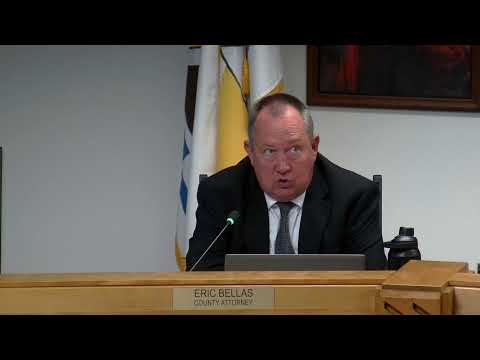
County Attorney (transcript reference) described House Bill 24-1173 as intending to streamline permitting by encouraging adoption of a model code from the Colorado Energy Office, but cautioned the county about broader energy-code requirements the attorney said could affect remodeling and new construction. "What it in fact does is it essentially encourages the electrification of everything not only to be built, but everything currently existing that may need to be updated," the attorney said during discussion, arguing that such requirements could increase construction costs and limit consumer choice.
Several commissioners framed the vote as a local decision to maintain existing permitting practices and to avoid committing the county to statewide energy-code requirements. One commissioner said personal choice should drive adoption of new technologies: "I currently own my third hybrid vehicle. I love hybrid cars. That's my choice. I have 0 interest and 0 intention on ever owning an electric vehicle... Today, I don't believe in that technology," the speaker said, framing the opt-out as protecting local choice rather than banning chargers.
The resolution does not ban electric vehicle charging stations in the county. Commissioners and staff said electrical permits continue to be required for safety, and that private or commercial entities may still install chargers under existing codes and permit processes.
Votes at a glance: Resolution No. 16, Series 2025 — opting out of the permitting process created under HB24-1173 — moved, seconded, and approved on roll call (recorded in transcript as: "Commissioner Bridal. Aye. Commissioner McFaul. Aye. Commissioner Grantham. Aye").
County staff and commissioners noted the decision is limited to the permitting model and does not prohibit charging infrastructure; rather, it declines the county’s participation in the specific state model-permit/code pathway.