Get Full Government Meeting Transcripts, Videos, & Alerts Forever!
Get email alerts on the School Mental Health topic
No spam. Unsubscribe anytime.
Counselors urged for elementary grades after counselors report severe cases in middle school
Summary
Counselors and school leaders told the Select Committee that districts need school-based counseling at the elementary level, and counselors described urgent cases that reached middle-school offices within days of school starting.
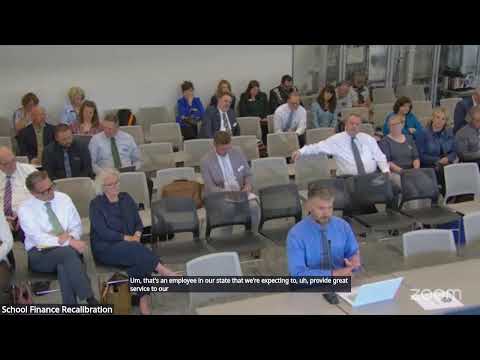
CASPER, Wyo. — School counselors and district leaders urged the Select Committee on School Finance on June 18 to fund counselors at the elementary level, saying school-based counseling identifies and responds to severe child-safety and mental-health needs and that the term “mental health counselor” is too broad to be used interchangeably with a school counselor.
What witnesses said
- Jeff Jones, a middle-school counselor and former teacher, recounted an incident from his early counseling work in which a sixth-grade student came to him in the first week of school and reported an ongoing sexual-abuse situation in her family. Jones described how the student disclosed, the counselor’s duty as a mandatory reporter, and the role school counselors played in immediate student protection and referral to outside clinical care. Jones used the case to illustrate why in-school counseling capacity matters for early identification of trauma and urgent needs.
- Jones and other witnesses asked the committee to clarify terminology. Jones said “mental health counselor” can mean licensed clinical psychologists, psychiatrists or social workers in private practice, whereas school counselors hold educator certification and endorsements specific to schools. He said school counselors are trained to identify and refer higher-intensity clinical needs, but that the school role is distinct from a clinical provider who prescribes medications or treats clients in private practice.
Why it matters: Elementary-level counseling can identify needs earlier, and witnesses said the funding model’s current counselor allocations (middle and high school) leave a gap for younger children. Witnesses urged the committee to consider adding elementary counselors into the funded model or to propose alternative funding approaches that accelerate hiring of school-based mental-health staff.
Committee response and next steps
Committee members asked for clarification on roles, licensing and how school counselor endorsements differ from clinical licensure. Consultants and department staff were asked to document the counselor workforce, credentialing pathways, and to estimate the fiscal impact of adding elementary counselor positions into the funding model.
Ending
Parents, counselors and administrators urged the committee to treat school counseling resources — especially for younger grades — as core to student safety, early intervention and educational success.