Get Full Government Meeting Transcripts, Videos, & Alerts Forever!
Get email alerts on the Special Education topic
No spam. Unsubscribe anytime.
Special-education funding, unpredictable high-cost placements spotlighted in public comments
Summary
Speakers urged clearer reimbursement and timelier payments for special-education costs and flagged single-student high-cost placements that can strain small district budgets.
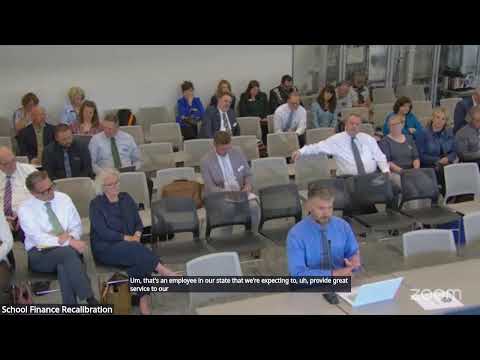
CASPER, Wyo. — During public comment at the Select Committee on School Finance’s June 18 recalibration hearing, special-education directors and district leaders urged the committee to address the timing and structure of special-education funding and to consider options for quicker reimbursement of extraordinary placement costs.
Why it matters: Districts with a small number of high-cost special-education placements can face sudden and severe budget pressure if reimbursement is slow or if per-student placement costs are very large. Witnesses urged that funding and cash flow processes should be updated so districts are not forced to front large outlays and wait months for reimbursement.
What witnesses said
- Shad Hamilton, special-education director at Uinta County School District No. 4 and a member of statewide special-education groups, told the committee Wyoming needs predictable, competitive funding to retain staff and to meet high-cost service needs. Hamilton said smaller districts contend with rate changes for out-of-district providers and that some vendors adjust rates to be competitive with neighboring states.
- Jeremy Smith, Sheridan County School District No. 1 business manager, told the committee about a recent placement his district funded and characterized as costly: “We just sent a kid this last year to C-bar V and Wilson. $400,000.” He cited the placement cost as an example of fiscal strain that can follow a single student placement.
- Several witnesses recommended either centralized contracts for specialized residential placements, monthly reimbursement mechanisms, or direct state handling of extraordinarily expensive placements to prevent local cash-flow crises. One practical suggestion: use the state’s existing electronic grant-management system (eGMS) to expedite monthly reimbursements rather than waiting for slower, episodic payments.
Committee follow-up
Committee members asked staff and consultants to analyze reimbursement timing and to return with options that would reduce district cash-flow pressure from high-cost special-education placements. Witnesses favored approaches that would preserve local responsibility for services while reducing risk that a single out-of-district placement would unduly strain a district’s general fund.
Ending
Speakers urged the committee to treat special-education reimbursements and placements as priorities in the recalibration work, and to present options that smooth cost spikes and accelerate payments to districts.