Get Full Government Meeting Transcripts, Videos, & Alerts Forever!
Get email alerts on the Spending Policy Reduction And Cipa Repeal topic
No spam. Unsubscribe anytime.
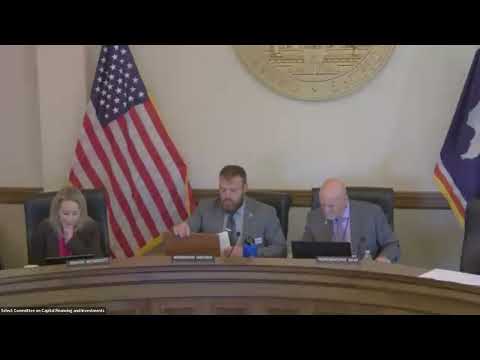
Committee debates bills to reduce spending rates; motion on repeal-draft of CIPA advances
Summary
The committee considered two draft House bills to reduce permanent-fund spending policies and debated a bill draft to repeal the CIPA account and reallocate investment earnings. Motions on the spending-policy bills failed; the committee advanced the LSO bill draft to repeal CIPA.
The Select Committee on Capital Financing & Investments took up two related draft measures that would lower the percentage of investment earnings available for annual spending from several state permanent funds and also considered a legislative-service-office draft to repeal the Capital Improvements and Projects Account (CIPA) and change how excess earnings are distributed.
Representative Harrelson moved to consider the draft of House Bill 270, a proposal that would reduce the spending-policy percentage (presented in committee discussion as a reduction from 5.0% to 4.5% on the Permanent Mineral Trust Fund side). The motion was seconded by Representative Wasserburger and debated; after a roll-call vote the motion failed (clerk recorded a 6-6 tie). The committee discussion and LSO responses during the debate repeatedly emphasized that a reduction in the percent would temporarily lower dollars available for appropriations but could increase long-term corpus growth and investment returns, creating "short-term pain for long-term gain," in the words of Representative Bair and others.
A second motion to bring House Bill 271 (a phased reduction for the Common School Permanent Land Fund, described in committee materials as 4.75% in year one and 4.5% in year two) likewise drew extended debate over budget timing and school funding implications; committee members asked how a cut would alter the long-range school funding forecast and whether school shortfalls (including prior property-tax changes and other policy actions) would be worsened by shifting dollars into long-term investments. The motion to consider House Bill 271 did not carry after roll call (clerk recorded a tie reported as 6-6 and the motion failed).
Separately, the committee considered a legislative-service-office bill draft prepared after 2025 Senate File 169 and its subsequent line-item vetoes. The LSO draft would repeal CIPA and restore the distribution scheme that sent amounts above a 2.5% threshold of PMTF earnings to the Legislative Stabilization Reserve Account (LSRA) rather than the then-vetoed distribution to CIPA; it also contains conforming technical changes and a reporting requirement directing the auditor to report amounts transferred to the general fund after repeal.
On a motion to advance the LSO bill draft (26 LSO 123), the committee approved the draft and authorized it to move forward. The roll call on that bill draft passed in committee (committee clerk recorded a majority in favor; the clerk reported the Senate delegation recorded six ayes and the House delegation recorded four ayes and two no votes), and staff noted bilingual technical comments remain to be addressed in bill text before introduction.
Ending: Committee members asked LSO staff to prepare fiscal comparisons that show differences among the enacted law, the enrolled act as passed, and the LSO clean-up draft so appropriators can see the programmatic and budget consequences. Several members said they remained concerned that moving excess earnings into reserve/corpus accounts would reduce near-term appropriable balances available to the governor and the next budget process unless the draft included alternative allocation language.