Get Full Government Meeting Transcripts, Videos, & Alerts Forever!
Get email alerts on the District Transition And Strategy topic
No spam. Unsubscribe anytime.
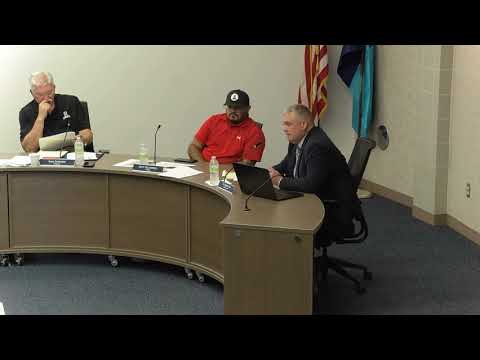
Albert Lea superintendent outlines strategic priorities, facilities task force and literacy focus
Summary
Superintendent Steve Heil told the Albert Lea Public School District study session that rebuilding trust, aligning strategic priorities, launching a facilities task force, strengthening literacy and growing local partnerships are his immediate priorities during his transition.
Superintendent Steve Heil outlined a transition agenda at the Albert Lea Public School District study session, recommending a facilities task force, clearer district identity, a stronger literacy focus and steps to retain and recruit staff.
Heil told the school board he has identified six “hidden themes” from two months of stakeholder listening: trust and voice, identity and image, community integration, equity and access, whole-child focus and talent retention. “We do have work to do and I’m not gonna hide from it,” Heil said.
He proposed two immediate lines of work. First, strategic realignment: review previous strategic priorities with advisory and stakeholder groups, then develop forward-moving strategic goals tied to measurable milestones. Second, create a facilities task force that will review comprehensive facilities data and make recommendations; the district has engaged an external firm (Wold Architects) to compile baseline data and Heil said a community task force will vet that information.
Heil emphasized literacy across grades and said the district should “look beyond test scores” to support students from early childhood through adult learners. He identified a stronger, district-wide professional learning community structure and a “high-reliability schools” model as priorities. “If we stay on the line for the high reliability schools we will move forward in a positive direction,” Heil said.
He also described a new CEO entrepreneurship program that partners students with local business leaders; Heil said the program is self-funded and running in business spaces rather than in district classrooms. An Education Foundation representative praised the program’s focus on small-business entrepreneurship and trades rather than producing “Fortune 500 CEOs.”
Board members asked how Heil would use past strategic planning work; Heil said he will not discard previous work and plans to conduct surveys and stakeholder sessions to “mold” existing material into updated mission, vision and core values statements. Several board members urged better inclusion of parents and multilingual access at school entrances, and asked that listening sessions and task-force outreach include explicit parent engagement.
Heil said recruitment and “grow-your-own” staff pipelines are critical and proposed targeted success-coach hours at main entry points to reduce waiting times for families who need language assistance. He repeated the need to connect schools with local businesses to better align education with workforce needs and described plans for a student superintendent cabinet to bring student voice into planning.
The presentation concluded with board discussion about athletics and community use of facilities as ways to strengthen district–community ties. Heil said he will present more detailed priority-setting items tied to his first-year evaluation and suggested staff and board will refine measurable goals once advisory groups begin work.
Votes at a glance The board approved the meeting agenda by voice vote at the start of the session; a second was recorded and the chair called the motion adopted by ayes (no opposition noted).