Get Full Government Meeting Transcripts, Videos, & Alerts Forever!
Get email alerts on the Aquatic Center Operations topic
No spam. Unsubscribe anytime.
Pasco PFD reviews conservative FCS operating study and directs staff to update interlocal agreement with city
Summary
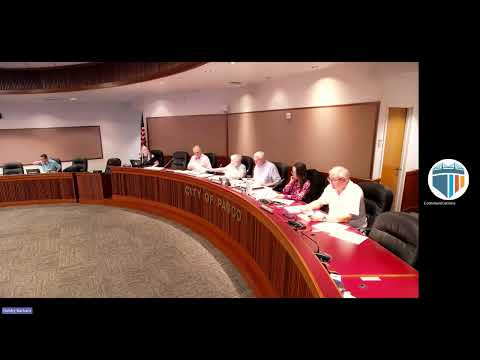
The Pasco Public Facilities District board discussed a conservative operating forecast by consultant FCS for the new aquatic center and voted to direct the executive director to work with the PFD attorney and the City of Pasco to develop an updated interlocal agreement for management and operation.
The Pasco Public Facilities District board discussed a draft operating forecast by consultant FCS that projects lower operating revenues than an earlier Ballard King analysis and voted to direct the executive director to work with the PFD attorney and the City of Pasco to develop an updated interlocal agreement for management and operation of the Aquatic Center.
The discussion focused on differences between the two outside studies: FCS estimated roughly $1.6 million in annual operating revenue for the facility, compared with Ballard King’s roughly $2.7 million estimate, and projected a city-operated annual operating cost of about $3.29 million compared with Ballard King’s $3.25 million. Board members and staff repeatedly described the two reports as “bookends” and said the likely outcome would be somewhere between the two projections.
Why it matters: the operating forecast informs staffing, fee-setting, and how much of the center’s shortfall will be covered by Pasco sales tax revenues. FCS projected a multi‑year shortfall that would be covered in part by sales tax receipts; staff said the PFD anticipates using sales tax funds to offset operating gaps but wants conservative assumptions for budgeting.
Key details from the presentation and discussion: Jesse (budget and finance committee staff) summarized FCS’s scope and assumptions, saying FCS assumed a 2026 opening, about 60,000 average annual visits, and no separate resident/nonresident price differentiation in its baseline. Major items driving the revenue gap included swim‑pass sales and concessions: Ballard King projected roughly $1.3 million from swim passes and about $300,000 in concessions; FCS used more conservative assumptions (about 700 annual passes in line with current Memorial Pool sales and an initial indoor concession modeled more like vending that yields roughly $40,000). Insurance estimates also differed substantially: Ballard King estimated about $50,000; the city’s insurer provided an estimate of about $224,000.
Board members and staff described other variables that could change results: hours of operation, marketing intensity, programming mix, whether Memorial Pool remains year‑round, and whether nonresident fees are adopted. Staff said they had the underlying FCS spreadsheet and could revise assumptions (attendance, hours, staffing) to produce updated forecasts.
Board action and direction: Marie Gillespie moved and the board seconded a motion directing the executive director to work with the PFD attorney and City of Pasco staff to develop an updated interlocal agreement (ILA) that reflects operating roles and the “true up”/reporting mechanisms discussed (motion carried). Staff said any eventual ILA would include reporting requirements and a true‑up mechanism so actual operating costs and revenues are reconciled after operations begin.
What the board did not decide: the board did not choose a single revenue forecast or adopt a permanent rate structure at this meeting. Members emphasized the study provides a conservative floor and that operating decisions (staffing, marketing, hours, concession model) can be adjusted once the facility is open and actual data are available.
Next steps: staff will work with the City of Pasco and legal counsel to draft a revised ILA and will return recommendations to the board. Staff also said they could use the FCS model spreadsheet to run alternate scenarios and provide clarifying answers to board questions about particular line items (for example, the swim‑pass assumptions and concession revenue comparisons).