Get Full Government Meeting Transcripts, Videos, & Alerts Forever!
Get email alerts on the Historic Preservation topic
No spam. Unsubscribe anytime.
School board schedules Sept. 9 workshop to study historic designation and future use of 'Old Rock Building'
Summary
Taylor County School Board voted to hold a public workshop on Sept. 9 to gather information on historic‑site designation, grant options and future uses for the Old Rock Building after a presentation on national/state landmark processes.
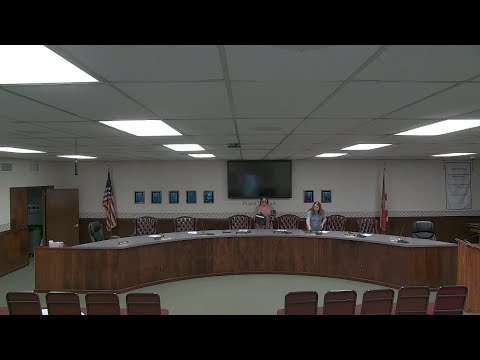
The Taylor County School Board voted to hold a public workshop on Sept. 9 at 5:15 p.m. to review the future use and possible historic designation of the Old Rock Building, board members said during an extended discussion.
Board member Mathis presented background on historic designation, saying the National Register of Historic Places typically requires a property to be at least 50 years old and to meet criteria such as association with important people or events or distinctive architecture. Mathis told the board federal recognition can bring eligibility for federal and state grants, tax incentives and protection when federal funding is involved, and that local ordinances still apply. Mathis also cited a nearby example — a Sopchoppy elementary school — that the district there placed on the register and later used to attract grants and restoration funding.
Melanie Cox advised the board that the district should first pursue a state master site file number before a national application because the state designation streamlines the national application and supports grant efforts. Cox also suggested seeking a Department of Commerce planning grant (no local match required) to fund outside consultants to lead stakeholder meetings and produce a formal reuse plan.
Board members expressed two themes: (1) interest in preserving the building and obtaining outside funding, and (2) concern about ongoing costs. Participants noted the building had recurring costs (board members cited roughly $97,000 a year in carrying costs) and recent district investments in the property (members referenced prior expenditures described in the meeting as “half a million” to “$750,000”). One board member described the parcel as a multi‑million dollar asset (spoken in the meeting as about $2,000,000) and urged the board to avoid creating a long‑term taxpayer burden.
The board voted to schedule a public workshop to gather preliminary research and to consult stakeholders including the county and city governments, local historical societies and potential grant writers. Miss Donnell moved to hold the workshop; Miss Carlton seconded. The motion carried. Melanie Cox agreed to join or call into the Sept. 9 workshop and to provide information on funding cycles and planning‑grant options beforehand.
Next steps identified by the board included: staff research on available grants and likely costs, obtaining a state master site file number if the board wants to pursue historic designation, drafting a short information packet for public meetings, and inviting government agencies and prospective local partners to the workshop. The board and staff said they will do internal prework so public attendees are presented with feasible options rather than open‑ended requests for ideas.
The board did not adopt any preservation ordinance or binding agreement at the meeting; it only approved the workshop and requested staff and consultants provide further information for public discussion.