Get Full Government Meeting Transcripts, Videos, & Alerts Forever!
Get email alerts on the Harbor Island Remediation topic
No spam. Unsubscribe anytime.
Grand Haven details Harbor Island PFAS, CCR investigation; $1.09 million in congressional funds reported
Summary
Derek Gaitos, the city’s project manager, and HDR project manager Laura Zawaida gave Grand Haven City Council a technical update July 21 on PFAS and coal combustion residuals (CCR) investigations at Harbor Island and said a congressional appropriations entry secured $1,092,000 for the project, subject to further congressional steps.
Derek Gaitos, the city’s project manager, and Laura Zawaida, HDR’s Harbor Island project manager, updated the Grand Haven City Council on July 21 about ongoing investigations and planning for remediation of contamination on Harbor Island, including PFAS sampling, CCR (coal combustion residuals) issues and verification of coal‑pile removal.
The presentation described a three‑phase remedial investigation work plan that will expand monitoring wells and borings, add permanent monitoring points where temporary vertical aquifer samples were previously taken, and gather data on the groundwater–surface water interface between the island and the Grand River. Gaitos told council the Phase 1 field work is planned for summer and fall and that the city expects to begin drawing more definitive conclusions in early 2026.
The plan matters because the data will be used to evaluate remediation alternatives, better estimate cost and constructability, and prepare submittals to the Michigan Department of Environment, Great Lakes, and Energy (EGLE) and federal regulators. "This next plan ... you'll see at your second meeting in August. You should be getting the cost associated with that," Gaitos said. "We're getting really close. We're getting really close."
Why the issue is significant
PFAS chemicals and CCR on Harbor Island have regulatory, public‑health and budget implications for the city. Council members pressed staff for a clearer timetable, cost range and how regulators will weigh public‑protection requirements against municipal affordability. In response, staff described steps to narrow technical uncertainties and to present funding requests to the city and the Board of Light and Power (BLP) in August.
Work plan and technical steps
Laura Zawaida said the data collection will include: expanded monitoring wells to define groundwater plumes; borings to measure the presence and thickness of confining clay layers beneath the island; characterization of ash around former plant units; bathymetric and topographic surveys if cut‑and‑fill estimations are needed; and, depending on results, pump tests and groundwater fate‑and‑transport modeling. "That data will help us design whether we need any kind of a cutoff between the island and the Grand River," Zawaida said.
Zawaida said EGLE reviewed the work plan and suggested minor edits; the city expects to post deliverables and memos to the project resource library at renewharborisland.com. She also reported the city’s hydrogeologic monitoring plan (HMP) is now approved by the state; that approval starts compliance timing tied to some regulatory steps.
Coal‑pile removal and verification
City staff reported substantial material removal from the former coal stockpile and said EGLE visited the site and expressed satisfaction with progress. The city placed a thin topsoil cap to limit erosion while verification work continues. Gaitos warned that additional change orders or follow‑up work may be required in areas where crews punched through a thin clay layer to complete removals. "It turned out really well so far," he said, but added that portions of the site may need revisiting as the broader remediation plan advances.
Costs and schedule
Councilmembers pressed staff for cost estimates. Gaitos said prior, conceptual estimates were broad; staff has worked with HDR to tighten those estimates and will continue refining them as new data arrive. He said sampling and monitoring will extend into mid‑2026 and that the city expects to be discussing remedy selection in early 2026. The project team previously discussed a wide conceptual range; councilmembers referenced a previously circulated $40‑$80 million concept, which staff said they are updating with new data.
Federal appropriation and next steps
Gaitos and Zawaida announced late Friday that the Renew Harbor Island project received a congressional appropriation entry in the FY2026 Interior, Environment, and Related Agencies bill. The city sought $2,000,000 and the appropriations language included $1,092,000 for the project; Gaitos said those funds "still have to be appropriated" through remaining congressional steps. He said the city has also asked the BLP and city council for funding authorization related to the upcoming work plan and will return in August with cost requests.
Public participation and upcoming outreach
Staff posted reports and quarterly monitoring results on the project website and said a town‑hall meeting is tentatively scheduled for Wednesday, Nov. 5, 2025, from 6:30 to 8 p.m. at Central Park Place. Zawaida said the project team will use town halls and posted deliverables to seek community feedback as remedy options are developed.
Public comments at the meeting
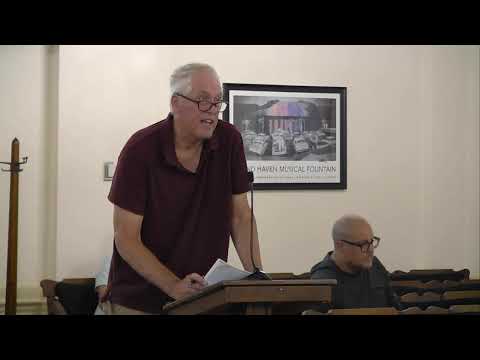
Local resident Jim Hagen urged the council to explore community solar on Harbor Island and asked the council and BLP to study buildable area, timing and incentive opportunities under the federal Inflation Reduction Act. "I think council needs to request a little bit of work here from the BOP," Hagen said, noting potential tax‑credit and 'energy‑community' incentives that could apply if parts of the site are suitable.
What remains unresolved
Staff said technical sampling must verify confining clay thickness, extent of ash and the groundwater‑surface water interaction before final remedy options can be costed and selected. Staff emphasized that regulators’ public‑protection requirements ultimately drive acceptable remedies, and that staff will seek to segment the island where possible to avoid remediating areas unnecessarily.
For now, the city is moving from conceptual alternatives toward site‑specific designs and tighter cost estimates; it is seeking council and BLP funding approvals in August and expects further public outreach in fall 2025.