Saint Paul officials outline downtown revitalization strategy, emphasize public safety and preferrable reuse of city properties
Loading...
Summary
City leaders described a three-part downtown strategy that prioritizes community-first public safety and converting underused offices to housing, detailed new task forces and one-time public-realm investments, and flagged gaps in staffing and business outreach capacity.
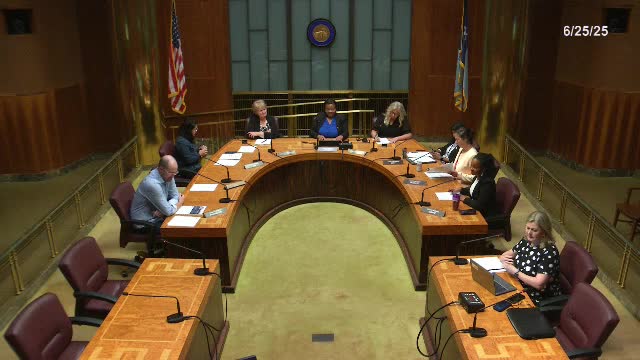
Deputy Mayor Ginger Tincher and city staff presented the City of Saint Paul’s plan to support the Saint Paul Downtown Alliance’s 2024 investment strategy, saying the city will prioritize community-first public safety and downtown revitalization across departments and build workgroups to deliver specific projects.
The plan responds to a Downtown Alliance strategy with three main priorities: converting underused office space into housing, investing in pedestrian-oriented streetscape improvements and advancing high-priority redevelopment opportunities. Tincher said the city will organize “as an enterprise” around those goals and has created leadership groups, work groups and task forces to move projects forward.
City leaders said the public-sector role will focus on actions private partners cannot take, including infrastructure, permits, property monitoring and coordinated public-realm investments. Tincher described a property risk management task force formed to address problems at Madison Equities properties and said the team now produces a regular situation report for stakeholders. She also said the 2025 budget included one-time funding to accelerate sidewalk repairs, trash-can replacements and tree work downtown.
Staff described four categories of municipal work: top priorities (community-first public safety and downtown revitalization), the daily “grind” of essential services, strategic “drive” projects and “vampires” (processes that drain staff time). Tincher said the administration will say “no or not now” to some lower-priority items so staff and resources can focus on urgent downtown work.
On office-to-housing conversions, staff said the city is assessing public assets such as the annex building to test whether converting office space to housing would be a “higher and better use.” The presentation said a space-needs analysis is under way to determine how many desks and what facilities the city would need if offices move, and that an RFP and developer-selection process would follow only if the partnership determines conversion is appropriate.
Commissioners asked about the city’s return-to-office policy and business retention work. Tincher said the city has increased in-office requirements since COVID and that “we are now at at least 3 days,” adding the administration would provide specifics. Staff acknowledged many municipal employees (for example first responders) were never fully remote and said office-based staff are transitioning back.
On business outreach, staff described a reactive model today (responding when businesses raise problems) and said the administration aspires to a proactive model in which assigned city liaisons regularly check in with business owners and coordinate across departments. Staff and commissioners noted resource limits: dedicated outreach would require additional personnel or a short-term “all hands” outreach push, and staff proposed a CRM integration to track business contacts and permit activity so follow-ups are visible across departments.
Commissioners and staff discussed public-realm tools that can be deployed quickly, including pedestrianizing streets to create event-friendly, walkable spaces and using relatively low-cost street treatments and temporary barriers. Several commissioners urged that residents who already live downtown and unsheltered people be included in outreach and housing strategies as the plan proceeds.
Deputy Mayor Tincher said the city’s communications and public information officers will coordinate a citywide message calendar to “carry those good news stories” and better promote downtown events and activations with partners such as Visit St. Paul and the Downtown Alliance.
Officials framed the effort as a partnership among the City, Ramsey County, the Saint Paul Port Authority, Visit Saint Paul, the Metropolitan Council and private and nonprofit partners; staff said the city’s role is to catalyze and coordinate the public pieces of that partnership.
Looking ahead, staff said workgroups will continue to form task forces on office utilization, business retention, public-realm improvements and property monitoring; the city will return with details on the space-needs analysis and timing for any RFPs if conversion of a public building is recommended.
The presentation did not include formal council votes; commissioners asked for additional detail on timelines, staffing needs for business outreach and the cost estimates tied to public-realm projects.
Ending: Commissioners thanked Tincher and staff and moved to the next agenda item, a presentation on the Housing Trust Fund.