Get Full Government Meeting Transcripts, Videos, & Alerts Forever!
Get email alerts on the Housing Code Enforcement topic
No spam. Unsubscribe anytime.
Council approves alternative landlord‑training, tenant-notification ordinance after rejecting petition
Summary
The Duluth City Council voted 6–2 to approve Ordinance 16, a council-authored alternative that adds landlord training requirements, additional tenant notifications and shortened timelines for life‑safety repairs. Council authors said the ordinance protects tenants without shifting legal or financial risk onto renters.
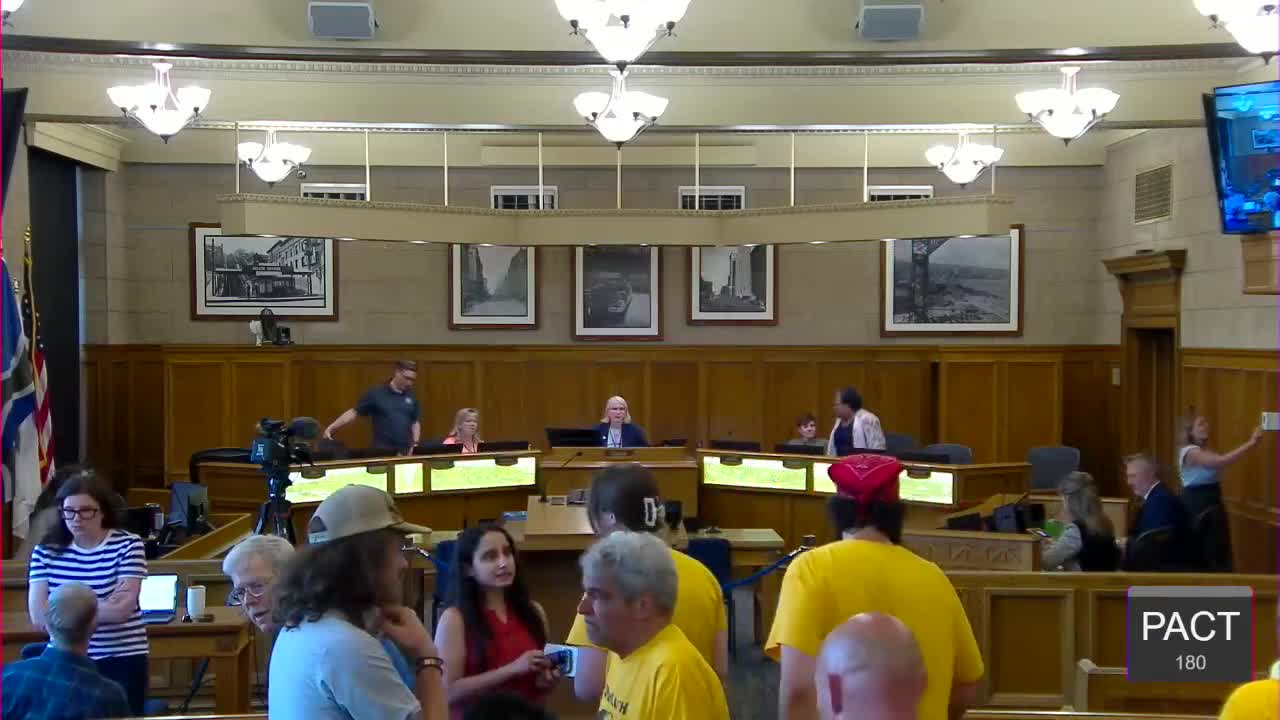
The Duluth City Council approved Ordinance 16, an amendment to chapter 29a of the Duluth City Code, by a 6–2 vote at a special meeting that included extended public testimony on competing proposals to address rental housing repairs.
Ordinance 16 requires landlord training, expands tenant notification requirements and shortens repair timelines for life‑safety and code violations. Council supporters said the measure gives tenants enforceable protections while relying on the city's existing inspection and enforcement framework.
“Both the tenant's right to repair ballot measure and the alternate ordinance before council tonight advocate for tenants receiving timely repairs. Period,” Councilor Randy Randolph said during debate. “But the only one of them that provides the real enforceable protections that keep tenants safe without putting them at legal or financial risk is the alternate ordinance brought forward by the city council.”
Council debate emphasized enforceability, the role of the life‑safety division, and how a city ordinance differs from a citizen petition placed directly on the ballot. Supporters argued the alternative ordinance keeps remedy and enforcement with the city’s life‑safety inspectors and imposes penalties for noncompliance under existing city code, rather than asking tenants to pay contractors and seek reimbursement.
Deputy Fire Chief John Otis and life‑safety manager Greg Smith were present during discussion; councilors repeatedly cited life‑safety staffing constraints. City staff described current enforcement capacity: five housing inspectors plus supervisors and two support staff for nuisance/vacant property enforcement, which councilors said affects implementation and workload.
Opponents and some councilors said the council‑authored ordinance was presented as an alternative targeted at the citizen petition and could be perceived as competing with the ballot initiative. Councilor Dirwachter said she supported many elements but opposed how the ordinance was offered as an alternative to the petition and said she would vote no for that reason.
The roll call on Ordinance 16 recorded six yes votes and two no votes. The clerk's roll call recorded Owls and Dirwachter as the no votes; the tally was recorded as “The ordinance passes 6 to 2.” The ordinance will take effect under the schedule in city code and will be implemented by the life‑safety division and other departments assigned in the ordinance text.
Councilors and staff said follow‑up steps include written notices for landlords and tenants, scheduling for any training required under the ordinance, and monitoring life‑safety capacity to implement the new enforcement timelines.