Get Full Government Meeting Transcripts, Videos, & Alerts Forever!
Get email alerts on the Transportation topic
No spam. Unsubscribe anytime.
Duluth council delays creation of Transportation Commission after public pleas and staff edits requested
Summary
After hours of public testimony urging a new Transportation Commission to address road safety and multimodal planning, Duluth City Council voted 5–2 to table the ordinance creating the commission so staff and advocates can finalize technical edits and staffing details.
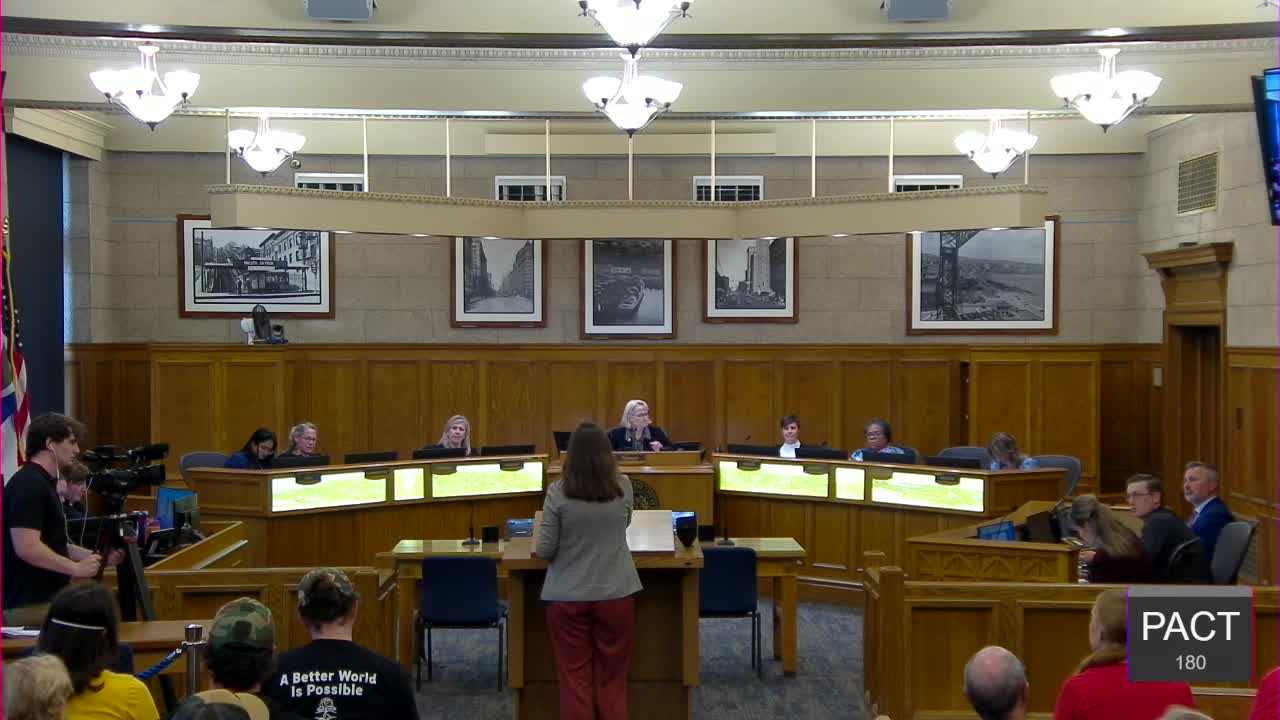
Duluth City Council on second reading voted to table an ordinance that would establish a Duluth Transportation Commission after extensive public testimony urging the body to move quickly on pedestrian, bicycle and street-safety work.
Supporters from neighborhood groups, transportation advocates and relatives of traffic victims urged the council to approve the commission at the meeting. Brandon Parker, a bicycle and pedestrian advocate, said, “We can live up to that value by empowering a commission to research and work with the community and stakeholders to build proactive recommendations” for safer streets. Former Councilor Mike Mayo and members of Vibrant Streets Duluth and other neighborhood organizations also described recent crashes and the need for a standing citizen body to advise the council and administration.
Council members pressing for caution said they wanted staff and the city attorney to finalize a small set of edits and confirm staffing plans so the new commission will be able to operate effectively. Councilor Awol, who sponsored the ordinance, acknowledged the urgency in testimony: “This commission really, the stories that we heard today were highlight the urgency of this.” Administrator Matt Staling read a letter from Mayor Emily Reiner into the record stating he and the administration support a transportation commission but asked the council to allow staff time to reconcile the commission's language with a broader review of the city’s boards and commissions.
The vote to table passed on a roll call, 5–2. Councilors voting to table were Councilor Al, Councilor Kennedy, Councilor Swenson, Vice President Nephew and President Tomanek; Councilors Dirwachter and Randolph voted no. Council members who supported tabling said the planning department is already stretched—staff currently support nine separate boards—and that clarifying staffing and scope now would reduce later delays and increase the chance the commission will be effective.
Councilors who opposed the tabling urged the body to act immediately; they said the ordinance is on its second read and that the city has had years of discussion and public input. Several speakers and council members noted major upcoming projects—Central Entrance work, the London Road and Sixth Avenue East reconstructions, the Cross City Trail completion and the Campus Connector Trail—that would benefit from commission input.
Administration and advocates committed to accelerate work on a consolidated draft. Administrator Staling told the council a working draft was likely to require additional coordination and that staff would move with “a sense of urgency”; Councilor Awol asked advocates to hold the council accountable for rapid follow-up. A motion to table the ordinance was made by Councilor Awol, seconded by Councilor Kennedy, and carried on the 5–2 roll call.
The council did not adopt the Transportation Commission ordinance at this meeting. Council and administration agreed to resume work immediately on the precise language and staffing plan; the administration indicated it will return a final draft for council consideration as soon as edits are reconciled and stakeholder concerns addressed.
Votes at this meeting related to the ordinance included a procedural roll-call on the motion to table (5 in favor, 2 opposed). The council also discussed, but did not change, a broader plan to review and realign all boards and commissions so that staffing capacity matches any additions.
The ordinance remains on the council’s agenda and will return for action after staff and advocates reconcile edits and confirm staffing and administrative support.