Get Full Government Meeting Transcripts, Videos, & Alerts Forever!
Get email alerts on the Streets And Public Works topic
No spam. Unsubscribe anytime.
Lake Elmo hears $50 million streets plan and begins discussion on streetlight utility as levies rise
Summary
Council reviewed a pavement-management–driven streets program covering local, collector and county projects and discussed a possible streetlight utility to fund $3 million in developer-installed streetlights when their vendor warranties lapse; staff warned the draft models could raise related levies over the next decade.
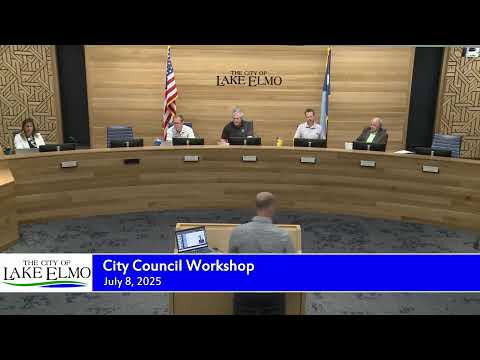
Lake Elmo staff used the July 8 workshop to present the streets portion of the CIP and to open a conceptual discussion about funding long-term streetlight ownership and replacement costs.
Jack (city engineering) summarized the streets program, describing three categories: local residential streets, collector/MSA projects and county cost‑share projects. He said local street needs account for a substantial portion of the draft $50 million streets total in the 10‑year plan and emphasized that the longer (10‑year) horizon adds uncertainty beyond five years because the city has completed many older restorations in the first half of the program.
Jack said some collector projects (for example, Hudson Boulevard) have remaining work that could be performed by developers or by the city depending on development timing. He also described the county cost‑share projects and trunk‑highway work, noting the interchange and frontage-road project near TH‑36 as a major near‑term item that has expanded in scope.
Director Handler walked council through funding sources for streets, including Municipal State Aid (MSA), special assessments, a planned transfer from the general fund and debt issuance. The CIP presentation included a draft profile that shows combined debt service and infrastructure levies rising in the coming decade; Handler said staff will remodel the levy impact as growth assumptions change.
Streetlights: staff raised a separate funding issue when Xcel Energy’s 25‑year service window for developer‑installed systems expires. Director Handler said the city currently has about $3 million worth of streetlight assets installed under developer agreements. Staff asked whether the council wants staff to study a “streetlight utility” (a fee‑based fund similar to stormwater or water utilities) or other options — continuing to have Xcel own and operate poles, buying and owning poles to reduce monthly operating costs, or a levy approach. Staff noted both models exist in other Twin Cities jurisdictions and that owning fixtures tends to lower monthly fees but shifts replacement costs and management to the city.
Council members discussed equity, practical administration and resident expectations. Several members noted rural areas intentionally lack lights and raised fairness questions about a city‑wide fee; others said a targeted utility (neighborhood-level or per-pole fee) could better match costs to benefits. Director Handler said staff will analyze costs of ownership versus leasing, sample rate structures, and equity options and return with options for future discussion.
Next steps: staff will refine street funding models, re-run levy projections with updated growth assumptions and prepare a comparative analysis of streetlight ownership versus leasing and possible fee structures for council review.