Get Full Government Meeting Transcripts, Videos, & Alerts Forever!
Get email alerts on the Capital Improvements Plan topic
No spam. Unsubscribe anytime.
Lake Elmo reviews 10-year capital improvement plan; staff asks council for direction on funding and priorities
Summary
City staff presented a draft 2026–2035 Capital Improvement Plan totaling about $133 million and asked the council for high-level direction on priorities, interfund loans and levy strategies ahead of a final adoption in December.
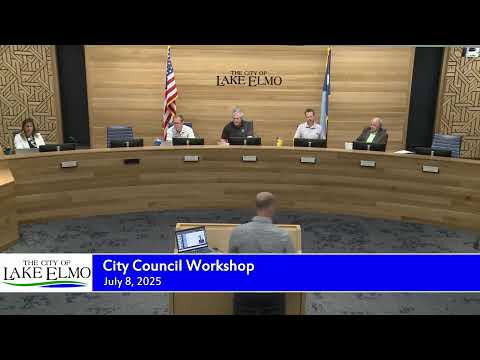
Lake Elmo City staff presented a draft 10-year Capital Improvement Plan during a July 8 workshop, outlining roughly 145 projects and asking the council for broad direction before the CIP returns for final adoption in December.
Director Handler told the council, “So this is just a, sort of preliminary discussion of the CIP. We don't adopt this until, the final version until December.” She said the plan covers vehicles, equipment, public buildings and infrastructure and noted the city moved from a five-year to a 10-year CIP in 2024 to get a longer-term view of capital needs. Handler said the draft treats a project as capital if it costs at least $25,000 and has a useful life of five years.
Why it matters: the draft shows most capital needs arise from public works — streets, water, sewer and stormwater — and includes a $50 million water treatment plant that dominates the infrastructure pie. Handler summarized the draft totals as about $133 million for 2026–2035 and said staff ranked projects by priority and funding source as they developed the plan.
Staff outlined funding tools including bonding, an infrastructure levy the council established in 2025, municipal/state aid, special assessments and interfund loans. Director Handler said the CIP model assumes a transfer from the general fund in the near term and that the infrastructure levy would rise as the city cash-flows projects. The presentation showed combined debt service and infrastructure levies rising from roughly $3.3 million to about $6 million by 2035 in the draft model.
Council members pressed staff about tradeoffs. Council Member Metruis and Council Member Hern raised questions about the source and timing of proposed interfund loans and urged staff to seek alternatives that minimize borrowing from other internal funds. Handler said staff had modeled interfund loans to smooth vehicle-replacement and other timing gaps, but that exact sources — general fund versus enterprise funds — had not been finalized.
Several department heads summarized major program areas. Marty (public works) highlighted vehicle replacements, playground and trail upkeep and public-works building repairs. Jack (city engineering) walked the council through the pavement-management–driven street program and funding scenarios for local, collector and county projects. Dustin (fire department) briefed the council on fire apparatus timing and the operational reasons staff are recommending advancing a ladder truck purchase.
Director Handler said the CIP is drafted in today's dollars and will be adjusted for inflation at the time projects move to implementation. “When we move this forward next year, everybody's gonna take a look at their items, decide what has already happened with inflation and adjust those prices accordingly,” she said.
Bottom line: staff asked the council whether specific items — including an earlier ladder truck purchase, a planned $5 million general-fund transfer to streets and possible interfund loans to the vehicle replacement fund — should remain in the December CIP. Council members gave initial guidance but asked staff for more financial analyses, alternatives such as lease-purchase options on vehicles, and to bring back materials showing levy and tax-rate impacts.
Looking ahead: staff will refine project costs and funding models and return to council before final adoption in December.