Get Full Government Meeting Transcripts, Videos, & Alerts Forever!
Monroe County sets tentative FY2026 millage at 2.7327%, advances $678.6 million budget after staff cuts and reserve planning
Summary
Monroe County officials on July 15 advanced a proposed $678,600,000 fiscal 2026 budget and set a tentative countywide millage rate of 2.7327% to send on TRIM notices.
Monroe County officials on July 15 advanced a proposed $678,600,000 fiscal 2026 budget and set a tentative countywide millage rate of 2.7327% to send on the Truth in Millage (TRIM) notices. The board also approved a 2.9% across‑the‑board cost‑of‑living increase for county employees and constitutional officers, approved a package of cuts and vacant‑position eliminations to reduce operating costs, and directed an increase in reserves to bolster the county’s disaster readiness.
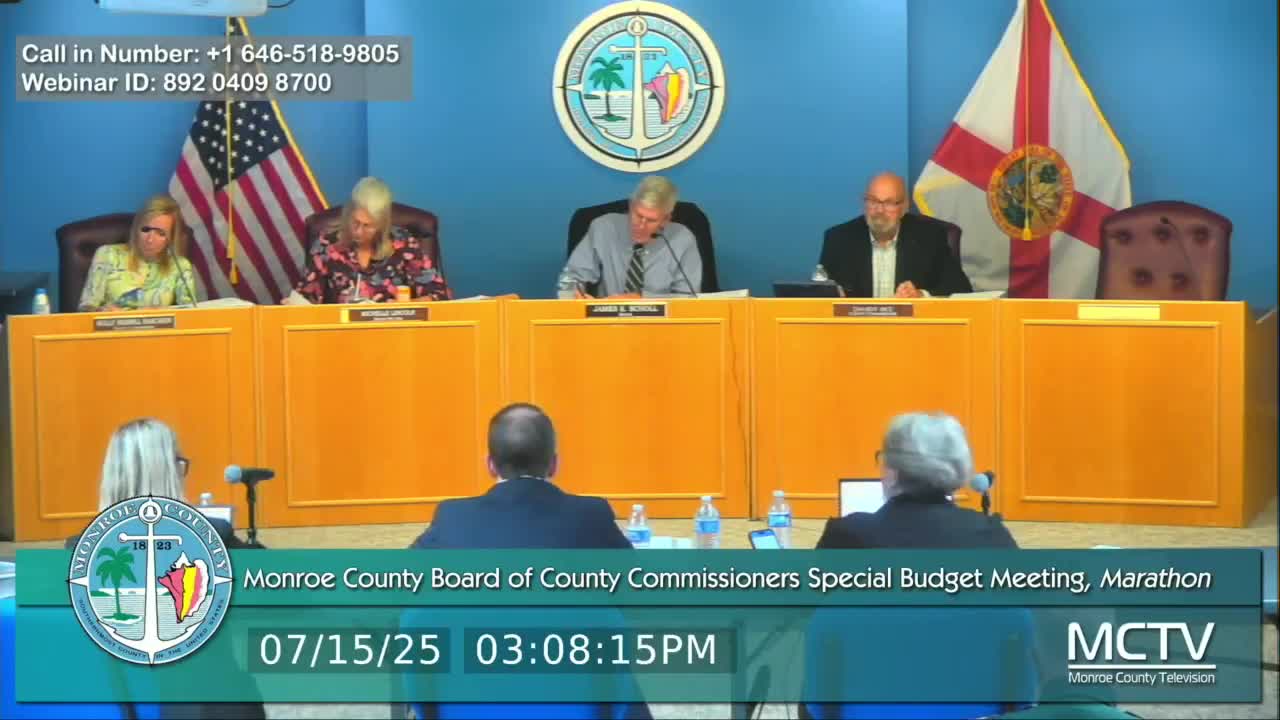
The budget presentation and votes came during a special budget meeting in Marathon where John Quinn, assistant budget director in the Office of Management and Budget, laid out the proposed FY2026 plan and the process for certification and two upcoming public hearings. Quinn told the board the proposed budget “includes cost of living adjustments for BOCC and constitutional officers employees” and reflected both unavoidable contract increases and a set of departmental reductions identified during budget roundtables.
Why it matters: County leaders said the changes respond to forecasted revenue declines — including a pause in some state resale revenues used by the Land Authority — and to emerging uncertainty about future federal disaster aid. County staff and the board said they want to increase cash reserves to limit the county’s exposure if federal reimbursement rules change. Lisa Tennyson, a county staff presenter on emergency and disaster funding risks, warned that “the direction seems to be overall that ... FEMA is moving towards a smaller footprint with more disaster responsibility and cost shifting to states and local governments,” and said the…
Already have an account? Log in
Subscribe to keep reading
Unlock the rest of this article — and every article on Citizen Portal.
- Unlimited articles
- AI-powered breakdowns of topics, speakers, decisions, and budgets
- Instant alerts when your location has a new meeting
- Follow topics and more locations
- 1,000 AI Insights / month, plus AI Chat