
Pensacola planning board recommends Floodplain Management code updates required by FEMA
Get AI-powered insights, summaries, and transcripts
Subscribe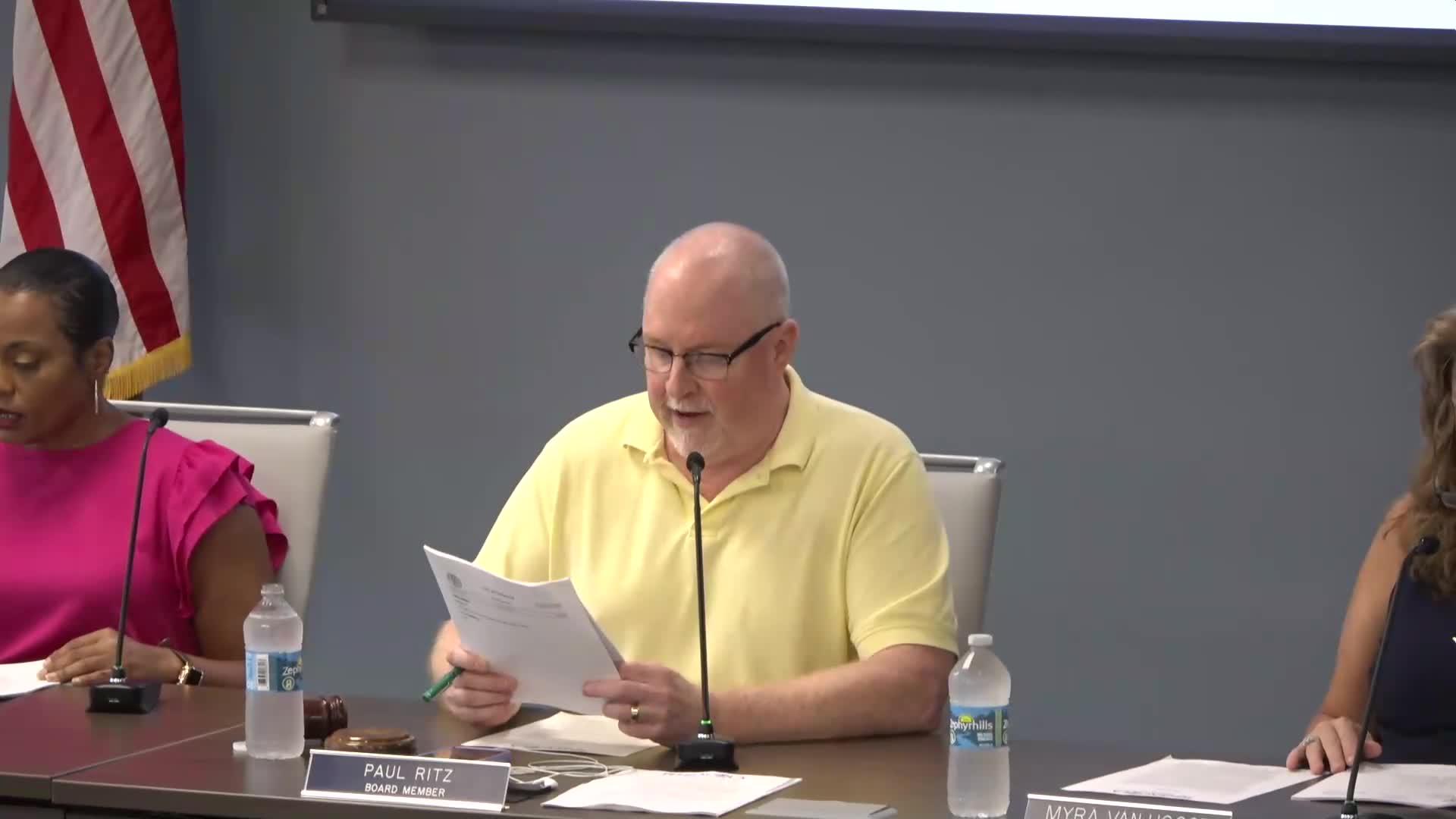
Summary
The City of Pensacola Planning Board voted unanimously to recommend city council adopt amendments to Chapter 12-9 of the Land Development Code to update floodplain management language, adopt new FEMA flood insurance rate maps and preserve the city’s Class 7 Community Rating System benefits.
The City of Pensacola Planning Board recommended adoption of amendments to Chapter 12-9 of the Land Development Code on July 8, 2025, to update the city’s floodplain management ordinance and adopt new Federal Emergency Management Agency flood insurance rate maps.
City staff and the city’s floodplain administrator said the changes are mandatory to maintain the city’s participation and Class 7 rating in the National Flood Insurance Program’s Community Rating System. Jonathan Bilby, Building Inspections Director and Floodplain Administrator, told the board the proposed language aligns city code with FEMA and the Florida Division of Emergency Management and with the eighth edition of the Florida Building Code.
The board’s vote was unanimous. The planning board’s recommendation will be forwarded to the City Council for consideration at its July 17 meeting.
Why it matters: The Community Rating System class 7 rating provides a 15% reduction in flood insurance premiums for NFIP policyholders in special flood hazard areas. Bilby and staff stressed that failure to adopt the new flood insurance rate maps by FEMA’s deadline (adoption required before Aug. 19, 2025, according to staff) could jeopardize participation in the NFIP and the community’s CRS rating, which would affect flood insurance availability and costs for residents.
Key details: Staff said the package does not raise the city’s present standards beyond current local practice but updates statutory and code citations and clarifies definitions and applicability. Amended sections listed by staff include 12-9-2 (applicability), 12-9-3 (duties and powers of the floodplain administrator), 12-9-7 (variances and appeals), 12-9-10 (definitions), 12-9-11 (buildings) and 12-9-14 (manufactured homes).
On manufactured homes and mobile-home parks, Bilby explained that Pensacola currently has few or no mobile-home park developments inside city limits, but state and FEMA definitions require the ordinance language. Under the NFIP and the Community Rating System, mobile homes in flood hazard areas must now meet higher elevation standards; Bilby said the standard effectively requires elevation to the base flood elevation plus the city’s three-foot freeboard where applicable.
The board asked whether the changes apply to existing construction. Bilby said the flood ordinance applies to existing buildings when a project qualifies as a “substantial improvement” or if a structure is substantially damaged — a condition typically defined as repair or improvement costs that exceed 50% of market value. For residential substantial improvement, elevation is generally required; commercial structures may be allowed floodproofing under applicable code provisions.
Public availability and outreach: Staff said preliminary FEMA maps have been publicly available since earlier studies (first released for Escambia County in 2017), have been presented at prior public workshops and are posted on fema.gov and the city website. The city also offers paper copies and an online mapping tool provided through a partnership with Forerunner that lets residents compare existing and new maps.
What the board decided: The planning board moved, seconded and voted unanimously to recommend the ordinance amendments as presented. Staff will forward the recommendation and the ordinance language to City Council for action at its July 17 meeting.