Get Full Government Meeting Transcripts, Videos, & Alerts Forever!
Get email alerts on the Permitting topic
No spam. Unsubscribe anytime.
Kissimmee staff outline permitting, inspections and business tax receipt processes; emphasize staffing, tech upgrades and outreach
Summary
City development staff reviewed building and fire prevention operations, citing staffing levels, permitting statistics, review timeframes and a series of process improvements including a self-service portal, lunchtime trainings and plans for a decision engine and improved phone queuing.
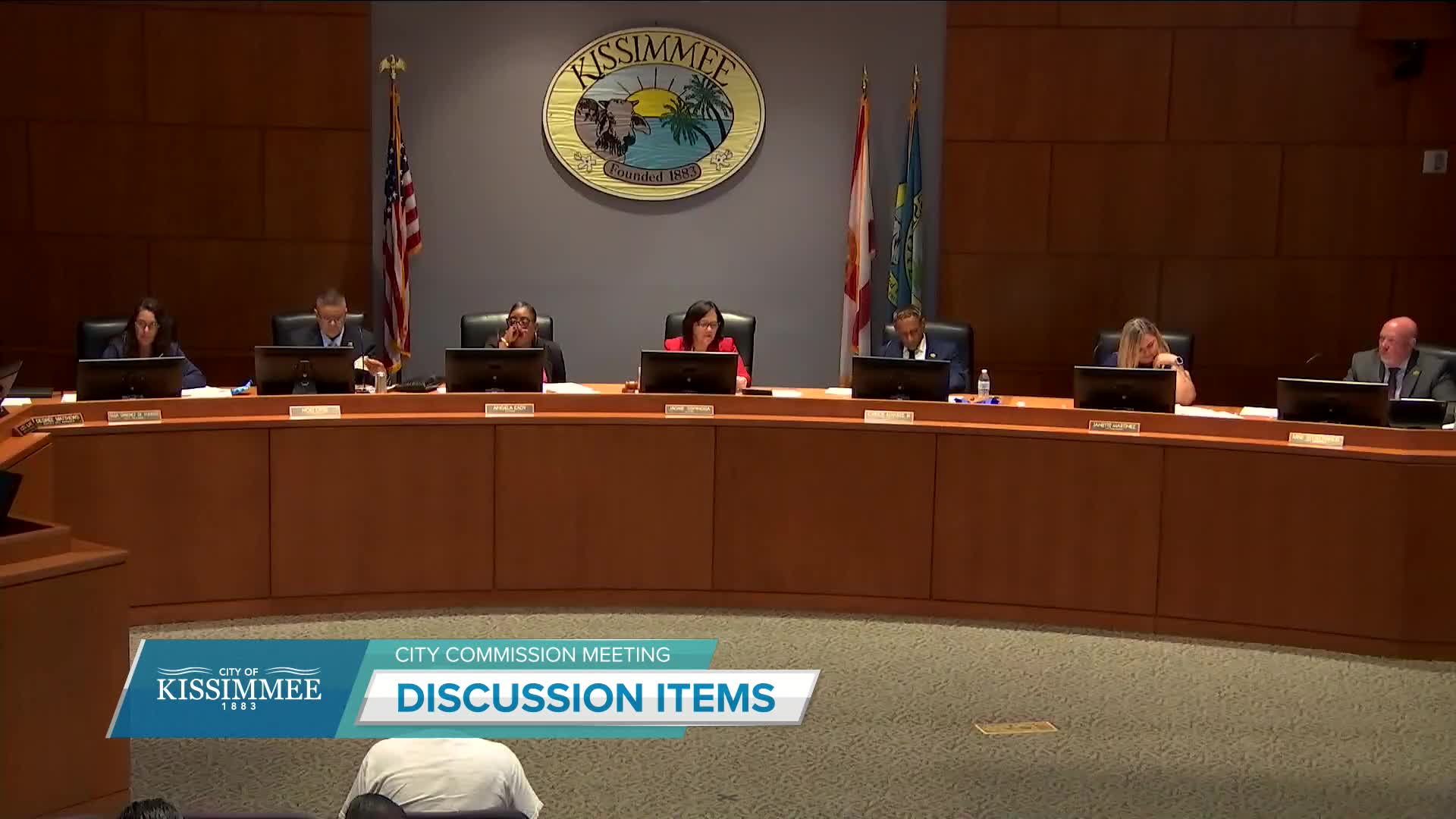
City Development Services staff updated the City Commission on permitting and building-safety operations, explaining staffing, review timelines, common sources of delay and a suite of recent and planned improvements intended to streamline reviews and improve customer service.
Development Services Director Craig Holland and Building Division Manager Samantha Bridal said the Building Division (which includes fire prevention) increased authorized positions from 24 in FY2024 to 29 in the current fiscal year, with 27 positions filled and two vacancies. Staff said 13 of those positions — nearly 45% — are bilingual. Bridal said the division collectively holds 116 unique licenses and certifications and that the deputy building official has earned the International Code Council's Master Code Professional certification.
Bridal provided activity statistics: in FY2024 the division processed about 13,489 total applications (permits, contractor registrations and business tax receipts), completed 12,812 reviews, issued 5,786 permits, conducted 17,974 inspections and issued 343 certificates of occupancy. For business tax receipts (BTRs) the division processed 3,049 applications in FY2024. Staff said the city issued permits at a higher proportion per application than neighboring jurisdictions and that sufficiency review in Kissimmee generally takes about one business day, with total review cycles for commercial permits ranging from three to 11 business days depending on complexity.
Staff identified common causes of delays: work begun without permits, incomplete applications, delays in applicant responses or fee payments, poor plan quality, coordination with outside agencies (including Toho Water Authority, engineering, sanitation and 911 addressing), and missed inspections. Bridal said the formal review does not begin until fees are paid following sufficiency review, and noted that external agencies' timelines affect the overall schedule.
Recent improvements listed include expanded staffing, a Development Services Center with earlier hours, step-by-step video tutorials, two self-service kiosks, monthly "lunch and learn" trainings, an enhanced self-service portal, and a dedicated quick-turnaround reviewer for routine permits. Upcoming items include a fee study, efforts to improve ISO ratings, exploring IAS accreditation, filling critical staff positions, a decision engine to streamline workflows, a new phone queuing system with callback options, expanded electronic plan review, automated notifications, and new customer resources including an owner-builder brochure and a business startup guide.
Commissioners and downtown business representatives said the changes and trainings have reduced problems from earlier years, praised staff for customer service, and urged continued outreach to help applicants—especially first-time business owners—understand requirements. Several commissioners asked that key checklists and "what can delay a permit" guidance be posted as an easy-to-use reference for the public. Staff agreed to publish materials and continue outreach.